
Landscaping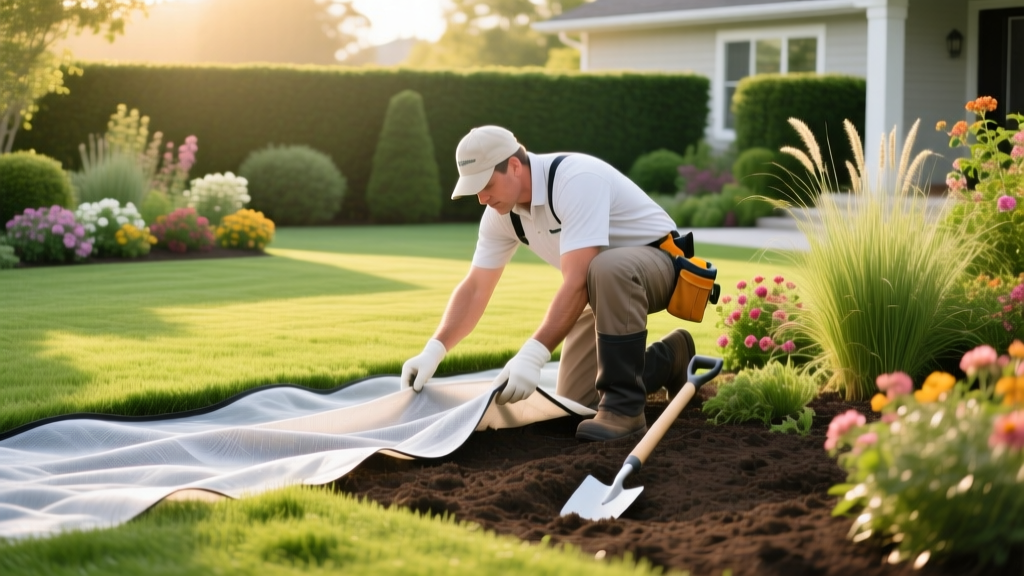
Critical Homeowner Landscaping Fabric Warnings and Fixes
Landscape fabric, commonly marketed as weed barrier, is one of the most frequently misapplied materials in residential hardscaping and garden bed construction. While the premise of laying down a physical barrier to stop weeds seems logically sound, the biological and hydrological realities of soil ecology tell a different story. When homeowners install the wrong type of fabric—or install it incorrectly beneath organic mulch—they trigger a cascade of soil failures that ultimately kill desirable plants and create worse weed infestations.
This diagnostic guide breaks down the most severe homeowner landscaping fabric warnings, identifies the exact failure modes occurring in your garden beds, and provides actionable, professional-grade remediation protocols.
Warning 1: The Hydrophobic 'Soil Sandwich' Effect
The most common mistake homeowners make is purchasing cheap, non-woven spunbond polyester or polypropylene fabric (often sold in lightweight 3-ounce rolls at big-box stores). Initially, these materials allow water to pass through. However, within 12 to 18 months, the microscopic pores (typically under 0.1mm) become completely clogged with silt, fungal hyphae, and tannins leaching from decomposing mulch above.
Diagnostic Symptom: You water your garden beds heavily, but the soil beneath the mulch remains bone dry. Water pools on top of the fabric or sheets off into the lawn, causing erosion.
The Solution: Switch to Woven Slit-Film Geotextiles
If a physical barrier is absolutely necessary (such as beneath inorganic gravel or river rock pathways), you must use a woven slit-film polypropylene geotextile. Professional-grade woven fabrics, such as DeWitt Pro-5 or GroundCover, feature a distinct grid-like weave that maintains a water permeability rate of over 100 gallons per minute per square foot, even after years of soil contact. Expect to pay between $0.40 and $0.65 per square foot for true woven geotextiles, compared to $0.15 for non-woven alternatives.
Warning 2: Root Girdling and the 'Weed Volcano'
Tree and shrub roots require continuous gas exchange (oxygen in, carbon dioxide out) with the atmosphere. Impermeable landscape fabrics severely restrict this exchange, suffocating the fine feeder roots located in the top 6 inches of the soil profile. Furthermore, as landscape fabric ages and becomes brittle, aggressive tree roots will push through the mesh. As the roots expand in girth over the years, the rigid fabric acts as a tourniquet, causing root girdling that slowly strangles the tree.
Simultaneously, the 'Weed Volcano' effect occurs. Wind-blown weed seeds land on the decomposing mulch above the fabric. They germinate and send taproots down into the fabric mesh. Because the roots intertwine with the synthetic fibers, pulling the weed tears the fabric, creating holes that allow even more weeds to penetrate from the soil below.
Material Matrix: What Actually Works
Understanding the mechanical differences between barrier materials is critical for long-term landscape health. Use this comparison matrix to audit your current or planned garden beds.
| Material Type | Best Application | Water Permeability (Long-Term) | Failure Mode |
|---|---|---|---|
| Non-Woven Spunbond | French drains, behind retaining walls | Poor (Clogs in 1-2 years) | Hydrophobic layering, soil suffocation |
| Woven Slit-Film | Under gravel paths, dry creek beds | Excellent (Maintains flow) | Weeds root into the weave if covered in organic mulch |
| Heavy Cardboard | Sheet mulching, new bed creation | Good (Breaks down in 6-9 months) | Temporary only; requires thick mulch layer to hold down |
| No Fabric (Organic Mulch) | Planting beds, tree rings, shrub borders | Perfect (Natural soil ecology) | Requires 3-4 inch depth to naturally suppress weeds |
Step-by-Step Remediation Protocol
If your garden beds are currently suffering from fabric-related soil compaction or root girdling, follow this professional remediation sequence to restore soil health.
- Clear the Mulch: Use a flat-bed landscape rake to pull back all existing organic mulch. If the mulch has decomposed into a soil-like layer on top of the fabric, discard it or move it to a compost pile; do not reuse it directly on the soil.
- Extract the Fabric and Staples: Cut the fabric into manageable 4x4 foot sections using heavy-duty utility shears. Pull up all metal or plastic sod staples. (Leaving old staples in the soil will damage future aeration equipment and pose a hazard).
- Mechanical Aeration: Because the fabric has likely compacted the topsoil and restricted earthworm activity, use a broadfork or a manual garden fork to pierce the soil to a depth of 6 inches. Rock the fork gently to fracture the compacted layers without turning the soil.
- Apply a Compost Top-Dressing: Spread a 1-inch layer of screened, finished organic compost over the aerated soil. This reintroduces beneficial mycorrhizal fungi and soil bacteria that were starved of oxygen under the fabric.
- Install Coarse Arborist Chips: Apply 3 to 4 inches of coarse, aged arborist wood chips directly over the compost. According to research published by Washington State University Extension, coarse wood chips naturally suppress weed seed germination through physical shading and allelopathic properties, entirely eliminating the need for synthetic barriers.
When to Ditch Fabric Entirely: The Arborist Approach
For 90% of residential planting beds, tree rings, and shrub borders, landscape fabric should be completely omitted. The modern consensus among certified arborists and soil scientists is that a thick layer of organic mulch applied directly to the soil surface provides superior weed suppression, moisture retention, and temperature modulation without the long-term ecological penalties of synthetic geotextiles.
'The use of landscape fabric in permanent planting beds is a horticultural myth that causes more harm than good. It disrupts the natural decomposition cycle, prevents the incorporation of organic matter into the soil, and ultimately leads to the decline of landscape plants.' — Adapted from University of Missouri Extension guidelines on sustainable mulching practices (MU Extension G6960).
Pro-Tip for High-Wind Areas: If you are using organic mulch without fabric and live in a high-wind region, avoid lightweight shredded bark or dyed mulches, which will blow away. Instead, opt for heavier, interlocking materials like pine bark nuggets or shredded hardwood that knits together, or use the Morton Arboretum's recommended mulching techniques to ensure the material stays anchored during storms.
Final Diagnostic Takeaway
Landscape fabric is a highly specialized construction material designed for aggregate stabilization and drainage systems, not for use beneath organic mulch in planting beds. By recognizing these homeowner landscaping fabric warnings early and transitioning to a fabric-free, deep-mulch strategy, you will drastically reduce long-term maintenance costs, eliminate the 'weed volcano' effect, and cultivate a biologically active soil food web that sustains your landscape for decades.

