
Landscaping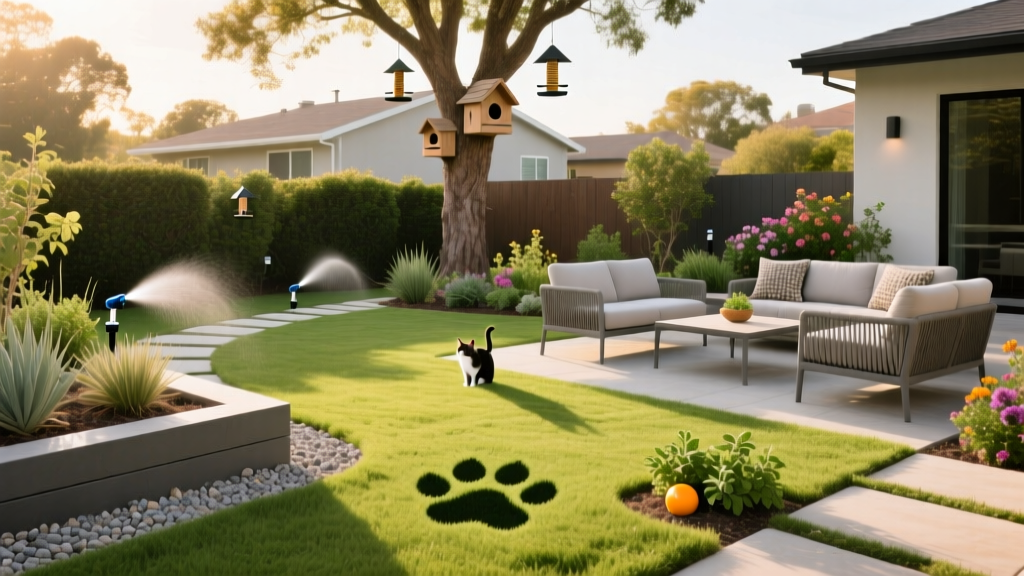
How Do You Get Rid of Cats in Your Backyard? A Humane Landscape Playbook
When homeowners ask, "how do you get rid of cats in your backyard?" they are usually dealing with two specific landscape problems: nitrogen-burned turf from feline urine and excavated mulch beds from digging. Feral and neighborhood cats treat loose soil and freshly laid sod as oversized litter boxes. Eradicating this behavior requires a multi-sensory approach that makes your property unappealing without causing harm to the animals.
The True Cost of Feline Landscape Damage
Cat urine contains exceptionally high concentrations of urea and uric acid. A single deposit can deliver enough localized nitrogen to burn a 4-to-6-inch patch of Kentucky Bluegrass or Tall Fescue down to the roots. Beyond the aesthetic damage to your lawn, feline feces introduce severe biological hazards into your landscape.
⚠️ Health Warning: Toxoplasmosis Risk
Outdoor cats are the primary carriers of Toxoplasma gondii, a parasite shed in their feces. According to the Cornell Feline Health Center, these oocysts can survive in moist soil for over a year. If you maintain vegetable gardens or children's sandboxes, removing cats from your yard is a critical public health measure, not just a landscaping preference.
Outdoor cats are the primary carriers of Toxoplasma gondii, a parasite shed in their feces. According to the Cornell Feline Health Center, these oocysts can survive in moist soil for over a year. If you maintain vegetable gardens or children's sandboxes, removing cats from your yard is a critical public health measure, not just a landscaping preference.
Sensory Deterrents: Rewiring the Cat's Environment
Cats rely heavily on their olfactory and tactile senses to navigate and select elimination sites. By disrupting these sensory inputs, you can retrain neighborhood cats to bypass your property entirely.
Olfactory Repellents: Commercial vs. DIY
Forget the myth of scattering cayenne pepper or coffee grounds; these wash away after one rainstorm and can cause severe ocular damage to animals, violating humane pest control standards. Instead, rely on putrescent egg solids and specialized essential oil blends.
| Product / Method | Active Mechanism | Longevity | Avg. Cost |
|---|---|---|---|
| Liquid Fence Cat & Dog Repellent | Putrescent egg solids, garlic oil | 3-4 weeks (reapply after heavy rain) | $22 / Gallon |
| Nature's Mace Cat Repellent | Peppermint oil, white pepper, meat meal | 4-6 weeks (granular form) | $35 / 40lb bag |
| Citrus Peel Mulch Top-Dressing | Limonene (natural citrus oil) | 1-2 weeks (decomposes rapidly) | $10 (DIY) |
Textural Barriers: Protecting Mulch and Soil
Cats despise walking on prickly or unstable surfaces. If cats are using your garden beds as a litter box, the soil is too soft and inviting. Implement the 1-Inch Hex Netting Protocol:
- Level your existing soil and lay down galvanized 1-inch hexagonal chicken wire flat against the dirt.
- Secure the wire with 6-inch landscape staples every 3 feet.
- Cover the wire with 2 to 3 inches of coarse cedar mulch or decorative river rock.
Plants will easily grow up through the 1-inch gaps, but the wire prevents cats from digging down to the soil. For a purely organic textural deterrent, top-dress your beds with prickly holly cuttings, sweetgum balls, or rough pine cones.
Tech-Driven Perimeter Defense
For large properties where physical barriers are impractical, motion-activated technology provides an automated, humane perimeter defense. The Internet Center for Wildlife Damage Management recommends active harassment devices to break the habituation cycle of returning feral animals.
1. Motion-Activated Sprinklers (The Gold Standard)
The Orbit Yard Enforcer Motion-Activated Sprinkler (approx. $75) is widely considered the most effective active deterrent on the market. It utilizes a passive infrared (PIR) sensor that detects body heat and motion up to 40 feet away. Upon detection, it fires a sharp, 5-second burst of water accompanied by a loud mechanical "click."
- Pro Tip: Set the dial to "Night Only" mode if the cats are strictly nocturnal, which conserves the 3 AA batteries and prevents you from getting sprayed during daytime yard work.
- Placement: Position the unit at a 45-degree angle to your property line so the PIR sensor catches the cat's lateral movement rather than waiting for it to walk directly at the lens.
2. Ultrasonic Repellents (Conditional Efficacy)
Devices like the Aspectek Predator Guard ($45) emit a sweeping 25kHz ultrasonic frequency paired with flashing LED strobes. However, ultrasonic sound waves cannot penetrate solid objects. If your yard is divided by wooden privacy fences or dense evergreen hedges, the sound will be blocked, creating blind spots. Use ultrasonic devices only in open, unobstructed lawn areas.
Landscape Design Modifications (Long-Term Fixes)
Integrating feline-repellent flora into your landscape design provides a permanent, low-maintenance biological barrier. While lavender and rosemary are often suggested, their oils are only released when crushed. Instead, plant these highly volatile species along your fence lines and garden borders:
- Plectranthus caninus (Scaredy Cat Plant): Emits a strong, skunk-like odor when brushed against. Thrives in USDA Zones 9-11 but can be grown as an annual in cooler climates.
- Ruta graveolens (Common Rue): A woody perennial with a bitter scent that cats inherently avoid. Warning: Wear gloves when pruning, as the sap can cause phytophotodermatitis (skin blistering in sunlight) in humans.
- Coleus canina: Often marketed specifically for pest deterrence, releasing an odor reminiscent of fox urine when the leaves are disturbed.
The 14-Day Backyard Eradication Protocol
To permanently evict cats from your landscape, follow this sequential playbook. Skipping the cleansing phase will result in failure, as cats will continually return to the scent of their previous markings.
Phase 1: Cleanse (Days 1-3)
Do not use bleach or ammonia; these mimic the smell of urine and attract cats. Use an outdoor-specific enzymatic cleaner like Nature's Miracle Outdoor to break down the uric acid crystals in the soil and turf. Hose down the area thoroughly after application.
Phase 2: Deploy (Days 4-7)
Install your physical barriers (hex netting under mulch) and set up the Orbit Yard Enforcer sprinklers at known entry points. Apply a perimeter band of granular putrescent egg repellent along the property line.
Phase 3: Reinforce (Days 8-14)
Monitor the sprinkler trigger logs. If cats are bypassing the PIR sensors, adjust the sensitivity dials and relocate the units. Reapply liquid repellents to fence posts and hardscape borders to maintain the olfactory shield.
FAQ: Common Backyard Cat Scenarios
Are mothballs an effective cat deterrent?
No. Mothballs contain naphthalene or paradichlorobenzene, both of which are highly toxic to cats, dogs, and local wildlife. Furthermore, using mothballs outdoors as a pesticide violates federal EPA regulations. They will poison your soil and can result in severe legal liability if a neighbor's pet ingests them.
What if the cats belong to my neighbors?
Focus your deterrents strictly on your property lines and garden beds. Motion-activated sprinklers and ultrasonic devices are ideal because they operate entirely within your property boundaries without causing physical harm or crossing into neighboring yards. Open a dialogue with your neighbor about keeping their pets indoors, citing the specific damage to your landscaping and the risk of disease transmission.
How do I stop cats from climbing my wooden privacy fence?
Cats use their claws to scale wood. Install a coyote roller (a spinning aluminum tube mounted to the top of the fence) or angle a 2-foot section of chicken wire inward at a 45-degree degree from the top of the fence. The spinning roller prevents them from getting the leverage needed to pull themselves over the top.

