
Landscaping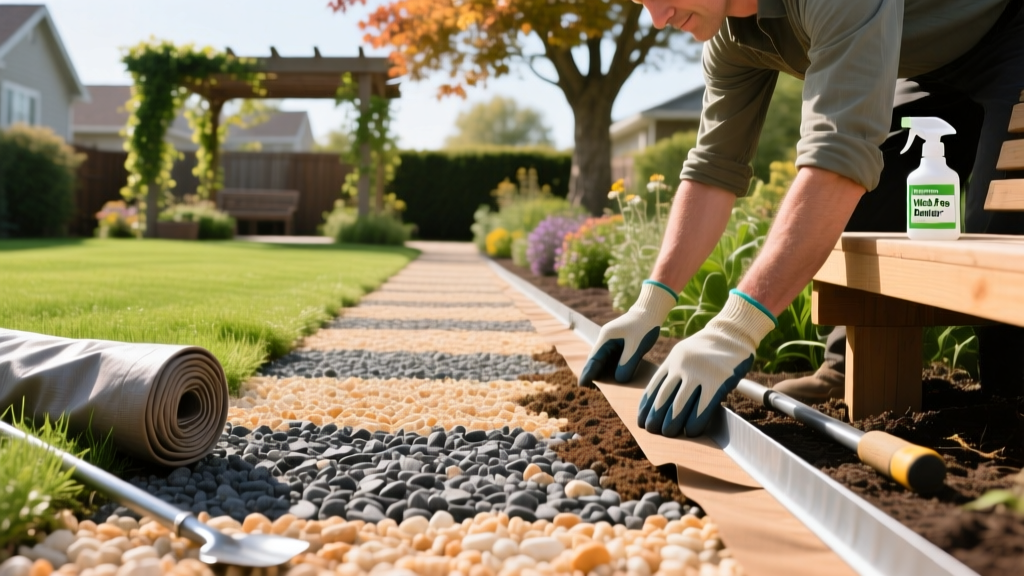
How to Build a Crushed Gravel Path That Actually Stops Weeds
The most common reason a gravel path fails within two years is not the stone itself, but the failure to manage hydrostatic pressure and lateral migration. When homeowners use rounded stone and cheap non-woven weed barriers, the gravel sinks into the mud, the barrier tears, and weeds exploit the gaps. Building a permanent, low-maintenance gravel path requires understanding soil mechanics, selecting angular aggregates, and installing rigid containment.
The Aggregate Matrix: Choosing the Right Stone
Not all gravel is suitable for foot traffic. The shape of the stone dictates how it locks together under pressure. Rounded stones roll; angular stones interlock.
| Gravel Type | Shape & Composition | Path Suitability | Failure Mode |
|---|---|---|---|
| Pea Gravel | Round, smooth, no fines | Poor (Decorative only) | Migrates laterally, shifts underfoot, impossible to rake smoothly. |
| 5/8" Minus Crushed | Angular, includes stone dust | Excellent (High traffic) | Can track indoors on shoes if not properly compacted with water. |
| Decomposed Granite (DG) | Fine, sandy, highly angular | Good (Dry climates) | Turns to mud in heavy rain or high-water-table regions. |
| 3/4" Clean Crushed | Angular, no fines/dust | Fair (Sub-base only) | Too large and loose for a comfortable walking surface. |
For a primary walkway, 5/8-inch minus crushed basalt or limestone is the industry standard. The "minus" designation means the mix includes stone dust and fines, which act as a natural binder when moistened and compacted, creating a semi-solid surface that still allows water to permeate.
Phase 1: Excavation and the 1/4-Inch Slope Rule
A gravel path must shed water, even if it is permeable. If water pools in the center, it will eventually wash out the sub-base. You must excavate to a depth of 5 inches across the entire path width.
- Depth: 5 inches below the desired final grade.
- Slope: Establish a 1/4-inch per foot cross-slope using a laser level or a 4-foot spirit level with shims. This ensures surface runoff without creating a noticeable tilt for pedestrians.
- Sub-base Compaction: Before laying any fabric, run a gas-powered plate compactor (rentable for ~$65/day) over the bare soil. This prevents future settling that creates puddle pockets.
Phase 2: The Geotextile Layer (Why Big-Box Fabric Fails)
The black, fuzzy "weed barrier" sold at home improvement stores is non-woven polyester. It clogs with silt within 18 months, destroying soil drainage and eventually tearing under the weight of the gravel.
Expert Specification: Use a woven polypropylene geotextile fabric (minimum 3.2 oz/sq yd, such as US Fabrics 4x4 or equivalent). Woven fabrics allow water to pass through while blocking soil migration, maintaining the structural integrity of the path for decades.
Roll the woven fabric over the compacted sub-base, overlapping seams by a minimum of 12 inches. Secure the perimeter with 6-inch landscape staples every 3 feet. According to research on permeable pathways and soil health, proper geotextile separation is the single most critical factor in preventing the gravel from mixing with the underlying clay or topsoil.
Phase 3: Rigid Steel Edging Installation
Gravel migrates laterally when stepped on. Plastic coil edging will warp, heave during freeze-thaw cycles, and eventually crack. You must use rigid metal edging.
- Material: 14-gauge powder-coated steel edging or 1/4-inch commercial aluminum landscape edging (e.g., Permaloc).
- Placement: Position the edging directly on top of the geotextile fabric along the trench walls.
- Anchoring: Drive 18-inch steel edging stakes through the pre-punched holes, angling them slightly outward (away from the path) at a 15-degree angle for maximum pull-out resistance.
- Height: The top of the edging should sit 1/2 inch below the final gravel surface to hide the metal while containing the stone.
Phase 4: The 3-Inch Drop and Mechanical Compaction
Do not dump the gravel from a wheelbarrow; the impact will tear your woven fabric. Shovel the 5/8" minus gravel evenly to a depth of 3 inches (which will compact down to roughly 2.5 inches).
The secret to a hard, weed-resistant surface is moisture-activated compaction. Lightly mist the gravel with a garden hose until it is damp (not saturated). Run the plate compactor over the path in overlapping passes. The water activates the stone dust in the "minus" mix, binding the angular stones together into a rigid matrix. The EPA's guidelines on permeable surfaces note that properly compacted angular aggregate significantly reduces runoff velocity while maintaining high infiltration rates.
2026 Material Cost Breakdown (Per 100 Sq. Ft. Path)
- Woven Geotextile Fabric: $45 - $60
- 5/8" Minus Crushed Gravel (1 Ton): $55 - $95 (varies by regional quarry proximity)
- 14-Gauge Steel Edging (20 Linear Ft): $90 - $120
- Equipment Rental (Plate Compactor): $65 / day
- Total Estimated DIY Cost: $2.55 - $3.40 per square foot
Long-Term Maintenance and Troubleshooting
Even a perfectly installed crushed gravel path requires minimal annual upkeep to maintain its structural integrity and aesthetic.
Managing the "Fines" Migration
Over time, heavy rain may wash a small amount of stone dust out of the surface layer, leaving the larger 5/8" stones exposed and loose. If the path begins to sound "crunchy" and shifts underfoot, it needs a top-dressing. Order a half-ton of the exact same 5/8" minus gravel, rake it to a 1/2-inch depth, mist it, and run the compactor over it once more.
Dealing with Organic Debris
Leaves and pine needles will eventually decompose on top of the gravel, creating a layer of organic humus where wind-blown weed seeds can germinate. Use a leaf blower on a low setting to clear debris weekly during autumn. Avoid using a stiff metal rake, which will pull the stone dust binder to the surface and disrupt the compacted matrix. For the rare dandelion that breaches the woven fabric via a surface seed, spot-treat with a 20% horticultural vinegar solution rather than pulling it, which can disturb the surrounding locked aggregate.

