
Landscaping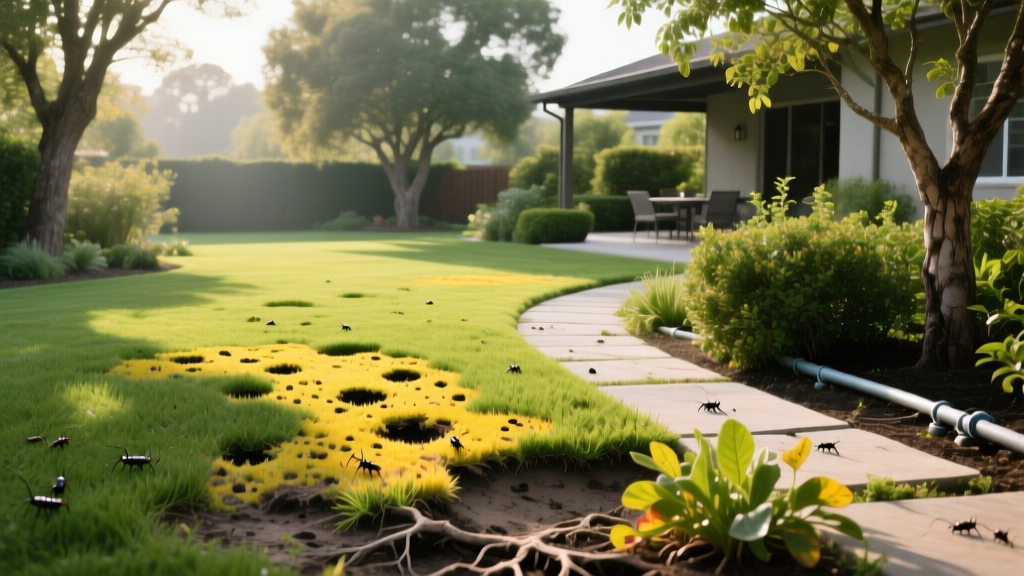
Common Jupiter Landscape Problems: Diagnosis & Fixes
Maintaining a thriving Jupiter landscape requires navigating a highly specific microclimate. Located in northern Palm Beach County, Jupiter sits in USDA Hardiness Zones 10a and 10b, characterized by intense summer humidity, seasonal salt-laden coastal winds, and predominantly sandy, nutrient-poor substrates. Homeowners and property managers frequently misdiagnose environmental stress as pest damage or simple neglect, leading to wasted resources on incorrect chemical treatments.
This diagnostic guide breaks down the four most pervasive environmental and structural failures in Jupiter landscaping, providing exact soil amendments, plant selections, and irrigation configurations required to stabilize your property.
Substrate Failures: Managing Immokalee and Wabasso Sands
The foundational challenge of any Jupiter landscape is the native soil. Most residential properties are built on Immokalee or Wabasso fine sands. These soils have an exceptionally low Cation Exchange Capacity (CEC), typically ranging from 1 to 5 meq/100g. This means the soil physically cannot hold onto positively charged nutrient ions (like potassium, calcium, and magnesium), causing them to leach directly into the water table during heavy summer downpours.
Diagnostic Symptom: Plants exhibit chronic micronutrient deficiencies (interveinal chlorosis on new growth) despite regular application of granular 8-2-12 palm fertilizers. Water pools on the surface during rain but the root zone dries out within 24 hours.
The Amendment Protocol
To artificially raise the CEC and improve moisture retention without suffocating the roots, you must integrate organic matter directly into the top 6 inches of the planting bed.
- Composted Pine Bark: Apply a 2-inch layer and till into the top 6 inches. Pine bark lowers the naturally high pH of Jupiter's shell-heavy fill dirt (often 7.5+) down to a more manageable 6.0-6.5.
- Expanded Shale or Permalite: For heavy traffic turf areas where organic matter decomposes too quickly, incorporate 10% expanded shale by volume to create permanent micropores for water retention.
- Humic Acid Applications: Apply liquid humic acid (specifically containing humic and fulvic acids) at a rate of 3 ounces per 1,000 square feet every 60 days. This chelates trace minerals, making them available to roots even in low-CEC sand.
For definitive baseline data, submit a soil core sample to the UF/IFAS Extension Soil Testing Laboratory. Request the 'Landscape Plant' panel ($10-$15), which specifically measures the phosphorus and potassium leaching common in coastal sands.
Coastal Wind and Salt Spray Burn
Properties located east of US-1 or near the Intracoastal Waterway face relentless salt aerosol exposure, particularly during winter cold fronts when northeasterly winds peak. Salt spray causes osmotic stress, drawing moisture out of leaf tissue and resulting in marginal necrosis (browning at the leaf edges).
Differentiating Salt Burn from Fungal Pathogens
A common misdiagnosis in Jupiter is treating salt burn with fungicides. Salt burn manifests as crispy, brown margins on the windward side of the plant, while the leeward side remains green. Fungal pathogens like Pythium blight, conversely, create irregular, water-soaked lesions that spread rapidly across the entire canopy regardless of wind direction.
Salt-Tolerant Plant Matrix for Jupiter Coastal Zones
When replacing failed plantings within 300 feet of the ocean or Intracoastal, utilize species with proven physiological adaptations to sodium exposure.
| Plant Species | Common Name | Salt Tolerance | Best Application |
|---|---|---|---|
| Coccoloba uvifera | Sea Grape | Very High | Windbreak screens, large focal points |
| Serenoa repens | Saw Palmetto | High | Groundcover, understory massing |
| Zamia integrifolia | Coontie | Moderate-High | Shade borders, foundation plantings |
| Chrysobalanus icaco | Cocoplum | High | Hedging, property line delineation |
Irrigation Conflicts and SFWMD Restrictions
Jupiter falls under the strict jurisdiction of the South Florida Water Management District (SFWMD). Year-round water restrictions limit irrigation to specific days and hours based on your address. Overwatering on permitted days to 'compensate' for skipped days is the leading cause of turf root rot in the area.
Warning: Applying more than 3/4 inch of water per irrigation cycle on Jupiter's sandy soils causes the moisture front to push past the 6-inch root zone, wasting water and triggering nutrient leaching.
Smart Controller Configuration
Replace legacy timer-based controllers with weather-evapotranspiration (ET) based smart controllers. The Rachio 3 or Hunter Pro-C with Solar Sync are ideal for Jupiter's microclimate.
- Zone Calibration: Measure your precipitation rate. Place three straight-sided tuna cans in a single sprinkler zone and run it for 15 minutes. Measure the depth in inches and multiply by 4 to get the hourly rate.
- Root Depth Settings: Set St. Augustine turf zones to a 6-inch root depth, and deep-rooted shrub zones (like Sea Grape) to 12 inches within the smart controller app. This forces the algorithm to space out watering events, encouraging deeper root growth.
- Flow Sensor Integration: Install a flow sensor (e.g., Hunter Flow-Sync) to detect micro-leaks in PVC lateral lines, which frequently crack due to soil shifting in newly developed Jupiter subdivisions.
Fungal Pathogens in High-Humidity Mulch Beds
Jupiter's summer humidity routinely exceeds 85%, creating an ideal incubation environment for Rhizoctonia solani (brown patch) in turf and Phytophthora in ornamental beds. The problem is almost always exacerbated by improper mulching techniques.
The 'Volcano Mulching' Failure
Piling mulch against the trunk flare of trees and shrubs traps moisture against the bark, inviting collar rot. Furthermore, using fine-ground cypress mulch creates a hydrophobic crust when dry, and a waterlogged mat when wet.
Corrective Action Plan
- Pull Back Mulch: Maintain a strict 3-inch gap between the mulch edge and the base of all woody ornamentals and tree trunks.
- Switch to Coarse Pine Straw: Replace fine hardwood mulches with long-needle pine straw. Pine straw allows for superior gas exchange and does not compact, keeping the root crown dry while maintaining soil moisture below.
- Targeted Fungicide Application: If Rhizoctonia is confirmed in St. Augustine turf (identified by expanding circular patches of brown, sunken grass with dark margins), apply a preventative systemic fungicide containing Azoxystrobin (e.g., Heritage SC) at a rate of 0.4 oz per 1,000 sq ft. Rotate with Propiconazole (e.g., Banner MAXX) 28 days later to prevent chemical resistance.
Frequently Asked Questions: Jupiter HOA & Zoning
Can my HOA force me to plant non-native, high-water species?
No. Under Florida Statute 373.185, local governments and HOAs cannot prohibit the implementation of Florida-Friendly Landscaping™ (FFL). If your Jupiter HOA mandates a specific percentage of water-intensive turfgrass or non-native palms, you can submit an FFL conversion plan certified by a local UF/IFAS extension agent to override the restrictive covenant.
How do I handle landscape debris during hurricane prep?
Palm Beach County Solid Waste Authority (SWA) suspends yard waste collection during active hurricane watches. Do not prune trees or cut hedges within 14 days of peak hurricane season (August-September). Loose branches and coconuts become lethal projectiles in 100+ mph winds. Pre-season pruning should be completed by May 31st, focusing on canopy thinning to allow wind passage rather than crown reduction.
What is the best turfgrass for shaded Jupiter lots with heavy oak canopy?
St. Augustinegrass ('Palmetto' or 'Seville' cultivars) is the only viable turf option for lots shaded by Live Oaks or Gumbo Limbos, requiring a minimum of 4 hours of filtered sunlight. If the canopy provides less than 4 hours of direct sunlight, abandon turf entirely and install a shaded groundcover of Asiatic jasmine or Bromeliads to prevent chronic muddy areas and mosquito breeding grounds.

