
Landscaping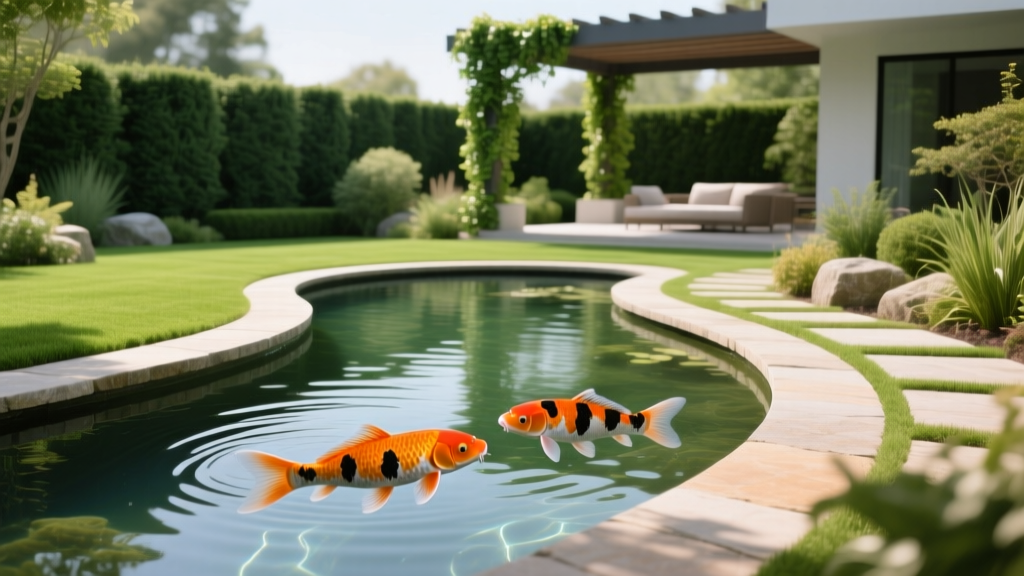
Practical Koi Fish Care Guide: Pond Setup, Water Quality & Feeding
The Foundation: Sizing and Landscaping Your Koi Pond
Successful koi fish care begins long before you introduce Cyprinus rubrofuscus to the water; it starts with the physical dimensions and landscaping architecture of the pond itself. Koi are high-bioload fish that can easily reach 24 to 30 inches in length and live for 40+ years. Inadequate pond volume leads to stunted growth, chronic water quality issues, and heightened disease susceptibility.
Minimum Pond Dimensions Framework:
- Base Volume: 1,500 gallons minimum for the first 3 to 5 koi.
- Scaling: Add 250 gallons of capacity for every additional adult koi.
- Depth Requirement: 3.5 to 4 feet minimum. This prevents the pond from freezing solid in USDA zones 4-6 and provides essential thermal stratification during summer heatwaves.
- Bottom Topography: Implement a sloped bottom angling toward a bottom drain. Avoid gravel substrates entirely; gravel traps organic detritus, fostering anaerobic bacteria that produce lethal hydrogen sulfide gas.
When integrating the pond into your landscape, ensure the surrounding grading slopes away from the water's edge. This prevents nutrient-rich lawn runoff—loaded with nitrogen and phosphorus from fertilizers—from entering the pond and triggering catastrophic algae blooms.
Engineering the Life Support: Filtration and Circulation
Koi produce massive amounts of ammonia through their gills and waste. A standard waterfall filter box is entirely insufficient for a dedicated koi pond. You must engineer a two-stage filtration system: mechanical (to remove solid waste before it decomposes) and biological (to house nitrifying bacteria that convert toxic ammonia into less harmful nitrates).
| System Type | Mechanism | Pros & Cons | 2026 Cost Estimate |
|---|---|---|---|
| Gravity-Fed Settlement | Water flows via gravity into a settlement chamber, then over brush/mats to a biological moving bed (MBBR). | Pro: Lowest energy use, safest for fish (no suction entrapment). Con: Requires complex plumbing below pond water level. |
$2,200 - $3,500 |
| Pressurized Bead/Sieve | External pump pulls water through a sieve or pressurized bead filter (e.g., Oase BioTec ScreenMatic) before bio-filtration. | Pro: Easier retrofit for existing ponds, excellent fine-particle removal. Con: Higher electricity costs, requires external pump housing. |
$1,800 - $2,800 |
For biological filtration, the industry gold standard remains the Moving Bed Biofilm Reactor (MBBR). Using media like K1 Micro or Kaldnes K3, aerated heavily via air pumps, provides thousands of square feet of protected surface area for Nitrosomonas and Nitrobacter bacteria colonies to thrive. Ensure your biological chamber is never cleaned with tap water, as chlorine will instantly eradicate your biofilm, crashing the pond's nitrogen cycle.
Mastering Water Chemistry: The Invisible Lifeline
Clear water does not mean safe water. According to research from Texas A&M AquaPlant, maintaining strict water chemistry parameters is the single most critical factor in preventing koi mortality. You must invest in a reliable liquid test kit, such as the API Freshwater Master Test Kit, and test weekly during the spring and fall transitional seasons.
Critical Water Parameters and Dosing Protocols
- Ammonia (NH3): Must be strictly 0.0 ppm. Any reading above 0.25 ppm requires immediate partial water changes and the addition of a zeolite-based ammonia neutralizer.
- Nitrite (NO2-): Must be 0.0 ppm. Nitrite binds to hemoglobin, causing 'brown blood disease' (hypoxia). If detected, add 3 lbs of non-iodized salt per 1,000 gallons to block nitrite uptake at the gills.
- pH: Target 7.5 to 8.5. Koi thrive in slightly alkaline water. A pH below 7.0 stalls the nitrogen cycle entirely.
- Carbonate Hardness (KH): Target 120 to 180 ppm. KH acts as a pH buffer. Nitrifying bacteria consume alkalinity as they process ammonia; if KH drops below 50 ppm, your pond is at high risk of a sudden, lethal pH crash.
Expert Dosing Tip: To safely raise KH without spiking pH, use standard sodium bicarbonate (baking soda). Dissolve 1 teaspoon per 10 gallons of pond water in a bucket of pond water before distributing it evenly. This will raise KH by approximately 10 ppm. Never add dry powder directly to the pond.
Seasonal Feeding Frameworks and Digestion Biology
Koi lack a true stomach; they possess a continuous intestinal tract. This biological reality dictates that their digestion is entirely dependent on ambient water temperature. Feeding the wrong food at the wrong temperature leads to undigested food rotting in the intestinal tract, causing fatal bacterial septicemia.
Data from the Southern Regional Aquaculture Center emphasizes that metabolic rates in pond fish plummet as water cools. Follow this strict temperature-based feeding matrix:
- Below 50°F (10°C): STOP feeding entirely. The fish's digestive enzymes are dormant. Any food consumed will rot in the gut.
- 50°F to 60°F (10°C - 15.5°C): Feed a highly digestible wheat germ-based diet (e.g., Hikari Wheat-Germ) 1 to 2 times per week. Wheat germ bypasses the need for complex protein-digesting enzymes.
- 60°F to 70°F (15.5°C - 21°C): Transition to a balanced staple diet (e.g., Aqua Master or Hikari Gold). Feed 2 to 3 times daily, offering only what they can consume in 3 minutes.
- 70°F to 85°F (21°C - 29°C): Peak metabolism. Feed high-protein color-enhancing or growth formulas 3 to 4 times daily. Utilize an automatic feeder to distribute smaller, frequent meals rather than one large dump, which spikes ammonia.
Predator Deterrence and Landscape Integration
A beautifully landscaped pond often acts as a beacon for local wildlife. Great Blue Herons and raccoons are the primary threats to koi. While plastic decoy herons or alligator heads are popular, koi quickly habituate to static objects, rendering them useless within weeks.
"The only foolproof predator deterrents in landscape design are physical barriers and architectural refuges. If a heron cannot stand in shallow water and strike, your fish are safe."
To integrate predator protection seamlessly into your landscape:
- Underwater Caves (Koi Castles): Construct deep overhangs using large, flat flagstones cantilevered over the pond edge at a depth of at least 2 feet. This provides a physical roof that prevents aerial wading birds from striking.
- Perimeter Planting: Plant dense, thorny shrubs like barberry or holly directly on the pond's perimeter. This prevents raccoons and herons from comfortably approaching the water's edge to hunt.
- High-Tensile Netting: During peak migratory seasons (spring and fall), deploy a black, high-tensile polypropylene net suspended 18 inches above the water surface on fiberglass posts. Black netting is virtually invisible from a distance, preserving your landscape sightlines while providing an impenetrable physical barrier.
Frequently Asked Questions
How much does a professional koi pond cost to build in 2026?
A professionally excavated, 2,500-gallon koi pond with gravity-fed filtration, EPDM or gunite construction, and proper landscaping integration typically ranges from $18,000 to $35,000, depending on regional labor rates and hardscaping materials.
Can I keep koi in a water garden with heavy aquatic plants?
Adult koi are notorious for uprooting and consuming soft aquatic plants like water lilies. If you desire a heavily planted ecosystem, install a separate, connected 'bog filter' or an upper pond separated by a waterfall where plants can thrive out of the koi's reach, allowing nutrient-rich water to flow through the roots before returning to the main koi pond.

