
Landscaping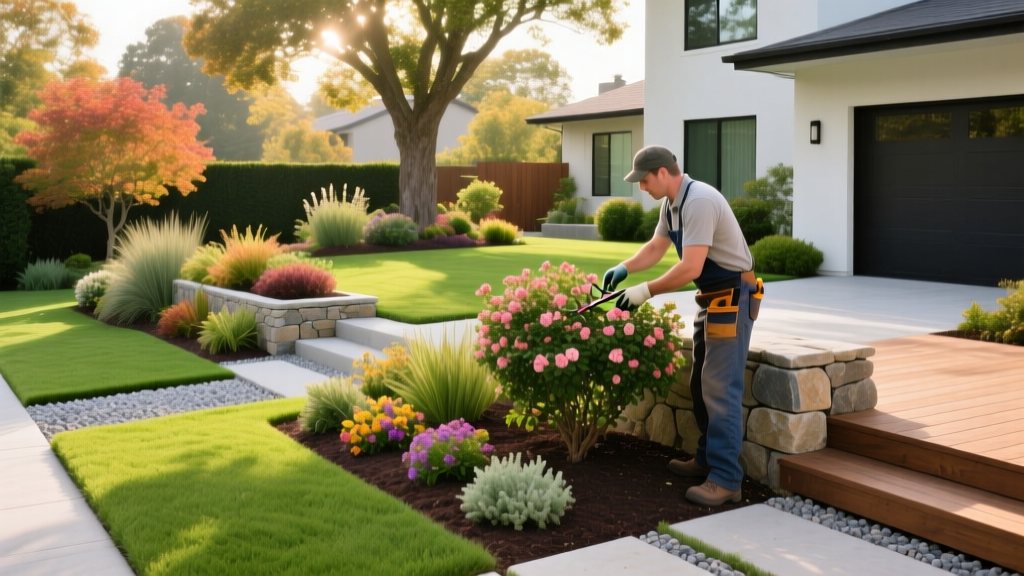
Landscape: What Is It and How to Design Your Property
Defining the Scope: Landscape, What Is It Really?
When homeowners ask, “landscape what is it?”, they often conflate landscaping with basic lawn maintenance or planting a few shrubs. In professional practice, landscaping is the deliberate integration of living elements (softscape), structural elements (hardscape), and environmental management systems (infrastructure) to create a functional, sustainable outdoor space. It is an applied science that requires understanding soil chemistry, hydrology, and structural engineering just as much as aesthetic design.
A successful yard overhaul requires moving beyond surface-level decoration. You must engineer the space from the ground up, starting with subterranean drainage and soil composition before a single plant is placed. Below is a comprehensive, step-by-step framework for planning and executing a complete landscape transformation.
The Three Pillars of a Functional Landscape
Every durable landscape relies on a triad of interconnected systems. Neglecting one pillar inevitably leads to the failure of the others—such as beautiful retaining walls collapsing due to poor infrastructure drainage, or expensive plants dying because they were placed in the wrong hydrozone.
| Pillar | Components | Primary Function | Lifespan Expectancy |
|---|---|---|---|
| Hardscape | Patios, retaining walls, walkways, pergolas, edging | Defines spatial flow, provides structural grade, manages foot traffic | 25 to 50+ years |
| Softscape | Trees, shrubs, perennials, turfgrass, mulch beds | Regulates microclimates, provides privacy, supports local ecology | 1 to 100+ years (varies by species) |
| Infrastructure | French drains, irrigation lines, low-voltage lighting, soil amendments | Manages water distribution, removes excess hydrostatic pressure, powers utilities | 15 to 30 years |
Step 1: Site Analysis and Microclimate Mapping
Before sketching any designs, you must quantify your site’s existing conditions. Guessing your soil type or sun exposure leads to costly plant replacements and drainage failures.
Execute a Percolation Test
Drainage dictates your entire hardscape and softscape strategy. To test your soil’s percolation rate:
- Dig a hole 12 inches deep and 12 inches wide in the proposed planting or patio area.
- Fill the hole with water and let it drain completely to saturate the soil.
- Refill the hole and measure the water level drop over exactly one hour.
Diagnostic Benchmark: An ideal drainage rate is between 1 and 6 inches per hour. If water drops less than 1 inch per hour, you have heavy clay and must install subsurface French drains or amend the soil with expanded shale. If it drains faster than 6 inches, you have sandy soil and will need to integrate organic compost to increase water retention.
Map Sun and Wind Corridors
Use a digital sun tracker app to log peak sunlight hours across different yard zones. Note that a “full sun” plant requires a minimum of 6 hours of direct, unfiltered light, ideally including the intense afternoon rays. Simultaneously, identify prevailing winter winds to position evergreen windbreaks (like Thuja occidentalis) to protect delicate perennials and reduce home heating costs.
Step 2: Hardscape First – Routing, Grading, and Base Prep
Amateur landscapers often plant first and build patios later, which destroys root systems and ruins soil grading. Always install hardscapes and subsurface infrastructure before softscaping.
Engineering the Paver Base
The longevity of a patio or walkway is determined entirely by its base, not the surface material. For a standard pedestrian patio using permeable pavers (which the EPA WaterSense program highly recommends for reducing stormwater runoff), follow this base specification:
- Excavation: Dig down 10 to 12 inches below the desired finish grade.
- Geotextile Fabric: Lay a non-woven geotextile fabric (e.g., Mirafi 500X) to prevent the base rock from migrating into the native subsoil.
- Aggregate Base: Add 6 inches of 3/4-inch minus crushed rock. Compact this in 2-inch “lifts” using a vibratory plate compactor (minimum 140 lbs) to achieve a 95% Proctor density.
- Bedding Layer: Apply 1.5 inches of ASTM C33 concrete sand, screeded perfectly level before laying pavers.
Managing Hydrostatic Pressure
If you are building a retaining wall over 3 feet tall, you must manage hydrostatic pressure. Backfill the rear of the wall with 12 inches of clean, washed 3/4-inch gravel, and install a 4-inch perforated PVC pipe at the base, sloped at a 1/8-inch per foot gradient to daylight the water away from the structure.
Step 3: Softscape Selection and Hydrozoning
Once the hardscape is set, transition to softscaping using the principle of hydrozoning. Hydrozoning involves grouping plants with identical water and sunlight requirements into the same irrigation zones. This prevents the common failure of overwatering drought-tolerant plants while underwatering moisture-loving species.
Hydrozone Plant Matrix
Consult the USDA Plants Database to verify native ranges and hardiness zones for your specific region. Below is a practical hydrozone framework for a temperate climate (USDA Zones 6-7):
| Hydrozone | Water Requirement | Ideal Placement | Recommended Species |
|---|---|---|---|
| Zone 1 | High (1.5+ inches/week) | Low areas, rain gardens, near downspouts | Hydrangea quercifolia, Osmunda cinnamomea (Cinnamon Fern) |
| Zone 2 | Moderate (1 inch/week) | Primary visual beds, foundation plantings | Echinacea purpurea, Salvia nemorosa, Buxus microphylla |
| Zone 3 | Low (Drought-tolerant) | Slopes, parking strips, full sun exposed areas | Muhlenbergia capillaris, Sedum spectabile, Yucca filamentosa |
Pro Tip for Irrigation: Drip irrigation is mandatory for softscape beds in 2026. Overhead spray heads lose up to 30% of water to wind drift and evaporation. Install pressure-compensating inline drip tubing (0.9 GPH emitters spaced 12 inches apart) directly beneath 3 inches of hardwood mulch to deliver moisture straight to the root zone.
2026 Budgeting Framework: What to Expect
Landscaping costs have stabilized following the supply chain disruptions of the early 2020s, but premium materials and skilled labor remain significant investments. When budgeting a 1,000-square-foot backyard transformation, use these current baseline metrics:
- Permeable Paver Patio: $24 to $42 per square foot (installed, including base prep).
- Modular Retaining Wall (e.g., Allan Block): $45 to $65 per linear foot for walls under 4 feet.
- Smart Irrigation Controller: $200 to $280 for Wi-Fi-enabled, weather-predictive models (e.g., Rachio 3 or Hunter Hydrawise) that automatically adjust watering based on local microclimate data.
- Mature Softscape Installation: $8 to $18 per square foot, heavily dependent on the caliper size of trees and the maturity of shrubs.
The 70/30 Rule of Landscape Budgeting
A common mistake is allocating 70% of the budget to visible plants and only 30% to base prep and drainage. Reverse this ratio. Allocate 70% of your capital to subsurface infrastructure, grading, and hardscape foundations. The remaining 30% can be spent on softscaping, which can be phased in over multiple seasons as your budget allows. A perfectly graded, well-drained patio with a few small shrubs will outlast and outperform a poorly drained yard packed with expensive, mature trees that will ultimately drown in standing water.

