
Landscaping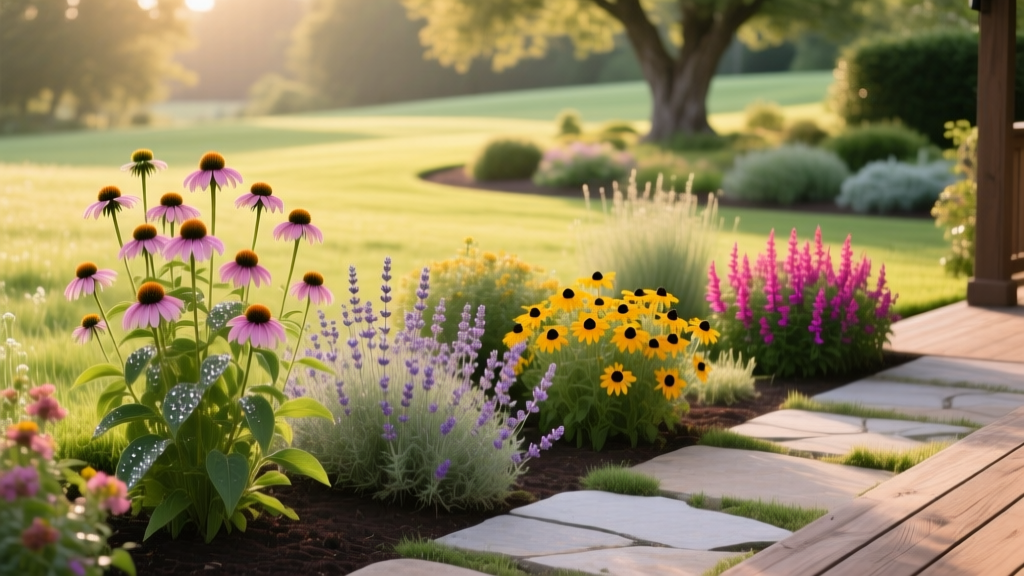
What Flowers Are Good for Landscaping? Best Picks by Zone
The Hardiness Zone Baseline
When homeowners ask what flowers are good for landscaping, the answer relies less on aesthetic preference and more on environmental compatibility. A flower that thrives in the humid heat of a Zone 9 Florida summer will rot in the heavy, wet clay of a Zone 5 Ohio spring. Professional landscape architects do not plant generic species; they select specific cultivars bred for disease resistance, precise mature dimensions, and regional hardiness.
Before selecting any plant material, you must verify your exact microclimate using the updated USDA Plant Hardiness Zone Map. The 2023 update shifted nearly half of the United States into a warmer half-zone, meaning historical planting guides from a decade ago may now recommend flowers that are no longer optimized for your current winter lows.
Microclimate Warning: Your official USDA zone is a baseline. South-facing slopes, areas near brick foundations (which radiate heat), and low-lying frost pockets can shift your effective planting zone by a full number in either direction. Always test a small bed before committing to mass plantings.
Top Perennial Cultivars for Landscape Beds
Perennials form the structural backbone of low-maintenance landscaping. Unlike annuals that require yearly replacement (adding $300–$600 to annual maintenance budgets), established perennials return yearly, expanding their root mass and suppressing weeds.
Cold & Temperate Zones (3–7)
- Purple Coneflower (Echinacea purpurea 'Magnus'): Unlike the standard species, the 'Magnus' cultivar features horizontal, non-drooping petals and superior resistance to aster yellows disease. Requires full sun (minimum 6 hours direct light), well-draining loam, and a soil pH of 6.0–7.0. Space plants 18–24 inches apart. Mature height: 30–36 inches.
- Knock Out Rose (Rosa 'Radrazz'): The original Knock Out remains the gold standard for disease-resistant landscaping shrubs. It is highly resistant to black spot and powdery mildew, eliminating the need for weekly fungicide sprays. Plant in full sun, spacing 3–4 feet apart to ensure air circulation. Prune to 18 inches in early spring before bud break.
- Russian Sage (Perovskia atriplicifolia 'Denim 'n Lace'): A superior alternative to older, flopping varieties. 'Denim 'n Lace' grows only 28–32 inches tall with a rigid, upright habit. Extremely drought-tolerant once established; overwatering is the primary cause of root rot in this species.
Warm & Transitional Zones (7–10)
- Hardy Lantana (Lantana camara 'Miss Huff'): The only lantana cultivar proven to survive Zone 7 winters when heavily mulched. It produces continuous orange, pink, and yellow blooms from June to frost. Highly attractive to pollinators but toxic to livestock and pets if ingested.
- English Lavender (Lavandula angustifolia 'Hidcote'): Demands alkaline soil (pH 6.5–7.5) and sharp drainage. If your landscape features heavy clay, you must amend the planting hole with 30% crushed gravel or plant on a raised berm. Space 12–18 inches apart.
Functional Landscaping: Solving Yard Problems
Flowers should serve a mechanical purpose in your landscape design beyond visual appeal. Selecting the right botanical tool for specific site challenges reduces long-term maintenance and prevents structural damage.
Erosion Control on Slopes
For slopes with a 15% to 30% grade, turfgrass is difficult to mow and prone to runoff. Creeping Phlox (Phlox subulata) forms a dense, evergreen mat that stabilizes topsoil. Plant plugs 12 inches apart in a staggered grid pattern. Expect full ground coverage within two growing seasons. Avoid planting on steep, unmaintained banks where aggressive vines like English Ivy might escape into local woodlands.
Deer-Resistant Perimeter Planting
In suburban areas with high cervid populations, unprotected flower beds will be destroyed. According to the Rutgers University deer-resistant plant database, Yarrow (Achillea millefolium) and Lavender score an 'A' rating (Rarely Damaged). Their fern-like foliage and high essential oil content make them unpalatable. Avoid planting deer-favorites like Hostas, Daylilies, or Tulips in perimeter beds adjacent to forest edges.
Cultivar Comparison Matrix
Use this matrix to cross-reference your site conditions with the appropriate plant material. Data compiled from regional extension trials and the Missouri Botanical Garden Plant Finder.
| Cultivar | USDA Zones | Light Requirement | Mature Size (H x W) | Avg. Retail Cost |
|---|---|---|---|---|
| Echinacea 'Magnus' | 3–8 | Full Sun (6h+) | 36" x 24" | $8–$12 (1 Gal) |
| Rosa 'Radrazz' | 4–9 | Full Sun | 48" x 48" | $18–$25 (2 Gal) |
| Lavandula 'Hidcote' | 5–8 | Full Sun | 24" x 30" | $10–$14 (1 Gal) |
| Phlox subulata | 3–9 | Full/Part Sun | 6" x 24" | $4–$6 (Plug) |
| Achillea 'Strawberry Seduction' | 3–8 | Full Sun | 24" x 24" | $9–$13 (1 Gal) |
| Lantana 'Miss Huff' | 7–11 | Full Sun | 60" x 72" | $15–$20 (3 Gal) |
Soil Preparation and Planting Economics
The most common failure mode in DIY landscaping is planting directly into unamended native soil. Budget for proper soil preparation to ensure a 95%+ survival rate in the first year.
Material Cost Breakdown (Per 100 Sq. Ft. Bed)
- Topsoil/Compost Blend (2 inches deep): 0.6 cubic yards. Cost: $30–$45 bulk, or $120 if buying bagged retail.
- Soil Sulfur (for pH lowering) or Lime (for pH raising): $15–$25 based on soil test results.
- Starter Fertilizer: Use a high-phosphorus 5-10-5 NPK ratio to stimulate root growth rather than foliar growth. Cost: $12 per 4lb box.
- Hardwood Mulch (3 inches deep): 0.9 cubic yards. Cost: $25–$35 bulk. Never use dyed mulches near edible gardens or delicate perennials, as the carbon-heavy dye decomposition can temporarily tie up soil nitrogen.
The Planting Protocol
- Dig a hole exactly as deep as the root ball, but twice as wide.
- Score the sides of the root ball with a utility knife to sever circling roots. Failure to do this will cause the plant to girdle itself and die within 3–5 years.
- Backfill with native soil mixed with 20% compost. Do not create a 'bathtub effect' by filling the hole entirely with potting mix, which traps water in the surrounding native clay.
- Apply 3 inches of mulch, keeping it 2 inches away from the plant's crown to prevent stem rot.
Frequently Asked Questions
How many flowers should I plant together for visual impact?
Landscape designers use the 'rule of odd numbers' and mass planting. Plant in drifts of 3, 5, or 7. A single isolated perennial looks like a mistake; a mass of five Echinacea creates a deliberate architectural focal point. Space them at 75% of their recommended mature width to encourage a cohesive, interlocking canopy that naturally suppresses weeds.
Are there flowers that bloom continuously all summer?
No single perennial blooms continuously from May to September without deadheading. However, Rosa 'Radrazz' (Knock Out) and Lantana camara are repeat-bloomers that require minimal deadheading. For continuous color, practice succession planting: pair early-spring Phlox with mid-summer Echinacea and late-autumn Sedum in the same bed.

