
Landscaping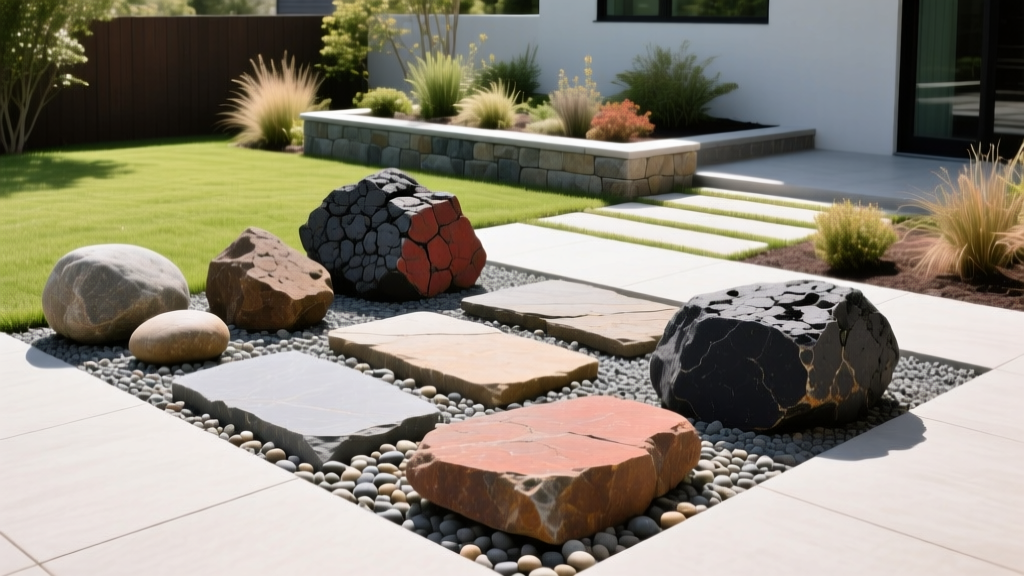
Landscaping Rocks Types: A Beginner's Guide to Costs, Sizes, and Uses
The Core Function of Hardscape Stone
Selecting the right hardscape materials is the most critical decision in any beginner landscape design. Unlike organic mulches that decompose and require annual replenishment, stone offers a permanent, low-maintenance solution for drainage, weed suppression, and visual contrast. However, choosing incorrectly can lead to shifting pathways, poor water percolation, and runaway costs. Understanding the specific physical properties of different landscaping rocks types ensures your yard remains functional and visually striking for decades.
The 5 Essential Landscaping Rocks Types for Beginners
1. Pea Gravel (The Budget-Friendly Mulch Alternative)
Pea gravel consists of small, smooth, rounded stones typically ranging from 1/4 to 3/8 of an inch in diameter. Because the stones are tumbled and smooth, they do not interlock. This makes pea gravel highly permeable for water drainage but unstable for heavy foot traffic or patio furniture. It is best utilized in dog runs, dry creek beds, and as a decorative mulch substitute around drought-tolerant plantings. In 2026, bulk pea gravel remains one of the most economical hardscape options, averaging $30 to $55 per ton depending on regional quarry availability.
2. River Rock (The Drainage & Aesthetic Workhorse)
River rock is larger than pea gravel, typically measuring 1 to 3 inches across. Its smooth, rounded edges are the result of natural water erosion. Landscapers primarily use river rock in drainage swales, French drain covers, and as a heavy-duty border around foundations where splash-back from roof runoff is a concern. Because the stones are large and heavy, they do not wash away easily during heavy storms. However, their rounded shape leaves large gaps between stones, meaning weed seeds can easily blow into the crevices if a proper base layer is not installed.
3. Decomposed Granite (The Patio & Pathway Base)
Decomposed granite (DG) is not a rounded stone; it is a crushed, angular material that includes fine dust and particles up to 1/4 inch. When compacted and slightly moistened, the angular edges lock together to form a hard, semi-solid surface that mimics concrete but remains permeable. DG is the premier choice for beginner-friendly patio bases, walkways, and fire pit pads. For high-traffic areas, professionals recommend mixing DG with a liquid soil stabilizer to prevent the surface from eroding during heavy rain.
4. Lava Rock (The Lightweight, Weed-Suppressing Accent)
Formed from volcanic eruptions, lava rock is highly porous and significantly lighter than granite or river rock. It is available in striking red and charcoal black hues that do not fade under UV exposure. Because of its lightweight nature, lava rock is ideal for rooftop gardens, second-story balcony planters, and areas where soil compaction is a concern. The sharp, porous edges also act as a natural deterrent to slugs and snails. A major drawback is that smaller lava rock sizes can be displaced by high-powered leaf blowers, so a minimum 1-inch grade is recommended.
5. Flagstone (The Premium Stepping & Patio Surface)
Flagstone refers to flat, sedimentary slabs of stone (often sandstone, limestone, or slate) used for stepping stones, patios, and retaining wall caps. Unlike loose gravel, flagstone is a structural element. Beginners should opt for 'select' or 'patio' grade flagstone, which is uniformly 1.5 to 2 inches thick, allowing it to be dry-laid over a compacted sand base without cracking. Thinner veneer grades should only be used for vertical wall facades.
Comparison Matrix: Costs, Sizing, and Traffic Ratings
Use this matrix to quickly identify which material aligns with your project requirements and budget constraints.
| Rock Type | Avg Bulk Cost (Per Ton) | Ideal Depth | Foot Traffic Rating | Best Application |
|---|---|---|---|---|
| Pea Gravel | $30 - $55 | 2.0 inches | Low (Shifts underfoot) | Dog runs, dry creek beds |
| River Rock | $90 - $180 | 3.0 inches | Very Low | Drainage swales, tree rings |
| Decomposed Granite | $45 - $85 | 3.0 inches | High (When compacted) | Walkways, patio bases |
| Lava Rock | $120 - $250 | 2.5 inches | Low | Xeriscaping, accent beds |
| Flagstone | $300 - $600+ | 1.5 - 2.0 inches | Very High | Stepping stones, patios |
Sizing and Depth Calculator: How Much Do You Actually Need?
The most common beginner mistake is under-ordering bulk stone, leading to expensive secondary delivery fees. To calculate the exact cubic yardage required for loose gravel (pea gravel, river rock, lava rock), use the standard volume formula:
The Cubic Yard Formula:
(Length in feet × Width in feet × Depth in feet) ÷ 27 = Cubic Yards
Example: You are building a 10 ft × 12 ft pea gravel patio with a target depth of 2 inches (0.166 feet).
- 10 × 12 = 120 square feet.
- 120 × 0.166 = 19.92 cubic feet.
- 19.92 ÷ 27 = 0.73 cubic yards.
- Pro Tip: Always add a 10% compaction and waste buffer. Order 0.8 cubic yards.
The 'Weed Barrier' Mistake: Plastic vs. Geotextile
Placing stone directly on bare soil guarantees weed infiltration and gravel migration into the mud. However, using the wrong barrier is equally destructive. Many beginners purchase cheap, solid black plastic sheeting from hardware stores. According to UMass Extension, solid plastic blocks water and air percolation, effectively suffocating the soil microbiome and causing water to pool on the surface, which washes away your expensive gravel.
Instead, invest in woven geotextile landscape fabric (typically 3 to 5 oz per square yard). Woven fabric allows water to drain into the soil while providing the tensile strength necessary to support the weight of heavy river rock and foot traffic. Secure the fabric every 3 feet using 6-inch galvanized steel sod staples, overlapping seams by at least 6 inches to prevent gravel from slipping through the gaps.
Edging and Containment Strategies
Loose landscaping rocks types like pea gravel and DG will naturally migrate into adjacent lawn areas if not properly contained. For a permanent, invisible edge, use 1/8-inch thick steel landscape edging. Steel edging can be bent to follow curves and is driven into the ground with a rubber mallet, leaving only a 1/2-inch lip above the soil line. This lip holds the gravel in place while allowing lawn mowers to glide over it without scalping the grass. Avoid flexible plastic coiled edging; it degrades under UV light within three to five years and frequently heaves out of the ground during freeze-thaw cycles.
Sourcing Economics: Bulk Delivery vs. Bagged Pallets
Understanding the break-even point between bagged and bulk stone will save you hundreds of dollars. Bagged rocks (usually sold in 0.5 cubic foot volumes at big-box stores) cost roughly $4 to $7 per bag. Bulk stone, delivered via a dump truck from a local landscape supply yard, costs significantly less per volume but incurs a flat delivery fee (typically $75 to $150 in 2026).
The Rule of Thumb: If your project requires more than 0.5 cubic yards (roughly 27 bags), bulk delivery is the superior economic choice. Furthermore, bulk yards allow you to inspect the exact stone color and gradation before purchasing, whereas bagged stones often contain excessive dust and broken fragments at the bottom of the plastic packaging.
Frequently Asked Questions
Will landscaping rocks alter my soil pH?
Yes, certain rocks can. Limestone and marble chips are highly alkaline and will gradually raise the pH of the underlying soil as they weather. This can cause iron chlorosis (yellowing leaves) in acid-loving plants like azaleas and hydrangeas. For acidic plant beds, stick to inert stones like granite, basalt, or washed river rock, as recommended by Utah State University Extension.
How do I clean leaves out of a gravel bed?
Do not use a standard leaf blower on high power, as this will scatter pea gravel and lava rock. Instead, use a leaf blower with a variable-speed trigger on the lowest setting, holding the nozzle at a 45-degree angle. For heavy debris, a specialized gravel rake with wide, flexible tines allows you to pull leaves to the surface without dragging the stones out of the bed.
Can I lay new gravel over old, muddy gravel?
No. If an existing gravel bed has become muddy, it means the stone has worked its way into the soil and the drainage profile has failed. You must rake out the contaminated top layer, re-grade the soil, install fresh woven geotextile fabric, and then apply the new stone. Laying fresh gravel over mud will only result in the new stone sinking within a single season.

