
Landscaping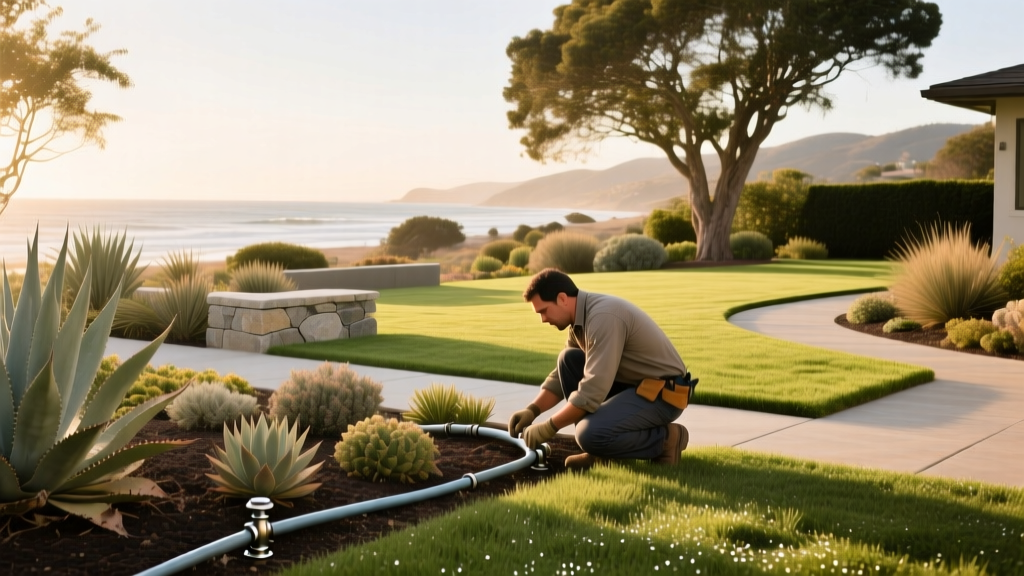
Leo Esparza Landscape Santa Maria CA: Fixing Coastal Yard Issues
The Central Coast Microclimate: Why Generic Landscaping Fails
Santa Maria sits in a unique agricultural and coastal microclimate characterized by morning marine layer fog, afternoon winds, and heavy adobe clay soils. Homeowners who apply generic Southern California or inland landscaping templates quickly face failing hardscapes, chlorotic plants, and irrigation runoff. Evaluating specialized local contractors—such as the benchmark set by Leo Esparza Landscape in Santa Maria, CA—reveals that successful Central Coast yards require hyper-local diagnostic skills and specific material selections.
This guide breaks down the three most severe landscaping failures in the Santa Maria Valley, providing exact diagnostic steps, material specifications, and remediation costs to restore your property's functionality and curb appeal.
Problem 1: Adobe Clay Soil Compaction and Alkaline Chlorosis
The predominant soil type in the Santa Maria Valley is Chualar clay loam and heavy Adobe clay. These soils possess high cation exchange capacity but suffer from severe compaction, poor percolation, and an alkaline pH (typically 7.5 to 8.2). When homeowners plant without amending, or overwater to compensate for poor root uptake, the result is structural soil failure and nutrient lockout.
Diagnosing Clay Compaction and Nutrient Lockout
- The Percolation Test: Dig a 12-inch deep, 12-inch wide hole. Fill it with water and let it drain. Refill it and measure the drop. In Santa Maria clay, a drop rate of less than 1 inch per hour indicates severe compaction requiring mechanical intervention.
- Iron Chlorosis Identification: Look for interveinal chlorosis (yellowing leaves with green veins) on new growth of shrubs like Indian Hawthorn or Photinia. In high-pH clay, standard iron fertilizers (Fe-EDTA) instantly bind to the soil and become useless.
The Local Solution Framework
Expert local landscapers correct this through a two-pronged approach: physical soil fracturing and chemical pH management.
- Deep Tine Aeration: Use a hydraulic deep-tine aerator to fracture clay down to 24 inches, avoiding the shallow 4-inch core aeration meant for turfgrass.
- Gypsum Application: Apply calcium sulfate (gypsum) at a rate of 50 lbs per 1,000 square feet. The calcium displaces sodium on the clay colloids, flocculating the soil particles to create pore space without altering the pH.
- Chelated Iron Selection: To treat chlorosis in alkaline soils, you must use Fe-EDDHA chelated iron (such as Sequestrene 138). Unlike EDTA, EDDHA remains stable and available to plant roots at a pH up to 9.0.
Problem 2: Coastal Wind Scour and Hardscape Corrosion
The afternoon westerly winds funneling through the Santa Maria Valley carry abrasive dust and, during winter storms, trace coastal salt spray. This environment rapidly degrades standard landscaping materials and desiccates broadleaf evergreens.
Material Failure Diagnosis
If your powder-coated aluminum light fixtures are showing white oxidation (aluminum oxide) within two years, or your standard 304-grade stainless steel pergola hardware is exhibiting surface rust, your materials are not rated for the Central Coast wind corridor. Similarly, if your privacy hedges show severe leaf scorch on the windward side, you have planted wind-susceptible species.
Engineering Wind-Resistant Landscapes
To combat wind scour, structural and botanical upgrades must be implemented simultaneously:
- Hardware Upgrades: Specify 316-grade marine stainless steel for all structural fasteners, pergola brackets, and lighting fixtures. The addition of molybdenum in 316 steel provides critical resistance to chloride pitting from coastal fog.
- Permeable Windbreaks: Solid wood fences create destructive wind turbulence (eddies) on the leeward side. Instead, plant semi-permeable windbreaks that filter 50% of the wind. The UC Davis Arboretum All-Stars database recommends Ceanothus 'Concha' (California Lilac) and Arctostaphylos 'Howard McMinn' (Manzanita) as deep-rooted, wind-tolerant native screens that thrive in Santa Maria's Zone 9b/10a climate.
Santa Maria Landscape Diagnostic & Cost Matrix
| Symptom | Root Cause | Professional Solution | Estimated 2026 Cost |
|---|---|---|---|
| Water pooling near foundation | Adobe clay impermeability | French drain with gravel sump & pop-up emitters | $2,500 - $4,500 |
| Pergola hardware rusting | 304 steel reacting to coastal fog | Retrofit with 316 marine-grade carriage bolts | $300 - $600 |
| High water bill / runoff | Spray heads on compacted clay | Convert to Netafim drip & install Rachio 3 controller | $1,800 - $3,200 |
| Yellowing shrub leaves | High pH iron lockout | Soil drench with Fe-EDDHA chelated iron | $150 - $250 |
Problem 3: Navigating MWELO and Irrigation Inefficiencies
As of 2026, Santa Barbara County strictly enforces the Model Water Efficient Landscape Ordinance (MWELO). Traditional spray irrigation on Santa Maria's sloping clay properties results in immediate runoff, violating local water codes and wasting thousands of gallons annually.
Diagnosing Irrigation Failures
Run a 'catch cup' test. Place flat-bottomed containers across your hydrozones and run the system for 10 minutes. Measure the water depth. If your spray heads deliver 1.5 inches per hour, but your clay soil's infiltration rate is only 0.2 inches per hour, you are generating 1.3 inches of runoff per cycle.
The Smart Conversion Protocol
Local landscape specialists solve this by decoupling precipitation rates from soil infiltration rates:
- Nozzle Swaps: Replace standard spray nozzles with Hunter MP Rotators. These multi-stream rotary nozzles reduce the precipitation rate to 0.4 inches per hour, allowing heavy clay time to absorb the moisture without pooling.
- Weather-Based Controllers: Upgrade to an EPA WaterSense certified smart controller like the Rachio 3 or Weathermatic SmartLink. These units pull local Santa Maria evapotranspiration (ET) data via Wi-Fi to automatically adjust runtimes based on the morning marine layer and afternoon wind spikes.
- Flow Sensors: Install a master flow sensor on the mainline. If a drip line is severed by a gopher—a common pest in the Central Coast agricultural belt—the controller detects the anomalous flow spike and shuts off the zone, preventing catastrophic water loss.
WARNING: The Unlicensed Contractor Trap
When searching for local help, beware of unlicensed handymen offering cheap drainage or irrigation fixes. Under California law, any landscaping project exceeding $500 in total labor and materials requires a C-27 Landscaping Contractor License issued by the CSLB. Unlicensed workers frequently use substandard PVC piping and bypass required backflow preventers, risking contamination of your home's potable water supply.
Vetting a Santa Maria Landscape Professional
Finding a contractor who matches the localized expertise of established local teams requires rigorous vetting. Use this checklist before signing a contract:
- Verify the C-27 License: Check their status on the California CSLB website. Ensure they carry active Workers' Compensation and $1M+ General Liability insurance.
- Request a Soil-First Portfolio: Ask to see examples of how they handle drainage. A competent local landscaper will show photos of sub-surface gravel sumps, permeable paver bases, and amended planting beds, not just aesthetic plant arrangements.
- Test Local Botanical Knowledge: Ask them how they handle alkaline soil chlorosis. If they recommend standard iron spikes or sulfur (which takes years to react in heavy clay), look elsewhere. They must understand chelated iron (Fe-EDDHA) and local native alternatives recommended by the UC Master Gardeners of Santa Barbara County.
Frequently Asked Questions
How long does it take to amend Santa Maria adobe clay?
Physical fracturing via deep-tine aeration and gypsum application yields visible drainage improvements within 3 to 6 months. However, building a healthy microbial web in heavy clay through the continuous addition of arborist wood chip mulch takes 18 to 24 months to transform the top 6 inches of soil structure.
Can I plant a traditional turf lawn in Santa Maria?
While technically possible, it is highly discouraged. Turf requires massive water inputs to survive the afternoon wind scour, and clay soils promote shallow rooting and fungal diseases like brown patch. If you desire a walkable surface, specify UC Verde Buffalograss or a high-quality synthetic turf system with a permeable crushed granite base.
What is the best time of year to install hardscapes in Santa Maria?
The optimal window for pouring concrete and setting retaining walls is late August through November. The morning fog has typically dissipated for the season, reducing the risk of moisture-related curing issues, and the ground is dry enough to support heavy machinery without compacting the surrounding soil.

