
Landscaping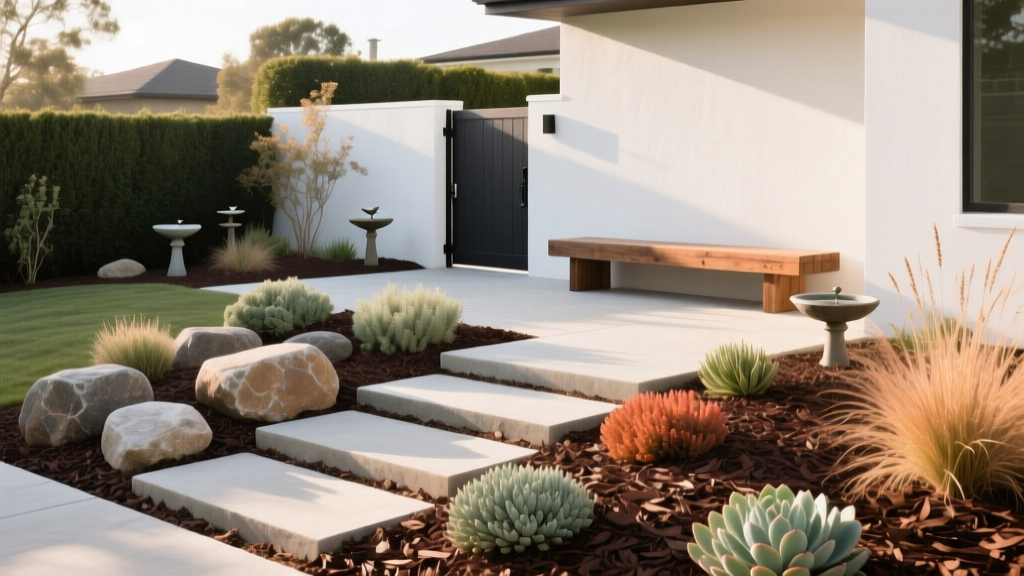
Low Maintenance Front Yard Landscaping Ideas With Rocks and Mulch
The Hidden Foundation: Soil Science for Hardscape and Organic Beds
Most low maintenance front yard landscaping ideas with rocks and mulch fail within three years because homeowners ignore the soil profile beneath the surface. Combining inorganic aggregates (rocks) with organic amendments (mulch) creates distinct micro-environments that require specific soil preparation. If you place heavy river rock over compacted clay without addressing drainage, you will create an anaerobic basin that kills adjacent turf and rots the root crowns of ornamental plants.
Before selecting materials, test your soil percolation rate. Dig a 12-inch deep hole and fill it with water. If it drains slower than 1 inch per hour, your soil is heavily compacted or clay-dominant. According to Texas A&M AgriLife Extension, amending the top 6 inches of native soil with expanded shale or pumice at a 30% volume ratio permanently improves drainage and prevents the subsidence that causes rock beds to sink and pool water.
Expert Tip: Never mix organic compost directly beneath a permanent rock bed. As compost decomposes, it loses volume, causing the rocks above to settle unevenly and creating depressions where weed seeds will collect and germinate.
3 High-Impact Rock and Mulch Front Yard Designs
When executing low maintenance front yard landscaping ideas with rocks and mulch, the goal is to establish clear visual boundaries that prevent material migration while minimizing the need for seasonal edging or blowing.
1. The Permeable Driveway Ribbon with Cedar Mulch Banks
Replace traditional concrete walkways or driveway extensions with a 4-inch layer of stabilized decomposed granite (DG). Stabilized DG contains a binding agent that locks the particles together when compacted, creating a surface as firm as concrete but permeable. Flank the DG ribbon with 3-inch deep cedar mulch beds. Cedar contains natural thujaplicins, which act as a fungicide and insect repellent, extending the mulch's lifespan to 3–4 years before requiring a top-dress. Use 6-inch steel landscape edging (minimum 14-gauge) to separate the DG from the mulch, preventing the fine granite dust from migrating into the organic beds and altering the soil pH.
2. The Dry Creek Swale for Drainage Management
For front yards with a natural slope or poor drainage, a dry creek bed is a functional masterpiece. Line the swale with a 3 oz/sq yd woven geotextile fabric, then install a 2-inch base layer of 1.5-inch crushed angular gravel for drainage. Top this with smooth, rounded river rocks (3 to 8 inches in diameter). The banks of the swale should be terraced using large basalt boulders and filled with dark hardwood mulch. The contrast between the smooth, light river rock and the dark, fibrous hardwood mulch creates a striking visual depth that requires zero weekly maintenance.
3. Geometric Basalt Columns with Pine Bark Islands
Modern architecture demands clean lines. Install vertical, hexagonal basalt columns (typically 12 to 36 inches tall) as focal points. Surround the base of the columns with a 3-inch layer of mini pine bark nuggets. Pine bark is highly acidic and decomposes very slowly, making it ideal for front yard beds featuring acid-loving foundation shrubs like azaleas or camellias. The geometric rigidity of the stone contrasts beautifully with the organic texture of the bark.
Material Cost, Longevity, and Soil Impact Matrix
Selecting the right materials dictates your long-term maintenance schedule and soil health. Below is a comparative analysis of the most effective rocks and mulches for front yard applications.
| Material Type | Avg. Cost (per ton/cu yd) | Expected Lifespan | Soil & Maintenance Impact |
|---|---|---|---|
| 3/4" Minus Crushed Basalt | $65 - $95 / ton | Permanent (Lifetime) | Locks together tightly; deters weed growth; does not alter soil pH. |
| Smooth River Rock (3-5") | $80 - $120 / ton | Permanent (Lifetime) | Rolls and migrates on slopes; requires heavy edging; retains heat. |
| Stabilized Decomposed Granite | $75 - $110 / ton | 10 - 15 Years | Highly permeable; requires re-compaction every 5 years. |
| Cedar Mulch (Shredded) | $40 - $55 / cu yd | 3 - 4 Years | Resists decay and insects; adds minimal organic matter to soil. |
| Hardwood Mulch (Dyed Black) | $30 - $45 / cu yd | 1 - 2 Years | Decomposes rapidly; can temporarily tie up soil nitrogen during breakdown. |
| Pine Bark Nuggets (Mini) | $45 - $60 / cu yd | 4 - 6 Years | Highly resistant to wind/water washout; lowers soil pH slightly. |
The Weed Barrier Debate: Geotextile vs. Sheet Mulching
The most common failure point in low maintenance front yard landscaping ideas with rocks and mulch is the improper use of weed barriers. Using the wrong barrier will suffocate your soil, kill beneficial mycorrhizal fungi, and ultimately create a muddy, weed-infested mess.
Under Rock Beds: Woven Geotextile Fabric
For inorganic rock beds, always use a woven polypropylene geotextile fabric (minimum 3 oz per square yard). Woven fabrics allow water and gas exchange while providing the tensile strength necessary to support heavy stones and prevent them from sinking into the native soil. Never use solid black plastic sheeting under rocks; it will trap water, create a perched water table, and tear within two seasons.
Under Mulch Beds: The Cardboard Smother Method
Never place synthetic weed fabric beneath organic mulch. Penn State Extension notes that synthetic fabrics block the natural decomposition cycle, preventing the mulch from integrating into the soil and leading to hydrophobic (water-repelling) soil conditions. Instead, use the sheet mulching technique: lay down overlapping layers of uncoated, plain brown cardboard directly over the soil, wet it thoroughly, and apply 3 inches of mulch on top. The cardboard suppresses weeds for 6 to 8 months while it biodegrades, feeding the soil microbiome without blocking long-term gas exchange.
Warning: Avoid 'volcano mulching' around the base of street trees or foundation shrubs. Piling mulch or rock against the root flare traps moisture against the trunk, inviting Phytophthora root rot and providing cover for boring insects. Maintain a strict 3-inch clearance around all woody trunks.
Step-by-Step Installation for Maximum Drainage and Longevity
Execute these steps to ensure your front yard landscape survives heavy rainfall and remains virtually maintenance-free.
- Grade the Subsoil: Excavate the bed areas to a depth of 4 to 6 inches. Grade the native soil to a 2% slope (a 1/4-inch drop per foot) away from your home's foundation to ensure positive drainage.
- Install Hardscape Edging: Drive 14-gauge steel or heavy-duty composite edging into the perimeter. Anchor with steel stakes every 3 feet. This physical barrier is what actually keeps mulch and rock separated and contained, not the weed fabric.
- Deploy the Correct Barrier: Roll out woven geotextile in the rock zones, overlapping seams by 6 inches and securing with landscape staples. In the mulch zones, lay down wet cardboard.
- Apply the Base Layer (Rock Zones Only): Spread a 2-inch layer of coarse, angular crushed stone (like 5/8-inch gravel) over the fabric. This acts as a French drain, moving water laterally away from the bed.
- Apply the Finish Layer: Add your decorative river rock or basalt to a total depth of 3 inches. In the mulch zones, apply 3 inches of cedar or pine bark. Do not exceed 3 inches of mulch, as deeper layers restrict oxygen to the rhizosphere.
By respecting the soil science beneath the surface and selecting materials based on their physical properties rather than just their aesthetic, you can achieve a pristine, low maintenance front yard that withstands the elements and eliminates weekend weeding chores.

