
Landscaping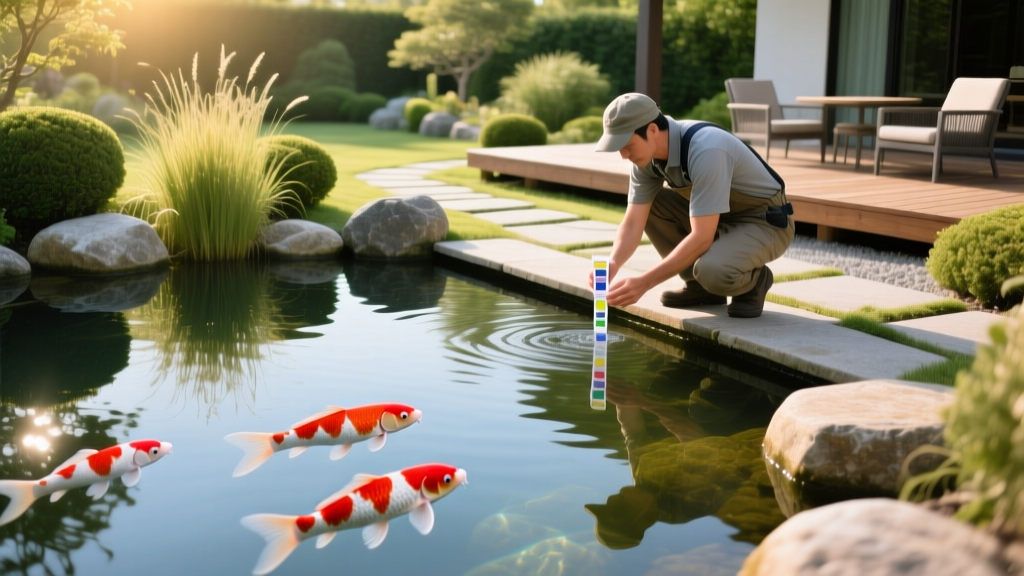
How to Maintain Water Quality in Koi Ponds: Problem Diagnosis
The Closed-Loop Reality of Koi Pond Ecosystems
A koi pond is not a natural body of water; it is a highly concentrated, closed-loop aquatic system. With stocking densities often exceeding 1,000 gallons per mature fish, the biological load is immense. When learning how to maintain water quality in koi ponds, you must shift from a reactive mindset to a diagnostic one. Water quality issues rarely appear overnight—they are the visible symptoms of underlying biological or mechanical failures in the nitrogen cycle, filtration capacity, or alkalinity buffering.
Before troubleshooting specific visual symptoms, you must establish a baseline using liquid reagent test kits (such as the API Freshwater Master Test Kit or Tetra Pond Test Kit). Test strips lack the precision required for sensitive parameters like ammonia and carbonate hardness.
Target Water Parameters for Mature Koi
| Parameter | Ideal Range | Lethal Threshold | Primary Function |
|---|---|---|---|
| pH | 7.5 - 8.5 | < 6.5 or > 9.0 | Enzyme regulation, osmoregulation |
| KH (Carbonate Hardness) | 120 - 180 ppm | < 50 ppm | Buffers pH, fuels nitrifying bacteria |
| Ammonia (NH3/NH4) | 0.0 ppm | > 0.25 ppm | Primary fish waste toxin |
| Nitrite (NO2) | 0.0 ppm | > 0.50 ppm | Secondary nitrogen cycle toxin |
| Nitrate (NO3) | 20 - 40 ppm | > 80 ppm | End product of nitrification, algae fuel |
| Dissolved Oxygen (DO) | > 7.0 mg/L | < 4.0 mg/L | Fish respiration, aerobic bacterial survival |
Visual Symptom Diagnostic Tree
When water quality degrades, the pond presents specific visual and behavioral cues. Use this diagnostic framework to identify the root cause and apply the correct mechanical or biological intervention.
Symptom 1: Opaque 'Pea Soup' Green Water
Diagnosis: Suspended single-celled phytoplankton (algae) bloom. This occurs when nitrate levels exceed 40 ppm combined with high UV exposure and inadequate mechanical filtration.
Solution: Install or upgrade an ultraviolet (UV) clarifier. UV light ruptures the algae cell walls, causing them to clump and be caught by the mechanical filter. Sizing Rule: For green water eradication, size the UV unit at 8 to 10 watts per 1,000 gallons of pond volume. For a 5,000-gallon pond heavily exposed to direct sunlight, a 54W unit like the Oase Vitronic 54W (approx. $240) is required. Ensure flow rates do not exceed the manufacturer's maximum gallons-per-hour (GPH) rating, or the water will pass through the UV chamber too quickly for effective cell rupture.
Symptom 2: Milky or Cloudy White Water
Diagnosis: Heterotrophic bacterial bloom. Unlike nitrifying bacteria (which attach to surfaces), heterotrophic bacteria reproduce rapidly in the water column to consume dissolved organic compounds (DOCs) from overfeeding or decaying plant matter.
Solution: Immediately reduce feeding by 75%. Increase surface agitation with a venturi aerator or air stones to compensate for the oxygen these bacteria consume. Do not use algaecides or harsh chemicals. Apply a flocculant such as API Pond Accu-Clear to bind the dead bacterial cells into larger particles that your filter sponges can trap. Clean your mechanical filter mats daily until the water clears.
Symptom 3: Thick Surface Foam and Scum
Diagnosis: High concentration of dissolved organic carbons (proteins and lipids) from fish slime coats, uneaten food, and biofilm die-off. Surface tension traps these compounds, creating persistent foam, especially near waterfall returns.
Solution: While liquid defoamers provide a temporary cosmetic fix, the permanent solution is mechanical extraction. Install a pond-specific protein skimmer or increase the frequency of your mechanical sieve filter backwashing. Adding a specialized DOC-removing filter media, such as granular ferric oxide (GFO) or high-grade activated carbon, in a mesh bag within the bio-chamber will adsorb these organics.
The Spring and Autumn 'Cycle Crash' Phenomenon
The most dangerous periods for koi pond water quality occur during transitional seasons when water temperatures fluctuate between 50°F and 60°F (10°C - 15°C). During these windows, the pond experiences a severe biological mismatch.
As water warms in spring, koi become active, their metabolism accelerates, and they begin producing ammonia. However, nitrifying bacteria (Nitrosomonas and Nitrobacter) remain largely dormant at temperatures below 60°F. The fish are producing waste, but the biofilter is not yet online to process it, resulting in lethal ammonia and nitrite spikes. According to aquatic research from Penn State Extension, temperature-driven biological lag is the leading cause of spring fish mortality in outdoor ponds.
Protocol for Transitional Seasons
- Below 50°F: Zero feeding. Fish metabolism is too slow to digest food; it will rot in their gut and foul the water.
- 50°F to 60°F: Feed only highly digestible wheatgerm-based diets once every other day. Monitor ammonia daily.
- Above 60°F: Gradually introduce high-protein color-enhancing foods as the biofilter bacteria reach full metabolic activity.
To protect fish during a spring nitrite spike, add non-iodized pond salt (sodium chloride) to achieve a 0.15% salinity concentration. The chloride ions compete with nitrite ions at the fish's gill receptors, preventing 'brown blood disease' (methemoglobinemia) while the biofilter catches up.
Alkalinity Depletion and pH Crashes
Nitrification is an acid-producing process. For every 1 gram of ammonia converted to nitrate, the bacteria consume approximately 7.14 grams of alkalinity (carbonates). If your pond's KH (Carbonate Hardness) drops below 50 ppm, the nitrifying bacteria will stall, and the pond will suffer a sudden pH crash, often dropping below 6.0 overnight.
Maintaining KH is non-negotiable for stable water quality. Test KH weekly. If levels drop below 120 ppm, buffer the system using sodium bicarbonate (baking soda).
Buffering Calculation and Application
Dosing sodium bicarbonate must be done gradually to avoid osmotic shock. The standard dosage is 1 teaspoon (approx. 4.5 grams) per 50 gallons of pond water to raise KH by roughly 10 ppm. Dissolve the powder in a bucket of pond water and distribute it evenly around the perimeter. Never dump dry powder directly into the skimmer or biofilter, as the localized high pH can kill the bacterial colonies it is meant to feed.
For long-term, hands-off buffering, place mesh bags of crushed oyster shells or agricultural limestone inside the biofilter chamber. The mild acidity of the nitrification process will slowly dissolve the calcium carbonate, automatically replenishing the KH as it is consumed.
Biological Filtration Upgrades: Moving Bed Biofilm Reactors
If your pond chronically struggles with ammonia despite having a large filter, the issue is likely insufficient surface area for bacterial colonization. Traditional static filter mats clog and create anaerobic dead zones.
Upgrading to a Moving Bed Biofilm Reactor (MBBR) using Kaldnes K1 Micro media provides a self-cleaning, highly oxygenated environment for nitrifying bacteria. K1 Micro offers approximately 950 square meters of protected surface area per cubic meter of media. The constant tumbling action caused by heavy aeration grids at the bottom of the filter chamber prevents detritus buildup and ensures every square inch of media is exposed to oxygen-rich water. When sizing an MBBR chamber, allocate 1 cubic foot of K1 Micro media per 100 gallons of pond volume for heavily stocked koi systems.
Maintaining pristine koi pond water is an exercise in managing biology, not just chemistry. By securing your alkalinity buffer, sizing your UV and mechanical filtration to the actual biological load, and respecting the temperature limitations of the nitrogen cycle, you eliminate the root causes of water quality failure rather than endlessly treating the symptoms.
For deeper insights into dissolved oxygen dynamics and how atmospheric pressure affects gas exchange in closed water systems, refer to the hydrological data provided by the United States Geological Survey (USGS). Consistent testing, precise dosing, and robust mechanical pre-filtration remain the undisputed pillars of advanced koi husbandry.

