
Landscaping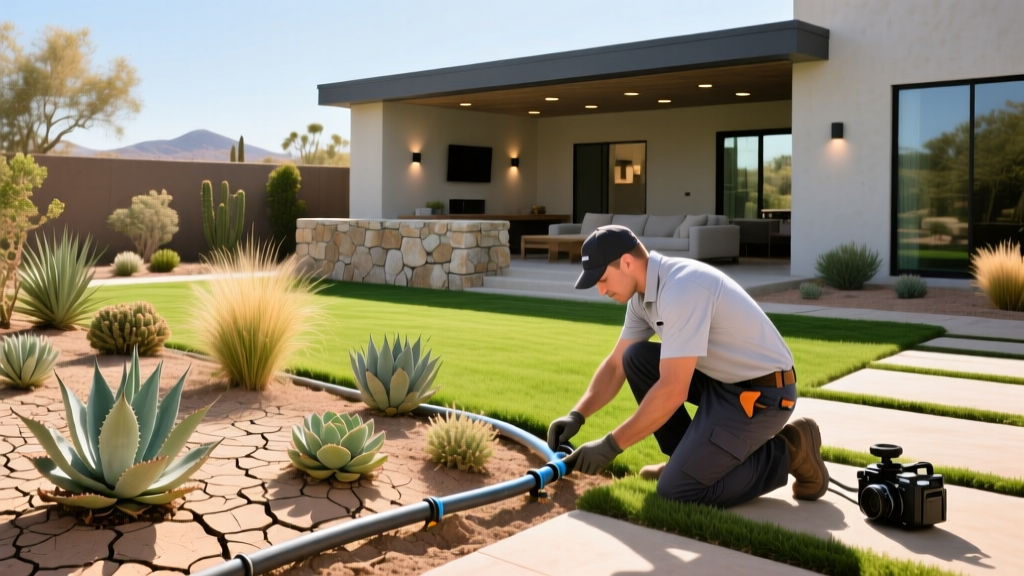
NV Landscape Troubleshooting: Fix Desert Yard Problems
The Unique Challenges of an NV Landscape
Designing and maintaining an NV landscape requires abandoning traditional horticultural practices. Nevada's environment is defined by extreme temperature fluctuations, less than 10 inches of annual rainfall in the southern regions, and highly alkaline soils with a pH often exceeding 8.0. When homeowners attempt to apply temperate-climate landscaping logic to the Mojave or Great Basin deserts, the result is predictable: skyrocketing water bills, chronic plant decline, and structural hardscape failures.
This diagnostic guide addresses the three most frequent failure modes in Nevada residential landscapes—nutrient lockout from caliche soils, evaporation-driven irrigation inefficiency, and thermal mass root cooking—and provides exact, field-tested solutions for each.
SNWA Watering Compliance Alert: The Southern Nevada Water Authority enforces strict seasonal watering schedules. Landscape irrigation is prohibited between 11:00 AM and 7:00 PM from May through September. Violations result in escalating fines, making automated, early-morning drip systems a legal and practical necessity.
Diagnosing Chlorosis and Nutrient Lockout in Alkaline Soils
The most common misdiagnosis in an NV landscape is attributing yellowing leaves to underwatering. In reality, the culprit is usually iron chlorosis caused by caliche—a hardened layer of calcium carbonate that binds essential micronutrients, rendering them unavailable to plant roots.
The Caliche Barrier and pH Imbalance
When soil pH rises above 7.5, iron becomes insoluble. Standard hardware store iron supplements (Fe-EDTA) are completely ineffective in Nevada soils because the EDTA chelate breaks down in high-pH environments. To solve this, you must use a specific molecular chelate designed for alkaline conditions.
| Symptom | Primary Cause | Actionable Solution |
|---|---|---|
| Interveinal chlorosis (yellow leaves, green veins) on new growth | Iron deficiency due to high pH (>7.5) | Apply Fe-EDDHA (6% chelated iron) as a soil drench at 1 oz per 5 gallons of water. |
| Stunted growth, pale overall foliage, poor flowering | Nitrogen tie-up by high carbon mulch or caliche | Side-dress with blood meal (12-0-0) or apply a urea-based liquid fertilizer directly to the root zone. |
| Leaf tip burn, brown crispy margins | Salt accumulation from hard municipal water | Leach salts by applying 2 inches of water slowly over 4 hours once a month; apply soil sulfur to lower pH. |
For long-term soil structure improvement, physical disruption is required. When planting trees like the Desert Willow (Chilopsis linearis) or Palo Verde (Parkinsonia aculeata), dig a hole twice as wide as the root ball but no deeper. Backfill with a mix of 70% native soil and 30% expanded shale or pumice to improve drainage without creating a 'bathtub effect' that traps water against the taproot.
Solving Irrigation Failures and Evaporation Loss
Spray heads and rotary sprinklers lose up to 50% of their water volume to wind drift and evaporation in the Nevada desert. Converting to subsurface or targeted drip irrigation is the single highest-ROI upgrade for an NV landscape.
Step-by-Step Drip Conversion Protocol
- Cap the Spray Heads: Remove existing pop-up spray nozzles and install 1/2-inch barbed drip conversion adapters at the base of the riser.
- Size the Emitters Correctly: Use 2.0 Gallons Per Hour (GPH) pressure-compensating emitters for shrubs and 4.0 GPH for trees. Avoid adjustable bubblers, which frequently clog with desert dust.
- Implement the 'Cycle and Soak' Method: Nevada soils have a slow infiltration rate (often less than 0.5 inches per hour). Running a single 30-minute cycle causes runoff. Instead, program your controller for three 10-minute cycles, spaced 60 minutes apart, allowing water to penetrate deeply past the caliche layer.
- Expand the Emitter Ring Annually: As trees mature, their feeder roots extend to the drip line. Add emitters in a concentric ring 18 inches from the trunk, expanding outward every two years.
According to the University of Nevada, Reno Extension, deep, infrequent watering encourages deep root growth, which is critical for drought survival. Watering established desert trees deeply once every 14 to 21 days during the summer is vastly superior to shallow watering every three days.
If you are currently maintaining non-functional turf, the SNWA Water Smart Rebate program offers financial incentives for turf removal, paying up to $3 per square foot for replacing grass with water-efficient xeriscaping. This effectively subsidizes the entire cost of a professional drip irrigation conversion.
Hardscape Heat Island Effect and Plant Scorch
A frequently overlooked problem in NV landscape design is thermal mass. Dark colored retaining walls, concrete patios, and artificial turf absorb solar radiation all day and radiate it back at night, raising the ambient microclimate temperature by 15°F to 20°F. This 'root zone cooking' kills plants placed within 3 feet of south-facing hardscapes.
Comparing Mulch and Groundcover Thermal Properties
Selecting the right groundcover is critical for moderating soil temperature. Below is a diagnostic matrix for choosing materials based on thermal reflectivity and moisture retention.
| Material | Thermal Impact | Moisture Retention | Best Use Case |
|---|---|---|---|
| Decomposed Granite (DG) | High heat absorption; can exceed 130°F at surface. | Low; compacts and sheds water when dry. | Pathways, driveways, and areas away from delicate root zones. |
| 3/4-inch Crushed Lava Rock | Moderate; porous structure dissipates some heat. | Very low; excellent drainage, prevents rot. | Succulent beds, Agave, and cactus installations. |
| Shredded Organic Wood Mulch | Low; insulates soil, keeping roots 10-15°F cooler. | High; reduces evaporation by up to 70%. | Tree rings, shade gardens, and non-succulent shrub beds. |
| Light-colored River Rock | Low to Moderate; high albedo reflects UV rays. | Low; allows rapid water penetration. | Dry creek beds, rain gardens, and south-facing foundation plantings. |
For south-facing walls, install a vertical trellis 6 inches away from the stucco or masonry. Planting a deciduous vine like the Baja Passion Vine (Passiflora foetida) provides summer shade that blocks thermal absorption, while dropping its leaves in winter to allow passive solar heating of the home.
Long-Term Maintenance Schedule for Desert Yards
An NV landscape is not a 'plant it and forget it' environment. It requires a specific, seasonally adjusted maintenance calendar to survive the extremes of the USDA Plant Hardiness Zones 8b through 9b typical of the state's lower elevations.
- February (Pruning & Pre-emergent): Prune frost-damaged tips from Lantana and Bougainvillea only after the last freeze date (usually mid-March in Las Vegas). Apply a pre-emergent herbicide like Prodiamine to prevent summer weeds like puncturevine.
- April (Fertilization & Mulch): Apply a slow-release, sulfur-coated urea fertilizer. Top-dress organic mulch beds with 2 inches of fresh material before the summer heat begins to bake the soil.
- July (System Audit): Conduct a 'wet check' on all drip zones. Run each zone manually for 2 minutes and visually inspect every emitter. Replace any clogged heads and flush the lateral lines by opening the end caps to clear sediment buildup.
- November (Winterization): Drain and blow out any exposed PVC irrigation lines that sit above the frost line to prevent catastrophic pipe splitting during January freezes. Wrap the trunks of young, thin-barked trees with commercial tree wrap to prevent sunscald and borer insect entry.
By addressing the specific chemical and physical barriers of the desert environment, homeowners can transition from fighting the landscape to working within its natural parameters, resulting in a resilient, low-input outdoor space.

