
Landscaping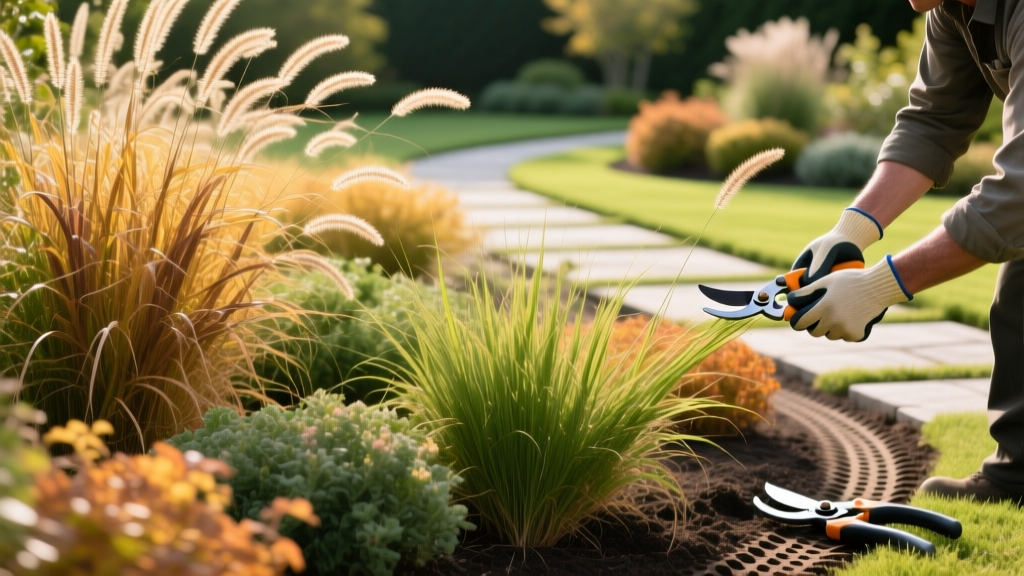
Maintaining Ornamental Grass in Landscape: Step-by-Step Care
The Hidden Maintenance Demands of Landscape Grasses
Integrating ornamental grass in landscape designs provides kinetic movement, drought tolerance, and vital winter texture. However, a common failure mode among homeowners is treating these specimens like standard turfgrass. Ornamental grasses require highly specific, cyclical maintenance routines. Improper cutting heights, excessive nitrogen application, and delayed division will rapidly lead to center die-out, flopping, and fungal pathogens. This guide outlines the exact step-by-step procedures for sustaining both warm-season and cool-season grasses in residential and commercial landscape beds.
Phase 1: The Late Winter Cutback Protocol
The most critical maintenance step for ornamental grass in landscape beds is the annual cutback. Unlike turfgrass, ornamental grasses should never be cut in the fall. The dormant foliage protects the crown from freeze-thaw cycles and provides overwintering habitat for native pollinators. According to the University of Minnesota Extension, cutting back should only occur in late winter or early spring, just before new green shoots emerge from the crown.
Tool Selection and Cutting Heights
Using the wrong tools results in ragged cuts that invite disease and waste hours of labor. Match your tool to the clump size:
- Large Clumps (Miscanthus, Cortaderia, Calamagrostis): Use a 24-inch cordless hedge trimmer, such as the EGO Power+ HT2410 (retailing around $229). The extended blade easily slices through thick, fibrous winter stems.
- Medium Clumps (Pennisetum, Panicum): Use heavy-duty manual hedge shears like the ARS HS-KR1000, featuring high-carbon steel blades that resist sap buildup.
- Small Clumps (Carex, Festuca, Hakonechloa): Use handheld grass shears or a string trimmer with a plastic blade attachment to avoid scalping the delicate crown.
⚠️ Critical Warning: Cutting Height Specifications
Always leave 4 to 6 inches of stubble for warm-season grasses (Miscanthus, Switchgrass). Cool-season grasses (Fescue, Blue Oat Grass) should be cut much shorter, leaving only 1 to 2 inches of stubble. Cutting warm-season grasses down to the soil line exposes the vulnerable crown to late spring frost damage and rot.
Always leave 4 to 6 inches of stubble for warm-season grasses (Miscanthus, Switchgrass). Cool-season grasses (Fescue, Blue Oat Grass) should be cut much shorter, leaving only 1 to 2 inches of stubble. Cutting warm-season grasses down to the soil line exposes the vulnerable crown to late spring frost damage and rot.
Phase 2: Crown Division and Rejuvenation
After 3 to 5 years, most clump-forming ornamental grasses will develop a dead, barren zone in the center of the root mass. This 'donut effect' occurs because the active growing points (rhizomes and tillers) continuously expand outward, starving the older center tissue. Division is mandatory to restore vigor and maintain the intended landscape design footprint.
Step-by-Step Division Procedure
- Timing: Divide warm-season grasses in mid-to-late spring once you see 2-3 inches of new green growth. Divide cool-season grasses in early fall or very early spring.
- Excavation: Dig a trench 6 inches outside the visible drip line of the grass clump. Use a sharp, flat-blade spade (e.g., Fiskars 91095935J) to sever the deep taproots.
- Extraction: Pry the clump from the soil. Mature Miscanthus root balls can weigh over 100 lbs; use a digging bar or mattock for leverage if necessary.
- Sectioning: Lay the clump on its side. Drive a sharp spade or a reciprocating saw (with a pruning blade) directly through the root mass, discarding the dead, woody center.
- Replanting: Cut the viable outer rings into quarters. Replant one quarter in the original hole, amended with native soil and a top-dressing of compost. Pot the remaining quarters in 3-gallon nursery containers with pine bark mulch to establish new landscape stock.
Seasonal Maintenance Matrix: Warm vs. Cool Season
Understanding the physiological differences between grass types prevents catastrophic maintenance errors. The Missouri Botanical Garden categorizes these grasses by their active growth periods, which dictates their entire care schedule.
| Trait | Warm-Season Grasses (e.g., Miscanthus, Panicum) | Cool-Season Grasses (e.g., Festuca, Deschampsia) |
|---|---|---|
| Active Growth | Late spring through summer (requires high heat) | Early spring and autumn (goes dormant in high summer heat) |
| Cutback Timing | Late winter / Early spring | Late winter (before spring flush) |
| Division Timing | Late spring (as new shoots emerge) | Early fall or early spring |
| Fertilizer Needs | Low (Apply once in late spring) | Very Low (Rarely needed in average soils) |
Phase 3: Summer Nutrient and Moisture Management
The most frequent cause of 'flopping'—where tall grasses collapse outward in the center of the landscape bed—is excessive nitrogen. Ornamental grasses thrive on neglect and lean soils. High-nitrogen turf fertilizers (like 24-4-12) force rapid, weak cellular growth that cannot support the weight of the seed heads.
Precise Fertilization Strategy
If your soil test indicates a severe deficiency, apply a low-nitrogen, organic fertilizer such as Espoma Organic Garden-tone 3-4-4. Apply at exactly half the manufacturer's recommended rate for standard garden beds (roughly 2 lbs per 100 square feet). Broadcast the granules around the drip line in late spring for warm-season grasses, and water in deeply. Never fertilize cool-season grasses during the summer months, as this forces growth during their natural dormancy period, leading to crown rot.
Targeted Irrigation
While established ornamental grasses are highly drought-tolerant, they require deep, infrequent soaking during their first two growing seasons. Use a drip irrigation line emitting 1 gallon per hour (GPH) per emitter, placed 12 inches from the crown. Run the system for 2 hours once a week to deliver 2 gallons of water directly to the deep root zone, avoiding the overhead moisture that triggers foliar diseases.
Phase 4: Fall Tying and Winter Ecological Standing
As autumn progresses, tall warm-season grasses can become unruly, particularly in regions with heavy, wet snow loads. Instead of cutting them down, preserve the winter architecture by bundling the foliage.
Use a 3mm biodegradable jute twine (such as Kenoco natural jute). Gather the entire clump at roughly two-thirds of its height and wrap the twine securely in a figure-eight pattern. This allows the grass to sway naturally in the wind while preventing the stems from splaying outward and snapping under the weight of ice or snow. Leaving the seed heads intact also provides critical winter foraging material for native birds, such as juncos and sparrows, turning your landscape bed into an ecological asset.
Troubleshooting Common Landscape Grass Failures
Even with proper step-by-step care, environmental factors can cause issues. Use this diagnostic framework to correct common problems:
- Symptom: Severe Flopping / Lodging.
Cause: Excessive nitrogen, insufficient sunlight (less than 6 hours of direct sun), or over-irrigation.
Fix: Relocate to full sun. Halt all fertilizer applications. Stake temporarily with bamboo canes and green garden tape until the next division cycle. - Symptom: Orange/Brown Pustules on Foliage.
Cause: Rust fungus (Puccinia coronata), prevalent in late summer during high humidity.
Fix: Prune and destroy heavily infected foliage (do not compost). Apply a copper-based fungicide (e.g., Bonide Liquid Copper) at a rate of 2 oz per gallon of water, coating both the upper and lower leaf surfaces. - Symptom: Sparse, Thin Growth in Center.
Cause: Natural aging and crown die-out.
Fix: Execute the crown division protocol outlined in Phase 2 immediately during the appropriate seasonal window.
By adhering to these precise, species-specific maintenance procedures, your ornamental grass in landscape installations will remain structurally sound, ecologically valuable, and visually striking for decades.

