
Landscaping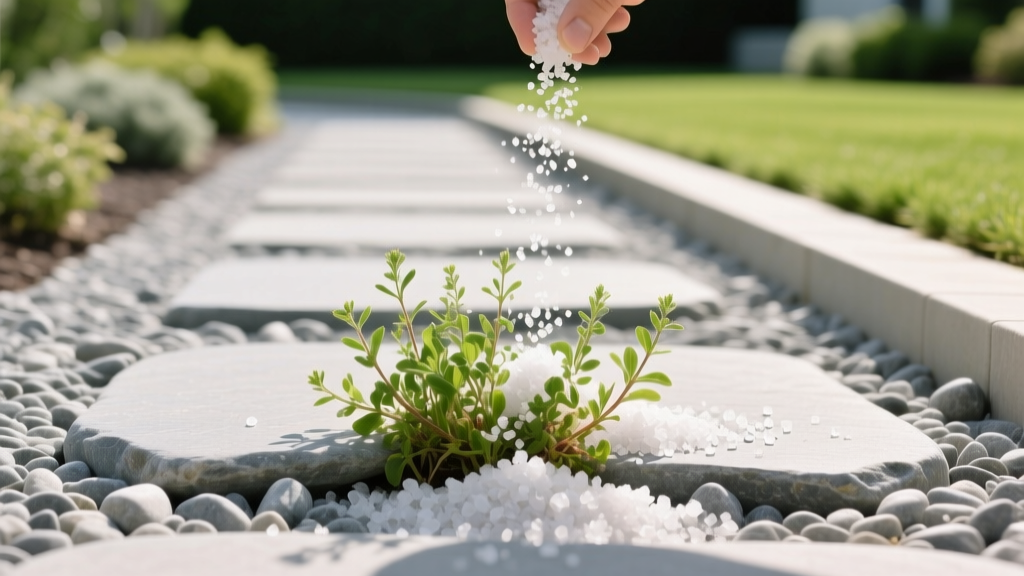
How to Permanently Kill Weeds in Gravel With Salt Safely
The Science of Osmotic Shock: Why Salt Eradicates Gravel Weeds
Using sodium chloride (NaCl) to eradicate vegetation in non-cultivated areas relies on a biological process called plasmolysis. When a highly concentrated salt brine contacts plant tissue, it creates a severe osmotic gradient. Water rapidly evacuates the plant's cells to balance the external salinity, causing the cellular membrane to detach from the cell wall. This results in immediate desiccation and irreversible tissue necrosis. Unlike systemic herbicides that rely on phloem transport, salt kills through localized chemical burning and long-term soil sterilization, making it highly effective for hardscapes where soil health is irrelevant.
However, the phrase 'permanently kill weeds in gravel with salt' requires a critical caveat: salt does not selectively target weeds. It sterilizes the substrate. If your gravel driveway borders a lawn, flower bed, or municipal storm drain, the sodium ions will leach into adjacent zones, destroying soil structure and poisoning desirable root systems. This guide details the exact chemical ratios, application protocols, and containment strategies required to use salt safely and effectively in 2026.
Identifying Your Gravel Invaders: Spot-Treatment Targets
Not all weeds respond to salt treatments equally. Deep-rooted perennials require higher salinity concentrations and repeated applications compared to shallow annuals. Below is a diagnostic matrix for common gravel-dwelling weeds and their specific vulnerabilities to sodium chloride.
| Weed Species | Scientific Name | Root Depth | Salt Susceptibility | Treatment Strategy |
|---|---|---|---|---|
| Dandelion | Taraxacum officinale | 10-15 inches | High | Saturated brine poured directly into the taproot crown. |
| Field Bindweed | Convolvulus arvensis | Up to 20 feet | Moderate | Foliar spray followed by soil drench; requires 2-3 applications. |
| Crabgrass | Digitaria sanguinalis | 2-6 inches | Very High | Surface-level broadcast spray; single application usually sufficient. |
| Horsetail | Equisetum arvense | 3-6 feet | Low | Silica cuticle must be mechanically crushed before salt application. |
The Exact Salt-to-Water Ratios for Permanent Eradication
To permanently kill weeds in gravel with salt, you must exceed the plant's osmotic tolerance threshold. A standard culinary sprinkle is ineffective and only attracts wildlife. You need a near-saturated brine. At room temperature, water can dissolve approximately 2.6 pounds of NaCl per gallon. Using boiling water increases this solubility limit slightly and adds thermal shock to the treatment.
The 2026 Saturated Brine Formula
- Base: 1 Gallon of Boiling Water
- Active Ingredient: 2.5 lbs of Coarse Rock Salt or Solar Salt (e.g., Morton Solar Salt, approx. $8 per 40-lb bag). Do not use iodized table salt; the anti-caking agents and iodine are unnecessary and cost 10x more per pound.
- Surfactant: 1 Tablespoon of liquid dish soap (breaks the surface tension of the water, allowing the brine to coat waxy weed leaves and penetrate gravel crevices).
Mixing Protocol: Pour the rock salt into a heat-safe, heavy-duty plastic or metal watering can. Add the boiling water and stir vigorously with a wooden stick until no more crystals dissolve at the bottom. Add the dish soap last to prevent excessive foaming.
Application Protocol: Step-by-Step Spot Treatment
Timing and weather conditions dictate the success of your salt application. Applying brine before a rainstorm will wash the sodium away before it penetrates the root zone, neutralizing the treatment and increasing environmental runoff risks.
- Check the Forecast: Ensure zero precipitation is expected for at least 48 hours post-application. Wind speeds should be under 5 mph to prevent drift onto adjacent desirable plants.
- Mechanical Preparation: For mature weeds with thick stems or waxy cuticles (like Horsetail or mature Plantain), use a string trimmer or shears to cut the weed down to the gravel line, then use a wire brush to scarify the remaining crown. This exposes the vascular tissue.
- Thermal Application: Apply the brine while it is still hot (above 140°F). The heat instantly denatures plant proteins, while the salt ensures long-term cellular dehydration. Use a narrow-spout watering can for precision, avoiding broad-spectrum spraying.
- The Dry Salt Follow-Up: For deep-rooted perennials like Bindweed, immediately after the liquid brine absorbs, pour a 1/4 cup mound of dry rock salt directly over the severed crown. As morning dew and ambient moisture interact with the dry salt, it will create a continuous micro-dosing effect over the next two weeks.
- Equipment Flushing: Salt is highly corrosive to metals. Immediately flush your watering can, pump sprayers, and any metal tools with fresh water and dry them thoroughly to prevent rust degradation.
The Hidden Costs: Soil Sterilization and Runoff Risks
While salt is cheap and highly effective on hardscapes, its environmental footprint requires strict management. When sodium ions accumulate in soil, they displace calcium and magnesium on clay particles. This process, known as flocculation breakdown, destroys soil structure, rendering it impermeable to water and air. According to the FAO Soils Portal, high sodium absorption ratios (SAR) lead to irreversible soil crusting and sterility in adjacent planting zones.
Environmental Runoff Warning
Never apply salt treatments within 10 feet of a municipal storm drain, creek bed, or groundwater recharge zone. The USGS Water Science School notes that salinization of freshwater ecosystems from hardscape runoff severely impacts local aquatic biodiversity and compromises municipal drinking water filtration. Always use physical edging barriers to contain the treated gravel zone.
Salt vs. Commercial Herbicides: A Cost and Efficacy Matrix
Homeowners often weigh salt against commercial chemical alternatives. Below is a comparative analysis of spot-treatment options for gravel driveways and walkways based on 2026 market pricing and ecological impact.
| Treatment Method | Cost per Gallon (Ready to Use) | Speed of Visible Results | Soil Sterilization Period | Best Use Case |
|---|---|---|---|---|
| Saturated Salt Brine | $0.35 | 4 to 12 hours | 1 to 3 years | Isolated gravel driveways, fence lines, patio pavers. |
| Glyphosate (41% Concentrate) | $1.20 (diluted) | 3 to 7 days | None (breaks down in soil) | Weeds near desirable plants where soil health must be preserved. |
| Horticultural Vinegar (30% Acetic Acid) | $4.50 | 2 to 4 hours | Temporary (lowers pH briefly) | Young annual weeds; ineffective on deep-rooted perennials. |
| Imazapyr (Ground Sterilant) | $18.00 (diluted) | 1 to 2 weeks | Up to 5 years | Industrial lots, utility poles, areas requiring zero vegetation. |
Post-Treatment Gravel Maintenance and Prevention
Once the initial salt treatment has eradicated the existing weed population, maintaining a sterile gravel surface requires physical barriers rather than continuous chemical dumping. Repeated salt applications will eventually result in a visible white crust on your gravel and guarantee toxic runoff during heavy spring thaws.
Installing Polymeric Sand and Geotextiles
For paver joints and fine gravel paths, sweep polymeric sand into the crevices and mist it with water. The polymers bind the sand particles together, creating a flexible, concrete-like seal that physically blocks weed seeds from reaching the soil below. For larger gravel driveways, rake back the top 2 inches of stone and install a heavy-duty, woven geotextile landscape fabric (minimum 4 oz per square yard). Non-woven fabrics will tear under the weight of vehicle tires and allow taproots to penetrate.
FAQ: Troubleshooting Salt Treatments
Q: Will rock salt damage my concrete driveway or asphalt?
A: Yes. Sodium chloride accelerates the freeze-thaw spalling of concrete and can degrade asphalt binders over time. If your gravel borders a concrete pad, keep the salt brine at least 6 inches away from the concrete edge. For weeds growing in concrete cracks, use 30% horticultural vinegar instead.
Q: How long does it take for the salt to neutralize in the gravel?
A: Salt does not 'neutralize' or break down like organic herbicides. It remains in the substrate until it is physically washed away by heavy rainfall or manual flooding. In arid climates, a single heavy salt application can sterilize a gravel patch for over three years.
Q: Can I mix salt with bleach for a stronger weed killer?
A: Absolutely not. Mixing sodium chloride with sodium hypochlorite (bleach) does not increase herbicidal efficacy, but it creates a severe risk of releasing toxic chlorine gas if the pH drops. Stick to the water, salt, and surfactant formula.

