
Landscaping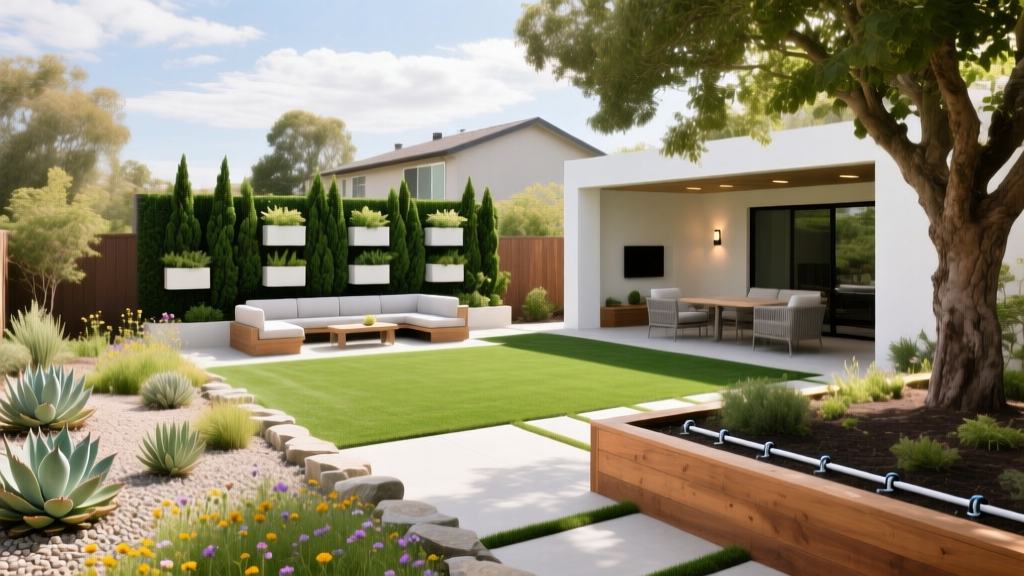
7 Practical Low Maintenance Backyard Ideas That Work
Reclaiming your weekends starts with rethinking your yard's infrastructure. Most high-maintenance landscapes fail because they rely on biological systems (turfgrass, annual flowers) that demand constant inputs of water, fertilizer, and labor. By shifting the balance toward hardscaping, smart automation, and climate-adapted perennials, you can drastically reduce your outdoor chores. Below are seven highly specific, actionable low maintenance backyard ideas that prioritize long-term durability over short-term aesthetics.
1. Replace High-Traffic Turf with Composite Decking
Lawns in high-traffic zones degrade quickly, requiring annual aeration, overseeding, and constant mowing. Replacing these areas with composite decking eliminates turf management entirely. While pressure-treated pine decking costs roughly $4 to $6 per square foot upfront, it requires $1.50 to $2.00 per square foot annually in staining and sealing to prevent rot and splintering.
For a true zero-maintenance surface, invest in capped composite boards like the Trex Transcend Lineage series. Priced between $18 and $22 per square foot (materials only), these boards feature a fully encapsulated polymer shell that resists fading, staining, and mold. Unlike wood, composite decking never requires sanding or sealing; an occasional wash with a garden hose and mild soap is the only maintenance required over its 25-year lifespan.
2. Install 14-Gauge Steel Edging to Stop Rhizome Creep
The number one cause of weekend yard work is weeding mulch beds where aggressive grasses (like Bermuda or Zoysia) have invaded. Plastic bender-board and aluminum edging fail because they lack the rigidity to stop underground rhizomes. The professional standard is 14-gauge hot-rolled steel edging (such as Colmet), installed at an 8-inch depth.
Installation Protocol for Steel Edging:
- Dig a narrow trench exactly 7 inches deep along the bed perimeter.
- Drive the 8-inch steel edging into the trench using a rubber mallet, leaving 1 inch exposed above grade to create a physical water and rhizome barrier.
- Pin the edging with 18-inch steel U-pins every 4 feet, ensuring no gaps exist at the joints.
3. Ditch Woven Weed Fabric for Deep Organic Mulch
A common mistake in low maintenance backyard ideas is laying woven polypropylene weed barrier fabric under organic mulch. Within two years, wind-blown soil and decomposing leaves accumulate on top of the fabric. Weed seeds germinate in this top layer, and their roots penetrate the fabric, making them nearly impossible to pull. Furthermore, the fabric suffocates the soil microbiome.
The Fix: Apply a 3-to-4-inch layer of double-shredded hardwood mulch directly onto bare soil. According to research from university extension programs, a thick layer of organic mulch naturally suppresses weed germination by blocking sunlight while retaining soil moisture. As the bottom layer decomposes, it feeds the soil, eliminating the need for synthetic fertilizers.
4. Automate Drip Irrigation with Smart Controllers
Sprinklers lose up to 50% of their water to wind drift and evaporation. Transitioning garden beds to subsurface drip irrigation paired with a smart controller cuts water waste and eliminates manual watering schedules. The EPA WaterSense program notes that smart irrigation controllers adjust watering based on local weather data, saving the average home nearly 7,600 gallons of water annually.
Pair a Rachio 3 Smart Sprinkler Controller (approx. $229) with Netafim Techline EZ drip tubing. Techline EZ features built-in pressure-compensating emitters spaced 12 inches apart and is infused with copper to prevent root intrusion into the emitter holes. Bury the tubing 2 inches under your mulch for a completely invisible, automated watering system.
5. Transition to Structured Perennial Grasses
Annual flowers require weekly deadheading, daily watering, and complete replacement every spring. Instead, anchor your landscape design with structured ornamental perennials that provide year-round visual interest with minimal intervention. The National Wildlife Federation strongly advocates for native and adapted perennials to support local ecosystems while reducing yard labor.
- Karl Foerster Feather Reed Grass (Calamagrostis x acutiflora): Grows up to 5 feet tall, provides vertical structure, and only needs to be cut back to 6 inches once a year in late February.
- Autumn Joy Sedum (Hylotelephium 'Herbstfreude'): Drought-tolerant succulent that blooms in late fall. Requires zero fertilization and thrives in poor, rocky soils.
- Walker's Low Catmint (Nepeta x faassenii): A sterile hybrid that blooms continuously from spring to frost without deadheading, and naturally repels deer and rabbits.
6. Decision Matrix: Hardscape vs. Softscape Investments
When planning low maintenance backyard ideas, use this matrix to evaluate where to allocate your budget. The goal is to maximize upfront hardscape investments to minimize recurring softscape labor.
| Material / Feature | Upfront Cost (per sq. ft.) | 10-Year Maintenance Cost | Primary Failure Mode |
|---|---|---|---|
| Belgard Permeable Pavers | $14 - $18 | $1.50 (joint sand refill) | Base settlement if sub-grade is uncompacted |
| Decomposed Granite (DG) | $3 - $5 | $4.00 (annual top-dressing) | Washing out without proper stabilizer binder |
| Trex Composite Decking | $18 - $22 | $0.20 (cleaning supplies) | Thermal expansion if end-gaps are ignored |
| Natural Turfgrass (Fescue) | $1 - $2 (sod) | $25.00+ (water, seed, chem) | Fungal diseases, grub damage, drought stress |
7. Install Astronomical LED Landscape Lighting
Maintaining outdoor lighting usually involves replacing halogen bulbs every 8 to 12 months and adjusting mechanical timers as the seasons change. Upgrade to commercial-grade LED fixtures, such as those from Cast Lighting, which feature solid bronze housings and diodes rated for 70,000 hours (over 19 years of nightly use). Pair the system with an astronomical timer that automatically calculates local sunrise and sunset times via GPS, adjusting the on/off schedule year-round without manual intervention.
Frequently Asked Questions
What is the cheapest low maintenance backyard surface?
Crushed gravel or decomposed granite (DG) stabilized with a polymeric binder (like Gator Stone Bond) is the most cost-effective hardscape. It costs $3 to $5 per square foot, allows water permeation, and requires only occasional raking compared to poured concrete which can crack and require expensive sealing.
How do I stop weeds in a gravel pathway without using chemicals?
Do not use weed fabric under gravel. Instead, excavate 4 inches, lay down a non-woven geotextile drainage fabric (which allows water through but blocks soil migration), and top with 3 inches of 3/8-inch minus crushed gravel. The sharp edges of the crushed gravel compact tightly, creating a physical barrier that prevents weed seeds from taking root.
Are fire pits considered low maintenance?
Wood-burning fire pits require ash cleanup and wood storage. For a low-maintenance alternative, install a natural gas or propane fire feature with a concrete or corten steel bowl. These ignite with a switch, produce no ash or smoke, and eliminate the need to source, chop, and store firewood.

