
Landscaping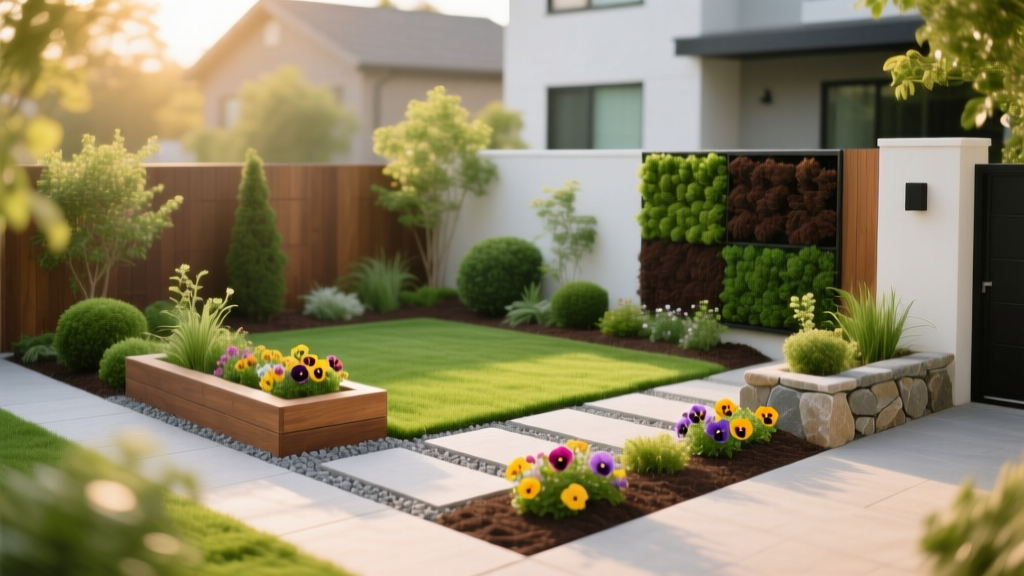
9 Practical Tiny Front Yard Ideas to Maximize Curb Appeal
Designing a front yard under 500 square feet requires a shift from traditional landscaping principles. When square footage is limited, every inch must serve a structural, visual, or functional purpose. Oversized foundation shrubs and sprawling lawns quickly overwhelm tiny frontages, creating a cluttered, uninviting entrance. The solution lies in precise material selection, vertical layering, and strict adherence to mature plant dimensions.
The 3-Zone Layout Framework for Small Frontages
Before selecting plants or hardscapes, divide your tiny front yard into three distinct functional zones. This prevents material clashing and ensures proper circulation.
Zone 1: The Foundation Transition (0–3 ft from house)
Keep this area low-profile (under 24 inches in height) to avoid blocking windows and to maintain architectural sightlines. Use dwarf evergreens or low-profile ornamental grasses.
Zone 2: The Circulation & Focal Core (3–8 ft)
This is your primary pathway and visual anchor. Limit hardscape materials to one dominant texture (e.g., permeable pavers) and use vertical elements like trellises to draw the eye upward without consuming ground space.
Zone 3: The Streetside Buffer (8+ ft to sidewalk)
Create a soft boundary using low retaining walls, ornamental boulders, or clustered container gardens to define the property line without installing a towering fence.
Keep this area low-profile (under 24 inches in height) to avoid blocking windows and to maintain architectural sightlines. Use dwarf evergreens or low-profile ornamental grasses.
Zone 2: The Circulation & Focal Core (3–8 ft)
This is your primary pathway and visual anchor. Limit hardscape materials to one dominant texture (e.g., permeable pavers) and use vertical elements like trellises to draw the eye upward without consuming ground space.
Zone 3: The Streetside Buffer (8+ ft to sidewalk)
Create a soft boundary using low retaining walls, ornamental boulders, or clustered container gardens to define the property line without installing a towering fence.
9 Practical Tiny Front Yard Ideas
1. Tiered Corten Steel Planter Boxes
Weathering steel (Corten) develops a protective rust patina that eliminates the need for painting while providing a striking, modern contrast to green foliage. For tiny yards, build a tiered arrangement using three rectangular boxes.
- Specifications: Use 14-gauge ASTM A588 weathering steel. 16-gauge is too thin and will bow outward under the lateral pressure of wet soil (which weighs roughly 120 lbs per cubic foot).
- Dimensions: Stack a 4x2x1.5 ft box, a 3x2x1.5 ft box, and a 2x2x1.5 ft box.
- Cost: $180–$250 per custom-welded box (2026 pricing).
- Drainage: Drill 1/2-inch holes every 6 inches in the base and elevate the boxes 1 inch off the ground using hidden composite shims to prevent concrete staining.
2. Permeable Paver Walkways with Creeping Thyme
Concrete slabs dominate small spaces and contribute to stormwater runoff. Permeable pavers allow water to infiltrate the sub-base while providing a structured, high-end look.
- Base Prep: Excavate 10 inches. Install 6 inches of compacted crushed angular aggregate (ASTM No. 57), followed by 2 inches of ASTM No. 8 bedding stone.
- Joints: Leave 1/4-inch gaps between pavers and fill with Thymus serpyllum (Creeping Thyme) rather than jointing sand. The thyme softens the hardscape edges and releases a subtle fragrance when stepped on.
- Cost: $16–$22 per square foot installed, according to Penn State Extension guidelines on permeable pavement systems.
3. Vertical Cedar Trellis Screens
When ground space is nonexistent, grow vertically. Construct a 7-foot tall, 3-foot wide privacy screen using 2x2 cedar framing and 1/2-inch galvanized hardware cloth.
- Plant Selection: Train Trachelospermum jasminoides (Star Jasmine). It is evergreen, drought-tolerant once established, and produces highly fragrant white blooms in late spring.
- Installation: Anchor the trellis using 36-inch galvanized steel post spikes driven into the soil, avoiding the need to dig deep trenches near shallow utility lines.
4. Dwarf Evergreen Anchors
The most common mistake in small yards is planting standard shrubs that eventually engulf the facade. Anchor your foundation beds with true dwarf cultivars that require zero structural pruning.
- Top Pick: Thuja occidentalis 'Danica' (Globe Arborvitae). It naturally forms a dense, perfect sphere.
- Mature Size: 2 to 3 feet wide and 3 to 4 feet tall after 10 years. As noted by the University of Minnesota Extension, dwarf conifers provide year-round structure without the aggressive lateral growth of standard arborvitae.
- Spacing: Plant exactly 2.5 feet apart to create a continuous, low hedge that won't spill onto the walkway.
5. Monochromatic Gravel Beds with Basalt Boulders
Replace high-maintenance turf with a minimalist xeriscape design. Using a single color palette makes a small space feel intentionally designed rather than chaotic.
- Materials: Lay down a heavy-duty woven geotextile fabric (minimum 4 oz/sq yd). Top with 2 inches of 3/4-inch minus crushed basalt gravel. The 'minus' designation means it includes stone dust, which locks the gravel together into a firm, walkable surface.
- Focal Points: Embed two 150-lb columnar basalt boulders vertically. Bury 20% of the boulder's base in the soil to make it look naturally outcropping, rather than dropped on the surface.
6. Low-Voltage Brass Uplighting
Lighting creates depth in a tiny yard, pushing the visual boundaries outward at night. Avoid cheap aluminum fixtures that corrode within two seasons.
- Hardware: Use cast brass well lights with an IP67 waterproof rating.
- Color Temperature: strictly 2700K (warm white). Anything above 3000K looks harsh and clinical against residential siding.
- Placement: Position lights 12 inches from the foundation wall, aiming straight up to graze the architectural texture of the home.
7. Built-in Ipe Wood Bench with Hidden Storage
If your frontage doubles as a social space, integrate seating directly into the hardscape. Build a 48-inch wide bench using Ipe (Brazilian Walnut).
- Durability: Ipe has a Janka hardness rating of 3,680 lbf, making it virtually impervious to rot, scratches, and heavy foot traffic. It lasts 40+ years without chemical sealing.
- Design: Use hidden pneumatic hinges on the seat top to create a weatherproof storage compartment for garden tools or winter ice melt.
8. Raised Corten or Aluminum Edging
Crisp, physical boundaries between gravel, mulch, and grass prevent the 'messy' look that plagues small yards. Flexible plastic edging degrades and warps; use rigid metal instead.
- Specs: 4-inch deep, 14-gauge aluminum or Corten steel strips. The 4-inch depth prevents aggressive rhizomes (like bamboo or mint) from invading adjacent beds.
- Installation: Dig a 4-inch trench, insert the edging, and backfill with tamped soil. Connect sections using factory-welded corner brackets, not overlapping bends.
9. Container Clustering for Flexibility
For renters or those who frequently change their design, cluster three oversized containers. The rule of thumb for tiny spaces is to use odd numbers and vary the heights by at least 30%.
- Pots: Use fiber-cement or glass-fiber reinforced concrete (GFRC). They mimic the look of cast stone but weigh 70% less, preventing structural overload on elevated porches.
- Plant Sourcing: Consult the Water Use Classification of Landscape Species (WUCOLS) database to ensure all three container plants share identical irrigation requirements, preventing the common failure of overwatering drought-tolerant specimens to keep a thirsty companion alive.
Material & Plant Cost Matrix (2026 Estimates)
Budgeting for a tiny front yard requires prioritizing high-impact hardscapes over expansive plantings. Below is a breakdown of current material costs and lifecycle expectations.
| Material / Plant | Best Application | Approx. Cost | Lifespan / Maintenance |
|---|---|---|---|
| 14-Gauge Corten Steel | Raised planters, edging | $180–$250 / unit | 25+ years; zero sealing required |
| Permeable Concrete Pavers | Primary walkways | $16–$22 / sq ft | 30+ years; vacuum sweep annually |
| Ipe Wood (Brazilian Walnut) | Built-in seating, accents | $14–$18 / linear ft | 40+ years; oil annually for color retention |
| 3/4" Minus Crushed Basalt | Ground cover, xeriscape beds | $65–$85 / ton | Permanent; top-dress every 5 years |
| Thuja occidentalis 'Danica' | Foundation anchors | $45–$65 / 3-gallon pot | 20+ years; no pruning required |
Common Mistakes That Shrink Small Yards
Warning: Avoid These Design Traps
- Ignoring Mature Widths: Planting a standard Juniperus chinensis 'Spartan' that grows 5 feet wide in a 3-foot foundation bed guarantees it will eventually block your walkway and require aggressive, unsightly shearing.
- Mixing Too Many Hardscapes: Using brick pavers, poured concrete, gravel, and natural stone in a 400 sq ft space creates visual fragmentation. Limit your ground materials to a maximum of two complementary textures.
- Symmetrical Overload: Perfect mirror-image planting on both sides of a narrow door highlights the lack of width. Use asymmetrical balance (e.g., one large vertical trellis on the left, balanced by a cluster of three low boulders on the right) to trick the eye into perceiving a wider space.
Execution and Maintenance Strategy
Implementing these tiny front yard ideas requires phased execution. Begin with hardscaping (walkways, edging, and lighting trenching) before bringing any soil or plants onto the site. This prevents soil compaction and damage to root balls during heavy material transport.
For ongoing maintenance, install a smart drip irrigation system with pressure-compensating emitters. In small yards, traditional spray heads waste water on hardscapes and siding. Drip lines deliver water directly to the root zone of your dwarf conifers and container plants, reducing water bills and preventing fungal diseases caused by wet foliage. By combining precise material dimensions, dwarf cultivars, and vertical layering, even a 200-square-foot frontage can deliver the curb appeal of a sprawling estate.

