
Landscaping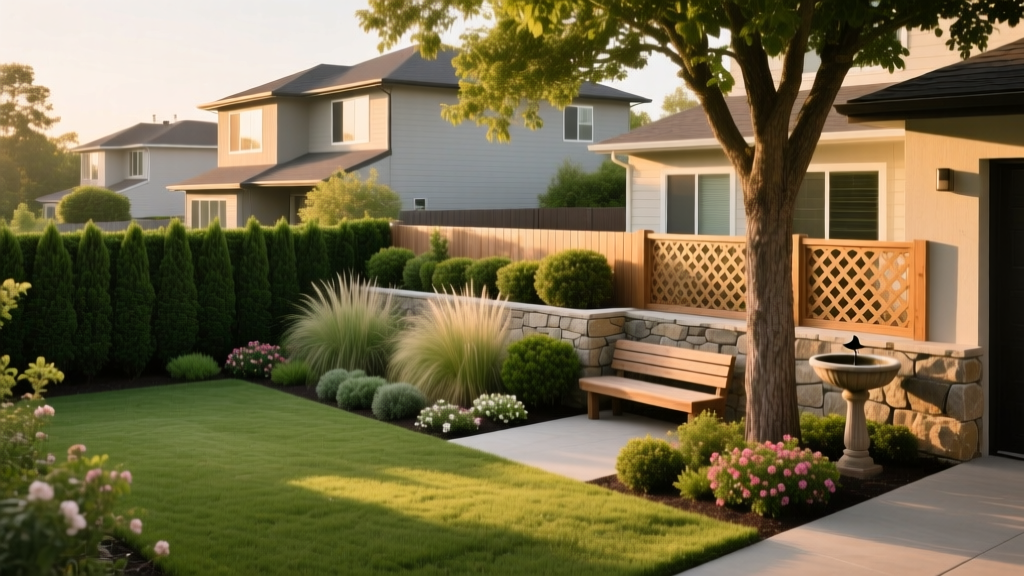
Property Line Landscaping Ideas: Solve Boundary & Privacy Problems
The Prerequisite: Pinning the Exact Boundary
Before installing any fencing, planting hedges, or digging drainage trenches, you must establish the exact legal boundary. Guessing where the property line sits based on existing grass edges or neighbor assumptions is the leading cause of costly encroachment lawsuits. As of 2026, a standard residential boundary survey (often called a pin survey) costs between $400 and $800, while a more comprehensive ALTA/NSPS survey runs $1,200 to $2,000. Always hire a licensed surveyor to drive physical iron pins or concrete monuments at the corners. Build your landscaping at least 6 to 12 inches inside your side of these pins to account for mature plant growth and fence post footing widths.
Warning: In many jurisdictions, allowing a neighbor's landscaping to encroach on your land for a continuous statutory period (often 7 to 15 years) without written permission can lead to adverse possession claims or prescriptive easements. Always document your boundary lines before planting.
Diagnosis & Solution 1: Visual Encroachment and Privacy Loss
The most common property line issue is a lack of visual privacy or a direct line of sight into your living spaces. While a standard 6-foot wood fence is the default fix, it often violates HOA setback rules, blocks beneficial wind flow, and creates a harsh visual wall. A layered biological screen offers superior noise dampening and aesthetic value.
The 'Emerald Green' Arborvitae Strategy
For narrow side yards where space is at a premium, Thuja occidentalis 'Emerald Green' is the industry standard. Unlike the aggressive Leyland Cypress (which grows 3 feet annually and frequently triggers neighbor disputes over shading and root damage), Emerald Green matures at 12-15 feet tall and only 3-4 feet wide.
- Spacing: Plant exactly 24 to 30 inches apart, center-to-center. Anything closer restricts airflow and invites Seiridium canker.
- Setback: Plant the center of the root ball 2.5 feet inside your property line. This ensures the mature 4-foot canopy stays entirely on your side.
- Cost: Expect to pay $45 to $65 per 5-gallon specimen in 2026. Installation by a professional crew adds $25 to $40 per tree.
Trellis and Climber Combinations
If your property line borders a public sidewalk where tall hedges violate municipal sight-line ordinances, install a 4-foot open-lattice cedar trellis topped with climbing Trachelospermum jasminoides (Star Jasmine). This provides dense, evergreen coverage and fragrant blooms without exceeding height restrictions.
Diagnosis & Solution 2: Invasive Roots and Hardscape Damage
When a neighbor plants aggressive species—such as running bamboo, silver maple, or willow—their root systems will inevitably cross the property line, cracking your patio pavers, lifting sidewalks, and competing with your turfgrass for water. You cannot legally poison or kill a neighbor's tree, but you have the right to intercept the roots on your side of the line.
Installing High-Density Root Barriers
To permanently stop rhizomes and lateral roots, install a mechanical root barrier. The legal right to sever encroaching roots is well-established, but doing so without a barrier means the roots will simply grow back the following season.
- Trenching: Dig a trench 18 to 24 inches deep and 4 inches wide exactly 2 inches inside your property line. (Check local utility lines via 811 before digging).
- Material Selection: Use a 60-mil High-Density Polyethylene (HDPE) panel, such as the DeepRoot® UB 24-2. Avoid cheap landscape fabric; roots will penetrate it within two years.
- Installation: Overlap panel joints by at least 4 inches and secure them with stainless steel screws. Ensure the top edge of the barrier protrudes 1/2 inch above the soil grade to stop surface-running rhizomes from bypassing the wall.
- Cost: Materials run $11 to $14 per linear foot, with trenching labor adding $8 to $12 per linear foot.
Diagnosis & Solution 3: Grade Changes and Water Runoff
If your neighbor's yard sits at a higher elevation, gravity will force stormwater, liquid fertilizer, and eroded topsoil directly onto your property. The common law principle of 'common enemy' or 'civil law' rules (depending on your state) dictates how surface water must be managed, but proactively engineering a solution is cheaper than litigation.
The French Drain and Retaining Wall Combo
For slopes with a grade change of 12 inches or more, combine a segmental retaining wall with a concealed drainage system. Penn State Extension guidelines emphasize that altering surface water flow onto a neighbor's lower lot creates strict liability for property damage.
- Base Preparation: Excavate a trench and lay 6 inches of compacted 3/4-inch crushed angular gravel. Never use rounded pea gravel for a wall base; it lacks shear strength.
- Wall Blocks: Use a pin-connected system like the Allan Block Classic. These interlock without mortar, allowing slight flexing during freeze-thaw cycles without cracking.
- Drainage Pipe: Place a 4-inch perforated PVC pipe wrapped in filter fabric directly behind the wall's base course. Tie this pipe to a solid 4-inch PVC discharge line that daylight at least 10 feet away from both foundations or ties into a municipal storm drain.
Comparative Matrix: Boundary Landscaping Options
Selecting the right property line landscaping idea requires balancing upfront costs, maintenance requirements, and legal risks. Use the matrix below to evaluate your options based on your specific site conditions.
| Solution Type | Avg Cost (2026) | Maintenance Level | Encroachment Risk | Best Use Case |
|---|---|---|---|---|
| Wood Privacy Fence | $35 - $55 / linear ft | Moderate (staining/rot) | Low (if set inside line) | Immediate privacy, pet containment |
| Evergreen Hedge | $20 - $40 / linear ft | High (annual pruning) | High (canopy/root spread) | Noise reduction, natural aesthetics |
| HDPE Root Barrier | $19 - $26 / linear ft | None (post-installation) | None | Stopping neighbor's invasive roots |
| Segmental Retaining Wall | $25 - $45 / sq ft | Low | Moderate (requires engineering) | Managing slope runoff, terracing |
Legal Guardrails and Execution Steps
Executing property line landscaping requires strict adherence to local zoning and HOA covenants. Before breaking ground, follow this sequential checklist to protect your investment and avoid forced removal orders.
Pro-Tip for Shared Costs: If a boundary fence or wall benefits both properties equally, many state laws (such as the Good Neighbor Fence Act in California) require neighbors to split the construction and maintenance costs 50/50. Send a formal, written notice detailing the project scope and estimated costs via certified mail before starting work.
Step-by-Step Execution Plan
- Procure the Survey: Obtain a stamped boundary survey from a licensed surveyor. Do not rely on the plat map provided at your real estate closing.
- Verify Setbacks and Easements: Check your municipal zoning code for side-yard setbacks (typically 5 feet) and utility easements. You cannot plant trees or build walls within a utility easement.
- Call 811: Submit a utility locate request at least 3 business days before digging trenches for root barriers or French drains. This is a free, legally required step.
- Communicate with the Neighbor: Walk the property line with your neighbor. Show them the survey pins and explain your planting or construction plan. Document this conversation in a follow-up email.
- Install Hardscape First: Build retaining walls, lay drainage pipes, and install root barriers before introducing softscape elements.
- Plant and Mulch: Install your chosen privacy screens or garden beds, ensuring all root balls and mature canopy projections remain strictly inside your surveyed boundary.
By diagnosing the specific boundary friction point—whether it is visual privacy, aggressive roots, or water runoff—and applying the correct engineered or biological solution, you can transform a contested property line into a secure, beautiful, and legally sound landscape feature.

