
Landscaping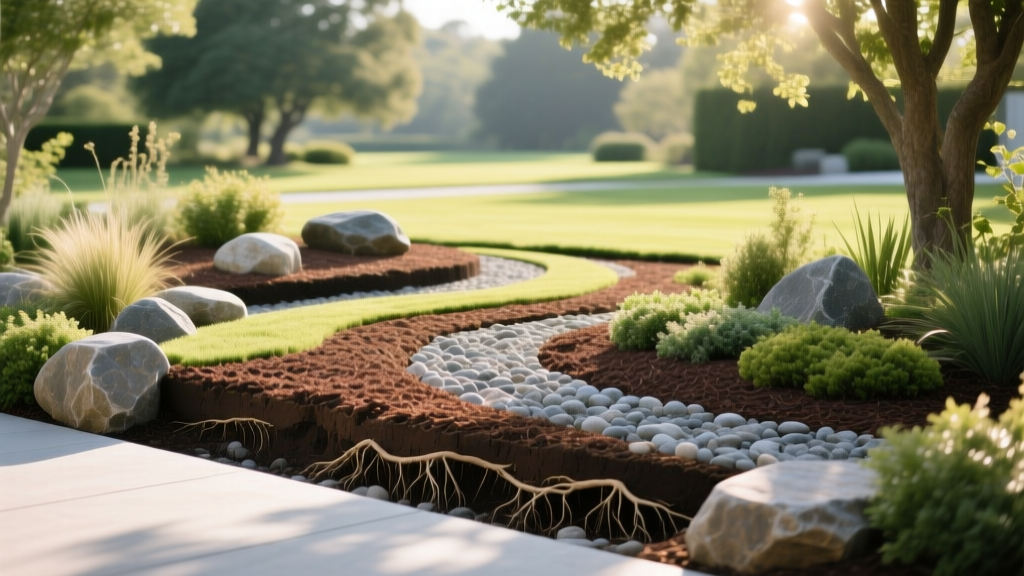
Rock and Mulch Landscaping: Hybrid Bed Design and Soil Health Guide
The Soil Science of Mixed Landscape Beds
Combining inorganic stone and organic wood products in the same garden bed is a hallmark of modern xeriscaping and transitional landscape design. However, executing successful rock and mulch landscaping requires more than just aesthetic vision; it demands a strict understanding of soil biology and amendment mechanics. Organic mulches (like shredded hardwood or pine bark) actively participate in the soil food web. As they decompose, they lower soil pH slightly, feed fungal hyphae, and improve cation exchange capacity (CEC). In contrast, inorganic rock mulches offer zero biological contribution and can actually raise soil pH if limestone-based gravel is used.
When designing hybrid beds, the primary challenge is managing the transition zone. If organic matter migrates into the rock zone, it creates a muddy, weed-conducive sludge. If rock migrates into the mulch zone, it dulls mower blades and disrupts the soil amendment cycle. According to North Carolina State Extension, maintaining a strict physical separation is critical to ensuring that the soil beneath organic zones receives necessary aeration and moisture, while the soil beneath rock zones remains stable and well-drained.
The Mulch-Rock Transition Rule
Never rely on landscape fabric alone to separate rock and mulch. Fabric degrades, tears, and blocks the vital gas exchange required for soil microbiomes. Always use a physical, impermeable hardscape edge (like aluminum or steel) driven at least 2 inches into the subgrade to create a permanent structural barrier between the two materials.
Design Frameworks: Where to Place Rock vs. Mulch
Deciding which material goes where should be dictated by plant physiology and irrigation needs, not just color contrast. Use the following decision matrix to allocate materials in your hybrid beds.
| Plant Type / Zone | Ideal Groundcover | Soil Amendment Strategy |
|---|---|---|
| Acid-loving shrubs (Azaleas, Hydrangeas) | Pine Bark Mulch (Organic) | Top-dress with elemental sulfur annually; mulch breakdown naturally lowers pH. |
| Succulents, Agave, Mediterranean herbs | 3/4-inch River Rock or Lava Rock | Amend subsoil with pumice/perlite prior to rock installation. No surface composting. |
| Deciduous shade trees | Shredded Hardwood Mulch | Apply 2-3 inches of arborist woodchips; replenish annually to feed mycorrhizal fungi. |
| Dry creek beds / Drainage swales | Cobble (1.5 - 3 inch) over gravel base | Zero organic amendments. Use geotextile underlayment strictly for structural stabilization. |
Step-by-Step Installation for Hybrid Beds
Proper installation prevents the most common failure mode in rock and mulch landscaping: material migration and soil compaction. Follow this exact sequence for 2026 best practices.
- Grade and Slope: Ensure the bed slopes away from foundations at a minimum of 1/4 inch per foot. Water pooling under rock zones will create anaerobic soil conditions.
- Amend Before Covering: Incorporate 2 inches of organic compost into the top 6 inches of native soil across the entire bed before laying any materials. Once rock is down, amending the soil becomes nearly impossible without heavy labor.
- Install Hardscape Edging: Use 4-inch commercial-grade aluminum edging. Drive the stakes so the top of the edging sits 1/2 inch below the final grade of the mulch, but level with the rock. This hides the metal while blocking migration.
- Lay the Inorganic Base: In the rock zones, lay a 1-inch base of coarse sand or crushed granite, tamp it down, and then apply 2 to 3 inches of decorative rock. Do not use landscape fabric here if you have heavy clay soil, as it traps moisture and causes root rot.
- Apply the Organic Mulch: In the mulch zones, apply 2.5 to 3 inches of shredded hardwood. Keep the mulch exactly 3 inches away from the base of tree trunks and shrub crowns to prevent collar rot.
Cost Breakdown and Material Sourcing
Budgeting for hybrid beds requires accounting for both the initial material costs and the long-term maintenance. While rock is a higher upfront investment, it eliminates the annual replenishment costs associated with organic mulch.
2026 Material Pricing Estimates
- Shredded Hardwood Mulch: $35 - $50 per cubic yard (delivered). Requires 2-inch top-dressing every 12-18 months.
- Cedar Mulch: $60 - $85 per cubic yard. Decomposes slower than hardwood and offers natural insect deterrence, but provides fewer soil nutrients.
- 3/4-inch River Rock: $130 - $180 per cubic yard. Heavy and difficult to spread manually; often requires a skid steer for large commercial jobs.
- Red Lava Rock: $160 - $210 per cubic yard. Lightweight, porous, and excellent for thermal mass in cooler climates, but can scratch easily if walked on.
- Aluminum Edging (4-inch): $8 - $12 per linear foot (materials only). Essential for hybrid separation.
- Professional Installation Labor: $65 - $95 per hour per crew member. Expect to pay $3.50 to $6.00 per square foot for full bed preparation, edging, and material spreading.
Warning: The Hidden Cost of 'Cheap' Rock
Purchasing unwashed river rock from discount quarries often introduces fine silt and clay dust into your beds. When this dust gets wet, it forms a concrete-like crust that blocks water infiltration and suffocates plant roots. Always specify 'double-washed' gravel from your supplier, even if it adds $20-$30 per ton to the invoice.
Maintenance and Long-Term Soil Health
The primary critique of rock and mulch landscaping from soil scientists is the 'sterilization' effect of large rock zones. As noted by researchers at the University of Minnesota Extension, soil biology requires a steady influx of carbon to thrive. Rock provides none.
To maintain soil health in a hybrid landscape, you must adopt a targeted amendment strategy. In the mulch zones, the natural decomposition process handles this. However, for the rock zones, you must utilize liquid soil amendments. Twice a year (spring and fall), apply a liquid humic acid and fulvic acid solution directly through the rock layer using a hose-end sprayer. This delivers essential carbon compounds and chelated micronutrients directly to the subsoil without requiring you to rake back tons of heavy stone.
'A landscape is only as healthy as the microbiome beneath it. When you cap soil with inorganic stone, you are essentially putting it on a starvation diet. Liquid carbon amendments are the only viable bridge to keep the soil food web active under rock mulch.' — Dr. Elaine Ingham, Soil Microbiologist
Frequently Asked Questions
Can I put mulch directly on top of old rock to convert a bed?
No. Adding organic mulch directly over inorganic rock creates a perched water table. The rock layer prevents the organic matter's roots and beneficial fungi from integrating with the native soil below, leading to shallow root systems and rapid mulch decay. You must rake out the rock and remove it before applying a true organic mulch layer.
Which is better for weed control: rock or mulch?
Neither is a permanent weed barrier on its own. Rock prevents weeds from germinating in the short term due to high surface heat and lack of organic matter, but wind-blown soil will eventually settle between the stones, creating a perfect seedbed for dandelions and crabgrass. Hardwood mulch suppresses weeds by blocking light, but it must be maintained at a strict 3-inch depth to be effective. For maximum weed control in hybrid beds, use a pre-emergent herbicide (like prodiamine) applied in early spring across both zones.
Does lava rock attract termites?
No. Inorganic materials like lava rock, river rock, and decomposed granite offer zero cellulose and therefore do not attract termites. In fact, replacing a 2-foot perimeter of organic wood mulch around your home's foundation with a 2-foot band of inorganic rock is a highly recommended structural pest control strategy to deter subterranean termite foraging.

