
Landscaping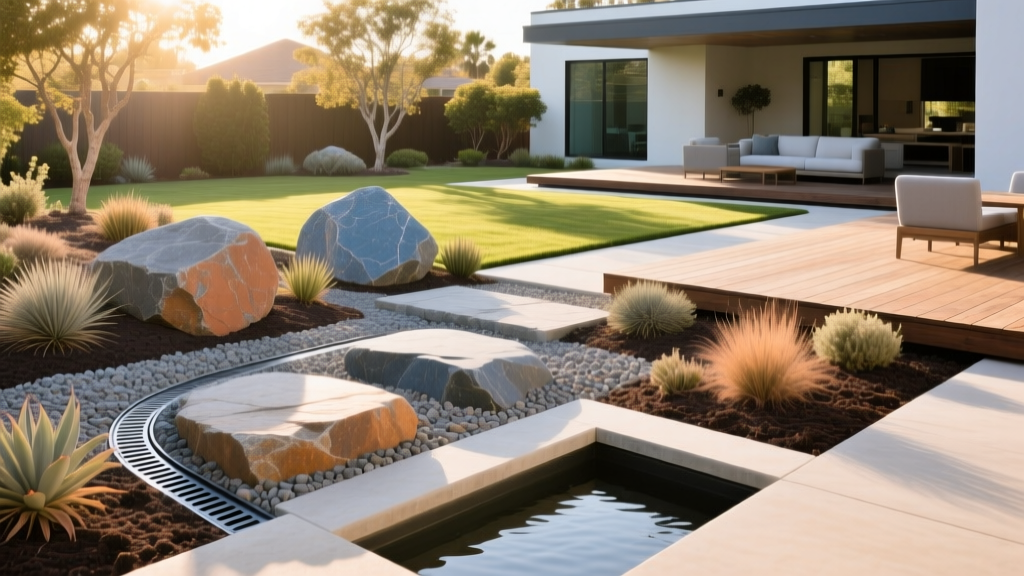
Rock Mulch Landscaping Ideas: Design, Drainage & Soil Health
The Soil Science Behind Rock Mulch
Unlike organic wood chips or shredded bark, inorganic rock mulch does not decompose to feed soil microbes or improve cation exchange capacity (CEC). This fundamental difference dictates how you must approach soil preparation and plant selection. According to the University of Minnesota Extension, while rock mulch excels at moisture retention and weed suppression, it offers zero nutritional value to the underlying soil profile. Therefore, any rock mulch landscaping ideas you implement must begin with aggressive upfront soil amendment, as top-dressing with compost after the rocks are laid is virtually impossible without removing the entire hardscape layer.
Expert Insight: Dark-colored rocks like basalt or lava rock absorb solar radiation and re-emit it as heat, raising the immediate soil temperature by 5°F to 10°F. This creates a thermal microclimate ideal for heat-loving succulents and Mediterranean herbs, but it can scorch the shallow feeder roots of moisture-loving perennials like hostas or hydrangeas.
4 High-Impact Rock Mulch Landscaping Ideas
When moving beyond basic foundation planting, specific rock grades and types serve distinct hydrological and aesthetic functions. Here are four advanced design applications.
1. Hydrological Routing with Dry Creek Beds
Use 1-3 inch Colorado River Rock to construct dry creek beds that manage stormwater runoff. Unlike solid concrete channels, river rock allows water to percolate into the subsoil while slowing flow velocity to prevent erosion. For structural integrity, line the center of the 'creek' with the largest cobbles (2-3 inches) and graduate down to 3/4 inch crushed gravel at the edges to lock the larger stones in place during heavy rain events.
2. Permeable Pathways with Decomposed Granite (DG)
For walkways that require a firm surface but must remain permeable, 1/4-inch minus Decomposed Granite is the industry standard. The 'minus' designation means it includes stone dust and fines, which compact tightly together. When mixed with a liquid polyurethane soil stabilizer, DG creates a surface nearly as hard as asphalt but allows 100% water infiltration, making it a premier choice for eco-conscious driveway and patio extensions.
3. Xeriscape Contrast Zones
Create striking visual geometry by pairing 1/2 inch white marble chips with deep green or purple foliage, such as Agave attenuata or Loropetalum. The high albedo (reflectivity) of white marble bounces light into the lower canopy of shrubs, promoting denser foliage growth. However, marble is calcium carbonate; as it slowly weathers, it will raise the soil pH. Reserve this design for alkaline-tolerant species and avoid using it around acid-loving plants like azaleas or blueberries.
4. Thermal Mass Extenders with Red Lava Rock
1/2 inch red lava rock is highly porous and lightweight, making it excellent for drainage-heavy beds. Its dark red color absorbs heat during the day and releases it at night. Placing a 2-foot ring of lava rock around the base of marginally hardy fruit trees (like certain fig or citrus varieties in zone 8) can provide just enough radiant heat to prevent frost damage during early spring cold snaps.
Material Comparison Matrix
Selecting the right aggregate requires balancing budget, drainage requirements, and long-term soil chemistry. Below is a comparative breakdown of the most common landscape aggregates as of 2026.
| Rock Type | Standard Grade | Avg. Cost (Per Ton) | Drainage Rate | Soil pH Impact |
|---|---|---|---|---|
| River Rock | 1" - 3" Cobbles | $80 - $150 | High | Neutral |
| Crushed Basalt | 3/4" Minus | $50 - $90 | Medium | Slightly Acidic |
| Lava Rock | 1/2" - 1" Porous | $100 - $180 | Very High | Neutral |
| Marble Chips | 1/2" Angular | $120 - $200 | Medium | Alkaline (Raises pH) |
| Decomposed Granite | 1/4" Minus (Fines) | $40 - $75 | Low (Compacts) | Neutral |
Installation & Soil Amendment Protocol
The Arbor Day Foundation emphasizes that improper mulching is a leading cause of urban tree decline. When installing inorganic rock, follow this exact sequence to prevent soil compaction and weed infiltration.
- Excavate and Edge: Dig the bed to a depth of 3.5 inches. Install 4-inch or 6-inch galvanized steel or heavy-duty poly edging. Steel is preferred for straight lines and retaining heavier aggregates like river rock without bowing over time.
- Amend the Subgrade: Because you cannot top-dress later, rototill a 2-inch layer of premium organic compost (screened to 3/8 inch) into the top 4 inches of native soil. This boosts the microbial biomass before the rock layer seals the surface.
- Deploy Woven Geotextile: Lay a professional-grade woven geotextile fabric (e.g., 3 oz to 5 oz per square yard). Never use cheap, non-woven black plastic. Plastic traps moisture, creates anaerobic soil conditions, and shreds into microplastics within three years. Woven fabric allows water and gas exchange while blocking weed taproots.
- Apply the Aggregate: Spread the rock to a uniform depth of 2 to 3 inches. Any deeper, and the rocks will sink into the soil over time; any shallower, and the fabric will be exposed to UV degradation.
Warning: The 'Volcano' Effect
When applying rock mulch around established trees, maintain a strict 4-inch gap between the rock pile and the tree trunk. Piling rock against the root flare (volcano mulching) traps moisture against the bark, inviting fungal pathogens like Phytophthora and encouraging girdling roots that will eventually strangle the tree.
When applying rock mulch around established trees, maintain a strict 4-inch gap between the rock pile and the tree trunk. Piling rock against the root flare (volcano mulching) traps moisture against the bark, inviting fungal pathogens like Phytophthora and encouraging girdling roots that will eventually strangle the tree.
Common Failure Modes & Troubleshooting
Failure Mode 1: Rock Sinkage and Mudding
Symptom: After two seasons, the river rock disappears into the soil, and weeds begin pushing through muddy patches.
Cause: Using non-woven landscape fabric or skipping the fabric entirely in heavy clay soils. The freeze-thaw cycle pushes the rocks downward into the clay.
Fix: Remove the rock. Lay down a 1-inch base layer of 3/4-inch crushed angular gravel, compact it, place your woven geotextile, and re-apply the decorative river rock. The angular base layer creates a structural bridge that prevents sinkage.
Failure Mode 2: Plant Scorch from Albedo Reflection
Symptom: The lower leaves of shrubs planted near white rock or light-colored gravel turn brown and crispy, despite adequate watering.
Cause: High-albedo rocks reflect intense UV and infrared radiation upward into the plant canopy, essentially double-baking the lower foliage.
Fix: Transition to a darker, matte-finished rock like crushed basalt or dark lava rock near sensitive plants, or plant low-growing, heat-tolerant groundcovers (like creeping thyme) to break up the reflective surface.
Frequently Asked Questions
Can I convert an existing bark mulch bed to rock mulch?
Yes, but you must remove 100% of the decomposing organic matter first. If you lay rock and geotextile directly over old wood chips, the chips will continue to break down, creating a spongy, uneven sub-layer that causes the rocks to shift and sink. Rake out the old mulch, amend the soil, lay the fabric, and then apply the rock.
Does rock mulch attract termites or pests?
No. Unlike organic wood mulches, inorganic rock provides zero cellulose for termites to consume. In fact, replacing wood mulch near your home's foundation with a 2-foot wide perimeter of crushed gravel is a standard integrated pest management (IPM) strategy to deter termite foraging and rodent nesting.
How do I clean leaves and debris out of a rock bed?
Do not use a high-powered leaf blower directly on the rocks, as this will scatter lighter aggregates like lava rock and marble chips. Instead, use a leaf blower with a wide, low-velocity nozzle attachment, or invest in a specialized landscape vacuum designed for aggregate beds. For routine maintenance, a flexible lawn rake used with an upward flicking motion effectively lifts debris without dislodging the stones.

