
Landscaping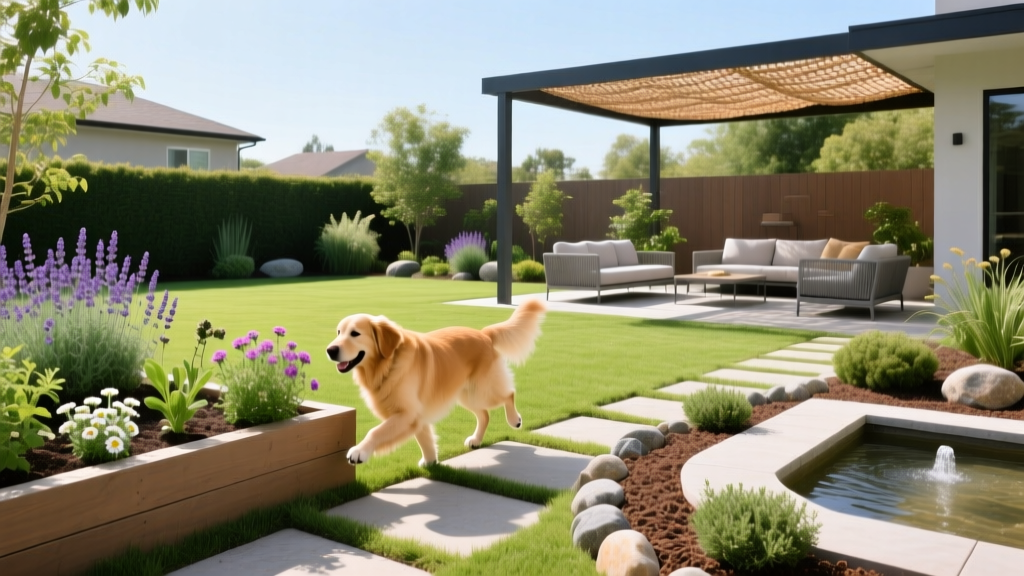
Dog-Friendly Landscaping: 10 Safe Backyard Ideas for Dogs
Designing a landscape that balances aesthetic curb appeal with the chaotic reality of a pet requires strategic material selection and spatial planning. When researching backyard ideas for dogs, most homeowners focus on basic fencing, but true pet-friendly landscaping goes much deeper. It involves understanding soil chemistry, paw-pad thermodynamics, and canine behavioral enrichment. This guide provides actionable, expert-level frameworks for building a durable, non-toxic, and engaging outdoor space for your dog.
Ground Covers That Survive Dog Traffic and Urine
Standard Kentucky Bluegrass (Poa pratensis) is highly susceptible to urine burn, manifesting as necrotic brown rings caused by nitrogen salts and uric acid. To maintain a green lawn, select turfgrass varieties with deeper root systems and higher salt tolerance.
- Perennial Ryegrass (Lolium perenne): The gold standard for dog yards in cool-season zones. It germinates in 5-7 days, allowing for rapid patch repair, and its high salt tolerance resists urine burn better than most fescues.
- Tall Fescue (Festuca arundinacea): Features deep roots (up to 2 feet) that dilute nitrogen salts before they reach the crown. Opt for turf-type tall fescue blends rather than forage varieties for a finer texture.
- Bermuda Grass (Cynodon dactylon): For warm-season climates, Bermuda recovers from physical tearing (digging and running) faster than any other turf due to its aggressive stolon and rhizome network.
- Dutch White Clover: An excellent non-grass alternative. Clover is naturally immune to urine burn, stays green during droughts without supplemental irrigation, and provides a soft, cool surface for paws.
Hardscaping and Paw-Safe Pathways
Hardscape materials must be evaluated for thermal absorption. Dark materials like black slate, asphalt, or dark stamped concrete can reach 145°F on a standard 90°F summer day, leading to severe paw pad hyperthermia and blistering within 60 seconds of contact.
Instead, utilize high-albedo (reflective) materials:
- Tumbled Travertine: Naturally porous and light-colored, travertine remains 20-30°F cooler than concrete in direct sunlight. Its pitted surface also provides excellent traction for older dogs with arthritis.
- Smooth Flagstone with Creeping Thyme: Use light sandstone or limestone flagstones. Plant Thymus serpyllum (creeping thyme) in the joints; it is non-toxic, withstands light foot traffic, and releases a pleasant scent when stepped on.
- Avoid Sharp Gravel: Crushed angular gravel (like 3/4-inch crushed rock) can lodge between toe pads and cause micro-lacerations. If using aggregate, opt for 3/8-inch rounded river pea gravel.
Containment: Dig-Proofing and Escape Prevention
A standard chain-link or wooden fence is rarely enough for athletic or terrier breeds. Containment requires addressing both vertical climbing and subterranean tunneling.
Pro-Tip: The L-Shaped Dig Barrier
To stop tunneling, do not just bury fencing straight down. Trench 12 inches deep along the fence line and install 19-gauge galvanized hardware cloth (1/2-inch mesh). Bend the bottom 12 inches of the mesh outward, away from the yard, forming an "L" shape. When a dog digs at the fence line, their paws hit the horizontal wire mesh, safely discouraging the behavior without causing injury.
To stop tunneling, do not just bury fencing straight down. Trench 12 inches deep along the fence line and install 19-gauge galvanized hardware cloth (1/2-inch mesh). Bend the bottom 12 inches of the mesh outward, away from the yard, forming an "L" shape. When a dog digs at the fence line, their paws hit the horizontal wire mesh, safely discouraging the behavior without causing injury.
For vertical containment, install coyote rollers along the top of the fence. These aluminum, free-spinning cylinders (costing approximately $32 per linear foot) prevent dogs from getting the front-paw leverage needed to vault over 6-foot fences. According to the American Kennel Club, visual barriers like bamboo reed fencing attached to the inside of chain-link fences also significantly reduce territorial barking by removing the dog's line of sight to street traffic.
Flora Selection: Navigating Plant Toxicity
Landscaping with dogs requires strict adherence to non-toxic plant palettes. Many popular ornamental shrubs contain cardiac glycosides or neurotoxins that are lethal if ingested. Always cross-reference your nursery purchases with the ASPCA's Toxic and Non-Toxic Plants database before planting.
| Plant Category | Safe Flora (Dog-Friendly) | Toxic Flora (Strictly Avoid) |
|---|---|---|
| Shrubs & Bushes | Camellia, Rosemary, Bottlebrush | Sago Palm, Oleander, Azalea |
| Flowering Perennials | Astilbe, Snapdragon, Zinnia | Foxglove, Lily of the Valley, Lantana |
| Ground Cover & Mulch | Creeping Thyme, Shredded Cedar | Cocoa Bean Mulch, Lily Bulbs |
Critical Warning: Never use cocoa bean mulch in a dog yard. It contains theobromine and caffeine—the same toxins found in chocolate. Ingestion of even small amounts can cause vomiting, diarrhea, tachycardia, and fatal seizures. Always opt for shredded cedar, pine bark, or arborist wood chips.
Enrichment Zones: Redirecting Destructive Behaviors
Dogs destroy landscapes out of boredom, not malice. By integrating dedicated enrichment zones, you can redirect digging and chewing away from your prized garden beds.
The Dedicated Digging Pit
Construct a 4x4 foot sandbox using untreated, rot-resistant cedar lumber. Fill it with washed play sand (avoid construction sand, which is too coarse and dusty). Bury durable rubber toys, like the Kong Classic, just beneath the surface. Praise and reward your dog when they dig in this designated zone, and gently redirect them here when they approach your flower beds.
Sensory and Cooling Stations
Install a shallow, in-ground splash basin or a heavy-duty polyethylene dog pool (like the Ruffwear Swamp Cooler) in a shaded corner of the yard. For mental stimulation, plant a "sniff garden" featuring dog-safe, highly aromatic herbs like lavender, chamomile, and rosemary. These scents provide mental enrichment and can have a mild calming effect on anxious dogs.
Waste Management and Drainage
Improper waste management leads to nitrogen overload in the soil and persistent odors. Designate a specific "pee zone" in a discreet corner of the yard to concentrate urine in one manageable area.
- Excavate: Dig a 3x3 foot area to a depth of 5 inches.
- Base Layer: Lay down heavy-duty geotextile fabric (minimum 4 oz/sq yd) to prevent weed growth while allowing water permeation.
- Drainage Rock: Add 2 inches of 3/4-inch crushed drain rock.
- Surface Layer: Top with 3 inches of 3/8-inch rounded pea gravel. The rounded stones are comfortable on paws and allow urine to drain instantly into the base layer, keeping the surface dry.
For solid waste, use a dedicated yard waste compost bin (like the Doggie Dooley in-ground septic system, approx. $65) which uses water and enzyme packets to safely break down feces into the subsoil, eliminating the need for plastic bag disposal. For surface odors on hardscapes, use a hose-end enzymatic cleaner specifically formulated to break down uric acid crystals, applying it during the cooler evening hours to prevent rapid evaporation.
A successful dog-friendly landscape is not about restricting the animal, but about designing an environment that accommodates their natural instincts while protecting your property investment through smart material science and botanical selection.

