
Landscaping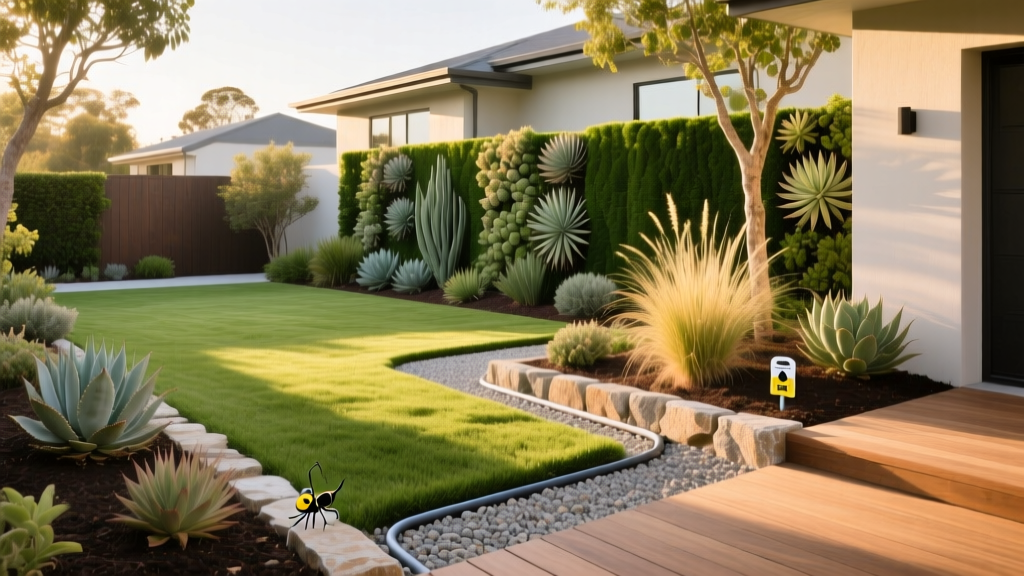
Problem-Solving Landscaping Ideas for Side of House Yards
Diagnosing the Side Yard 'Dead Zone'
Side yards are notoriously difficult landscape zones. Squeezed between the home’s foundation and the property line, these corridors typically suffer from a compounding matrix of issues: severe shade from roof overhangs, concentrated roof runoff, poor soil compaction from construction debris, and strict utility easement restrictions. Treating a side yard like a standard front or back lawn guarantees failure. Instead, successful side yard design requires a diagnostic approach that addresses specific microclimate and structural limitations.
Below is a targeted problem-solution framework for the four most common side yard failures, complete with exact material specifications, plant selections, and construction measurements.
Problem 1: The 'Bowling Alley' Effect (Narrow Sightlines)
Diagnosis
Side yards are often 3 to 6 feet wide and 40+ feet long. A straight, unbroken path or continuous lawn strip creates a wind tunnel effect and an uninviting, monotonous sightline that visually shrinks the property.
Solution: Staggered Hardscaping and Vertical Interruptions
Break the horizontal sightline by forcing the eye to zig-zag. Instead of a continuous concrete walkway, install staggered stepping stones. Use 24x24 inch bluestone treads (typically $8 to $12 per tread) offset by 12 inches laterally. Fill the gaps with 1.5-inch minus decomposed granite ($2 to $4 per square foot) to allow water permeation while stabilizing the path.
Expert Tip: Interrupt the corridor every 15 feet with a narrow, vertical planting. Ilex crenata 'Sky Pencil' (Japanese Holly) grows up to 8 feet tall but stays under 2 feet wide, providing a structural break without encroaching on the walking path.
Problem 2: The Sun-Deprived Trench (Heavy Shade & Root Competition)
Diagnosis
Between the house eaves and neighboring fences, side yards often receive less than 3 hours of dappled sunlight. Furthermore, mature trees from adjacent lots send feeder roots under the fence, aggressively competing for moisture and nutrients, making traditional turfgrass or shallow-rooted annuals impossible to sustain.
Solution: Shade-Tolerant Groundcover Matrices
Abandon the idea of mowing a side yard. Replace failing grass with a deep-rooted, shade-tolerant groundcover matrix. According to the Missouri Botanical Garden, selecting plants adapted to dry shade is critical for these root-competitive zones.
- Pennsylvania Sedge (Carex pensylvanica): A native grass-like sedge that thrives in dry shade and requires zero mowing. Plant plugs 12 inches on center.
- Big Blue Lilyturf (Liriope muscari 'Big Blue'): Extremely aggressive root system that outcompetes tree roots. Forms a dense 12-inch tall evergreen mat.
- Christmas Fern (Polystichum acrostichoides): Use as an anchor plant at the corners of the yard where it receives slightly more ambient light.
Problem 3: The Mud Pit (Eaves Drip & Poor Drainage)
Diagnosis
When gutters are absent or downspouts discharge directly into the side yard, thousands of gallons of roof runoff concentrate in a narrow trench. This creates a perennial mud pit that saturates the soil, potentially leading to foundation hydrostatic pressure and basement leaks.
Solution: Dry Creek Beds and French Drains
Address surface water and subsurface water simultaneously. For surface runoff, construct a dry creek bed. Excavate a trench 18 inches wide and 6 inches deep, sloping it toward the rear or front of the property. Line it with heavy-duty non-woven geotextile fabric (minimum 4 oz per square yard) to prevent soil migration. Fill the base with 2-inch angular drain rock, then top with 3 to 5-inch rounded river rock ($60 to $80 per ton). The rounded rock slows water velocity, while the angular base rock creates void spaces for water to percolate.
For severe subsurface saturation, a French drain is mandatory. The University of Minnesota Extension recommends trenching a 4-inch perforated PVC pipe, wrapping it in a soil-tight fabric sock, and bedding it in washed gravel. Ensure the trench maintains a strict minimum slope of 1/8 inch per linear foot to guarantee positive drainage away from the foundation.
Problem 4: The Utility & Trash Corridor (Clutter & Easements)
Diagnosis
Side yards are the default dumping ground for HVAC condenser units, trash receptacles, and utility meters. Hiding these eyesores often leads homeowners to build permanent structures that violate local utility easements or block required service access.
Solution: Modular Screening and Permeable Surfaces
Never pour solid concrete or build masonry walls over a utility easement. The Environmental Protection Agency (EPA) emphasizes the use of permeable surfaces in residential zones to manage stormwater and comply with municipal drainage codes.
Build modular, removable cedar lattice screens to hide trash cans and AC units. Set 4x4 pressure-treated pine posts 24 inches deep in concrete, but attach the cedar lattice panels using stainless steel lag screws rather than nails. This allows you to unbolt and remove the panels in under 10 minutes when utility workers or HVAC technicians need full access to the equipment.
Code Warning: Most municipalities require a minimum 3-foot clearance on all sides of an HVAC condenser unit for proper airflow and service access. Do not build screening closer than 36 inches to the unit.
Hardscape Material Comparison for Side Yards
Choosing the wrong hardscape material for a narrow side yard can exacerbate drainage issues and violate local codes. Use this matrix to select the appropriate surface material based on your specific yard conditions.
| Material | Avg. Cost (Installed) | Permeability | Best Application | Failure Mode to Avoid |
|---|---|---|---|---|
| Decomposed Granite (DG) | $4 - $7 / sq ft | High | Low-traffic walking paths | Using without a stabilizer binder; washes away in heavy roof runoff. |
| Permeable Pavers | $12 - $18 / sq ft | Very High | Patio pads, trash can pads, easements | Failing to clean joint sand; pores clog with silt over 3-5 years. |
| Poured Concrete | $8 - $14 / sq ft | Zero | Wide side yards with dedicated drainage | Pouring over utility easements; causes massive pooling against foundation. |
| Flagstone on Gravel | $15 - $22 / sq ft | Medium | High-end aesthetic pathways | Setting stones in mortar; mortar cracks in freeze-thaw cycles. |
The 3-Foot Foundation Buffer Rule
Regardless of the plants or hardscaping you choose, maintain a strict 3-foot buffer between the home’s foundation and any soil, mulch, or planting. When soil or organic mulch touches the siding or brick weep holes, it creates a moisture bridge. This leads to three catastrophic failure modes:
- Termite Bridging: Subterranean termites use the moist soil-to-wood contact to bypass chemical termite barriers.
- Siding Rot: Constant moisture wicking into wood or fiber-cement siding causes premature delamination and rot.
- Weep Hole Blockage: Brick veneer walls rely on weep holes at the base to expel trapped moisture. Mulch or soil covering these holes traps water inside the wall cavity, causing interior drywall damage.
Keep the 3-foot zone clear, using only inorganic materials like 1-inch washed river rock or leaving it as bare, graded soil sloping away from the house at a minimum drop of 6 inches over the first 10 horizontal feet.

