
Landscaping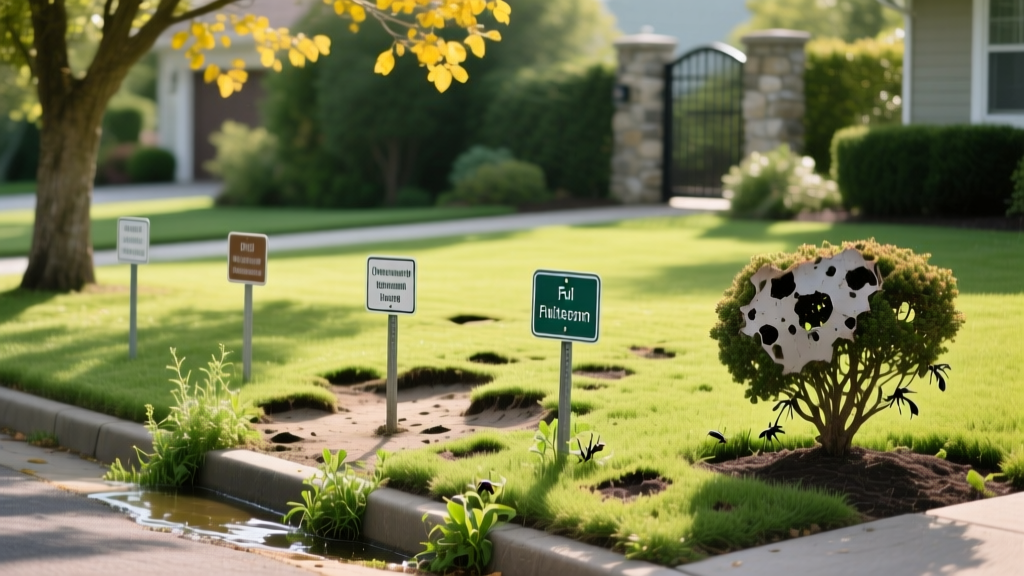
Diagnosing a Failing Simple Landscape: 5 Common Yard Problems & Fixes
The Myth of the Zero-Maintenance Yard
A 'simple landscape' is frequently misunderstood as an empty yard or a sterile grid of concrete and grass. When homeowners attempt to simplify their outdoor spaces, they often trade complex garden beds for severe, hidden maintenance headaches. A truly simple landscape relies on ecological balance and structural integrity, not just a lack of features. When minimalist designs fail, the symptoms are rarely aesthetic; they are structural and biological. Diagnosing why your low-maintenance yard is demanding high-maintenance interventions requires looking beneath the surface.
Symptom 1: The 'Low-Maintenance' Monoculture Lawn That Keeps Dying
The Diagnosis: Homeowners often strip away garden beds and expand the lawn to create a 'simple' look, assuming grass is easier to maintain. However, planting traditional Kentucky Bluegrass or Tall Fescue in full sun without complex irrigation systems guarantees failure. The soil is often heavily compacted from construction, and the monoculture lacks the biological diversity to resist drought or grubs.
The Solution: Transition to a deep-rooted, low-input turf alternative. For warm-season and transitional zones, Buchloe dactyloides (specifically the 'UC Verde' or 'Prestige' Buffalograss cultivars) requires 75% less water than traditional turf once established. For cool-season zones, utilize a microclover and fine fescue blend, such as Pearl's Premium Ultra Low Maintenance seed.
- Preparation: Core aerate the existing soil to a depth of 3 inches. Do not use a liquid aerator; mechanical pulling is required to break the compaction pan.
- Seeding Rate: Apply Buffalograss plugs at 1 plug per square foot (costing approximately $0.65 to $0.85 per plug in 2026) for rapid coverage, or seed at a rate of 2 lbs per 1,000 square feet.
- Establishment Edge Case: Microclover will turn brown and go dormant if subjected to severe, prolonged drought during its first summer. Deep, infrequent watering (1 inch per week) is mandatory for the first 90 days to drive taproots below the topsoil layer.
Symptom 2: Mulch Beds Turning into Weed Factories
The Diagnosis: To achieve clean, simple lines, many homeowners lay down cheap, dyed hardwood mulch over bare soil. Dyed hardwood is often made from recycled pallets that break down rapidly, depleting soil nitrogen and creating a perfect, nutrient-rich seedbed for weeds within 60 days. Furthermore, laying landscape fabric beneath organic mulch is a critical error; the fabric eventually clogs with silt, preventing water infiltration while weeds simply root into the decomposing mulch layer above the fabric.
The Solution: Switch to slow-decay organic mulches or inorganic aggregates, and apply a liquid pre-emergent instead of physical fabric barriers.
| Material | Avg. Cost (per cu. yd.) | Decay Rate | Weed Suppression | Best Use Case |
|---|---|---|---|---|
| Dyed Hardwood | $35 - $45 | Fast (6-9 months) | Poor | Avoid in simple landscapes |
| Double-Shredded Cedar | $55 - $70 | Slow (18-24 months) | Good | Tree rings, shaded beds |
| Decomposed Granite (DG) | $75 - $110 | None (Inorganic) | Excellent (if stabilized) | Sun beds, pathways, modern yards |
| River Rock (1.5 - 2 inch) | $60 - $85 | None (Inorganic) | Moderate | Drainage swales, fire pits |
CRITICAL WARNING: The 'Mulch Volcano' Edge Case
Piling mulch against tree trunks (volcano mulching) is the leading cause of basal stem rot and girdling roots in simplified yards. According to the University of Florida IFAS Extension, mulch must be kept at least 3 to 5 inches away from the root flare of the tree. The root flare must be visible and exposed to air. A 3-inch maximum depth of cedar mulch, spread out to the drip line, is the biological limit for healthy gas exchange.
Symptom 3: Hardscape Washouts and Paver Heaving
The Diagnosis: A simple patio or walkway often fails because contractors cut corners on the base aggregate to keep the initial bid low. Using 'stone dust' or 'screenings' as a base material is a catastrophic error in regions with freeze-thaw cycles. Stone dust holds water like a sponge. When it freezes, it expands, causing the pavers above to heave, shift, and crack the polymeric sand joints.
The Solution: Demand an open-graded base aggregate. The Interlocking Concrete Pavement Institute (ICPI) and modern permeable hardscape standards dictate the use of ASTM #57 crushed stone (roughly 1/2 inch to 1 inch in size with no fine dust) for the base layer. This allows water to pass straight through the base rather than pooling beneath the pavers.
- Base Depth: Minimum 6 inches of compacted ASTM #57 for pedestrian patios; 10 to 12 inches for driveways.
- Bedding Layer: Use 1 inch of ASTM C33 concrete sand. Never use masonry sand, which is too fine and will wash out.
- Jointing Sand: Upgrade to a high-performance polymeric sand like Alliance Gator Maxx G2 (approx. $48 per 40-lb bag in 2026). It resists efflorescence (the white, powdery staining that ruins simple, clean hardscapes) and remains flexible enough to handle minor thermal expansion without cracking.
Symptom 4: Foundation Pooling in 'Flat-Grade' Designs
The Diagnosis: Minimalist landscapes often feature flat, geometric grading to achieve a clean, modern look. However, flat grading near the foundation results in negative drainage. Water pools against the siding or brick, leading to basement leaks, efflorescence on foundation walls, and wood rot on sill plates.
The Solution: Implement the 5% slope rule. The EPA's WaterSense landscaping guidelines and standard building codes require the ground to drop at least 6 inches over the first 10 feet away from the foundation. If a flat aesthetic is non-negotiable, you must install a hidden trench drain or a French drain system wrapped in non-woven geotextile fabric, filled with washed #57 gravel, to intercept and route water away from the structure before it reaches the surface.
Decision Matrix: Is Your Yard 'Simple' or Just 'Empty'?
To evaluate your current landscape design, use this diagnostic matrix. An empty yard creates maintenance problems; a simple landscape solves them.
| Feature | Empty / Poorly Planned Yard | Intentionally Simple Landscape |
|---|---|---|
| Turf Area | 100% traditional grass, high water/chemical input. | Zoned turf using deep-rooted fescue or buffalograss only in high-traffic areas. |
| Planting Beds | Bare soil or dyed mulch, scattered single shrubs. | Mass plantings of native perennials (e.g., Echinacea, Salvia) grouped by hydro-zone. |
| Hardscape Base | Stone dust or sand base, prone to heaving and weeds. | Open-graded ASTM #57 aggregate base with permeable jointing. |
| Edging | Plastic coil edging that degrades and pops up annually. | Hidden 1/4-inch Corten steel edging or poured concrete curbing. |
2026 Material & Labor Cost Expectations
Budgeting for a proper simple landscape requires understanding where to allocate funds. You will spend more on subsurface preparation and less on surface-level decorations.
- Steel Edging Installation: $8 to $12 per linear foot (materials and labor). This creates the crisp, permanent lines essential to minimalist design without the annual replacement cost of plastic.
- Permeable Base Retrofit: If your existing pavers are heaving, expect to pay $12 to $18 per square foot to pull the pavers, excavate the stone dust base, install ASTM #57 gravel, and relay the stones.
- Smart Irrigation Integration: A simple landscape should not rely on manual watering. Upgrading to a Rachio 3 Smart Sprinkler Controller (approx. $230) paired with drip-line tubing in mulch beds reduces water waste by up to 40% compared to overhead spray heads.
'A simple landscape is not defined by what you remove, but by the resilience of what remains. When you eliminate biological diversity and structural drainage in the name of minimalism, nature will quickly fill the void with weeds and washouts.'
Diagnosing your yard's failures is the first step toward true low-maintenance living. By correcting the soil biology, upgrading base aggregates, and enforcing strict grading parameters, your simple landscape will finally function as intended: looking sharp while demanding minimal intervention.

