
Landscaping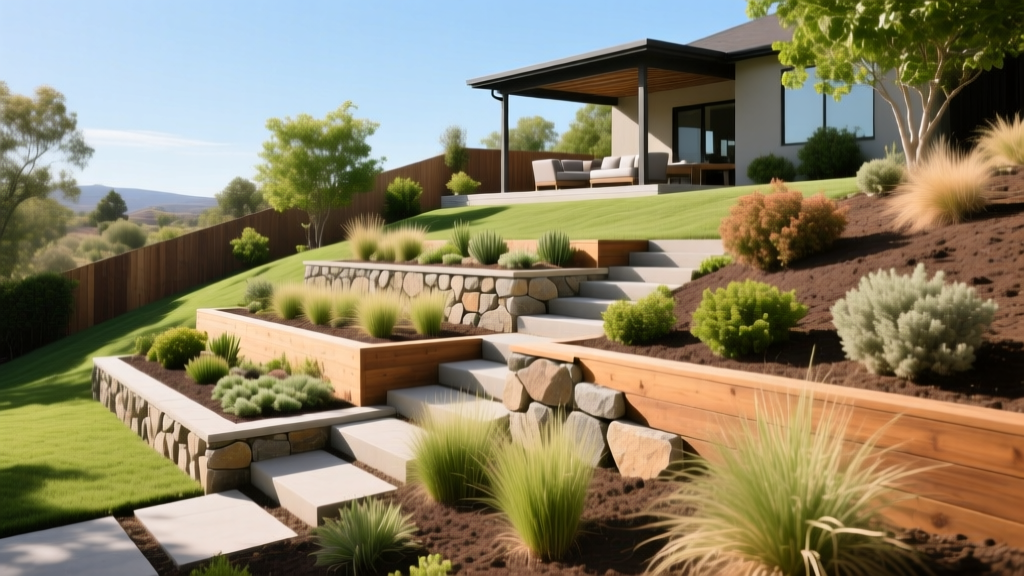
Beginner-Friendly Sloped Backyard Landscaping Ideas to Stop Erosion
A sloped yard presents two immediate problems: topsoil erosion and unusable square footage. According to agricultural extension data, a 15% grade loses topsoil at up to ten times the rate of flat terrain during heavy rainfall. For beginners, the goal of implementing sloped backyard landscaping ideas is not just aesthetic; it is about stabilizing the soil, managing stormwater runoff, and creating functional outdoor living spaces without hiring heavy excavation crews.
The Slope Grade Assessment Matrix
Before purchasing materials, you must determine your slope's grade. The grade dictates which landscaping techniques are structurally viable. Measure the rise (vertical height) and run (horizontal distance) of your yard. Divide the rise by the run and multiply by 100 to get the percentage.
| Slope Grade | Visual Cue | Primary Risk | Best Beginner Solutions |
|---|---|---|---|
| 0% - 10% | Slight tilt, easily walkable | Minor surface runoff | Standard turf, shallow rain gardens, gentle swales |
| 11% - 20% | Noticeable incline, mowing is tedious | Moderate topsoil washout | Deep-rooted groundcovers, dry creek beds, switchback paths |
| 21% - 35% | Steep, difficult to walk straight up | Severe erosion, turf failure | Terraced retaining walls (under 3 ft), heavy riprap stone |
| Over 35% | Cliff-like, unsafe for standard mowers | Structural landslides, mudslides | Engineered retaining walls, deep-rooted native shrub massing |
5 Beginner-Friendly Sloped Backyard Landscaping Ideas
1. Terraced Retaining Walls with Interlocking Blocks
Terracing breaks a single steep slope into multiple flat, usable tiers. For beginners, lip-and-pin interlocking concrete wall blocks (such as Belgard Weston Stone or Pavestone Retaining Wall units) eliminate the need for wet mortar. As of 2026, these blocks average $4.50 to $6.50 per square foot of face.
The Engineering Secret: The wall itself does not hold the hill back; the compacted base and drainage do. Excavate a trench and lay a 6-inch base of 3/4-inch crushed angular gravel, compacted with a mechanical plate compactor. Behind the wall, backfill with washed drainage stone and install a Schedule 40 4-inch perforated PVC pipe wrapped in a geotextile sock at the base to prevent hydrostatic pressure buildup, which is the number one cause of wall blowouts.
2. Deep-Rooted Groundcover Instead of Turf
Kentucky Bluegrass and Fescue have shallow root systems (typically 2 to 4 inches deep) that fail to anchor soil on grades over 15%. Replace turf with deep-rooted, spreading groundcovers. Juniperus horizontalis (Creeping Juniper) roots can reach 18 inches deep, while Phlox subulata (Creeping Phlox) forms a dense, weed-choking mat.
Plant 4-inch plugs at 12-inch on-center spacing. Immediately cover the exposed soil with biodegradable jute erosion control netting, pinning it down with 18-gauge, 6-inch U-shaped sod staples placed every 2 feet along the seams. The jute holds the soil in place for 12 to 18 months while the root network establishes.
3. Dry Creek Beds for Runoff Management
If water aggressively channels down your slope during storms, a dry creek bed intercepts the flow and safely routes it to a drainage exit or rain garden. Unlike a solid PVC pipe, a dry creek bed mimics natural hydrology and adds visual texture.
Excavate the channel to a 3:1 width-to-depth ratio (e.g., a 3-foot wide bed should be 1 foot deep at the center). Line the trench with a 4 oz non-woven geotextile fabric (like Mirafi 140N) to prevent the rocks from sinking into the clay subsoil. Fill the bed with a mix of 3-inch to 5-inch river rock, anchoring the edges with larger 8-inch boulders to prevent the stones from washing away during high-velocity flow events.
4. Zig-Zag Switchback Walkways
Walking straight up a 20% grade is exhausting and dangerous when wet. Switchback paths reduce the walking incline to a manageable 5% to 8% grade by zig-zagging across the slope. Use 8 inches of compacted crushed limestone as a base, topped with 2 inches of decomposed granite (DG). Install 4-inch aluminum landscape edging on the downhill side of the path to prevent the DG from spilling over the edge during heavy rain.
5. Base-Level Rain Gardens
Instead of fighting the water at the top of the slope, capture it at the bottom. A rain garden is a shallow, 6-inch depression planted with hydrophilic (water-loving) native species. According to the EPA Water Research division, a properly sized rain garden can absorb up to 30% more water than a standard lawn of the same size. Use deep-rooted natives like Asclepias incarnata (Swamp Milkweed) and Iris versicolor (Blue Flag Iris), which thrive in temporary inundation and act as biological filters for runoff pollutants.
Material & Cost Comparison Chart
Budgeting is critical for landscape construction. The table below outlines the average 2026 material costs and labor intensity for DIY beginners.
| Landscaping Method | Material Cost (Avg) | DYI Difficulty | Maintenance Level |
|---|---|---|---|
| Interlocking Retaining Walls | $22 - $35 / sq. ft. of face | High (Requires excavation/compaction) | Low (Annual weed sweeping) |
| Groundcover + Jute Netting | $1.50 - $2.50 / sq. ft. | Low (Planting and staking) | Medium (Pruning, weed pulling) |
| Dry Creek Bed | $8 - $14 / linear ft. | Medium (Trenching, heavy lifting) | Low (Occasional rock raking) |
| Switchback DG Paths | $6 - $10 / sq. ft. | Medium (Grading, edging) | Medium (Topping up DG yearly) |
| Native Rain Garden | $12 - $20 / sq. ft. | Low (Digging, planting) | Low (Once established) |
Critical Engineering Mistakes to Avoid
WARNING: The 3-Foot Retaining Wall Rule
Most municipal building codes strictly prohibit DIY retaining walls that exceed 3 or 4 feet in height (measured from the bottom of the compacted base to the top of the wall). Walls taller than this exert thousands of pounds of lateral earth pressure and require a stamped design from a licensed structural engineer. If your slope requires a 6-foot wall, build two 3-foot terraced walls separated by a 4-foot flat planting plateau instead.
WARNING: Do Not Use Woven Fabric Under River Rock
Beginners often buy cheap, woven polypropylene weed barrier for dry creek beds. Woven fabric is designed for solid surfaces under mulch; it does not allow water to percolate quickly. During heavy rain, water will pool on top of the woven fabric, turn the creek bed into a water slide, and wash your expensive river rock into your neighbor's yard. Always use non-woven geotextile fabric for drainage applications.
Step-by-Step: Installing a Basic Dry Creek Bed
- Map the Flow: Wait for a heavy rainstorm and observe where the water naturally flows. Mark this path with landscaping spray paint. Do not force water into an unnatural, straight line; follow the natural topography.
- Excavate the Trench: Dig the marked path to a 3:1 ratio. Create a slight meandering curve every 6 to 8 feet to slow down the water's velocity. Ensure the trench maintains a minimum 1% downward slope toward your drainage exit.
- Lay the Geotextile: Roll out 4 oz non-woven geotextile fabric. Overlap all seams by at least 12 inches and pin the fabric to the soil using 6-inch landscape staples every 3 feet.
- Place the Boulders: Before adding the small rocks, place 8-inch to 12-inch anchor boulders along the outside curves of the creek bed. These act as check dams to slow water and protect the banks from undercutting.
- Fill with River Rock: Dump 3-inch to 5-inch rounded river rock into the bed to a depth of 4 to 6 inches. Rake it smooth, ensuring the fabric is completely hidden.
Authoritative Resources for Native Plant Selection
Choosing the right plants for slope stabilization and rain gardens requires regional knowledge. Consult these databases to find deep-rooted natives adapted to your specific USDA Hardiness Zone:
- National Wildlife Federation (NWF) Native Plant Finder: Enter your zip code to generate a ranked list of native shrubs and perennials that support local pollinators while providing deep structural root systems for erosion control.
- Missouri Botanical Garden Plant Finder: An industry-standard database allowing you to filter plants by specific site conditions, including "dry shade," "wet soil," and "erosion control," complete with exact mature dimensions and root depth profiles.

