
Landscaping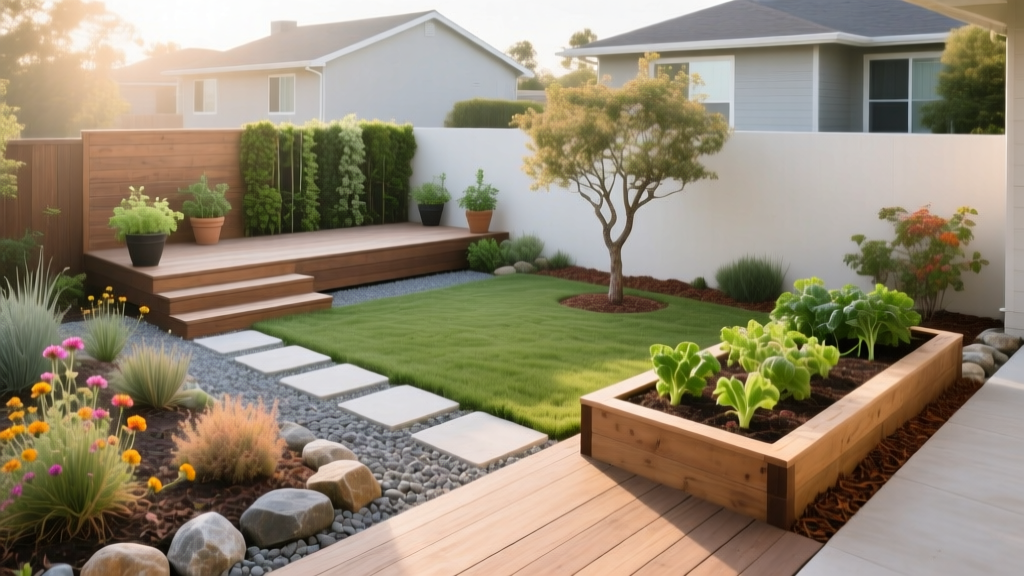
Small Area Landscaping Ideas: 4 Beginner-Friendly Yard Designs
Designing a yard under 400 square feet requires a shift in perspective. Unlike sprawling suburban lawns, small spaces—such as townhouse patios, side yards, and urban courtyards—demand precision. Every square foot must serve a functional or aesthetic purpose. For beginners, the sheer volume of plant and hardscape options can lead to cluttered, unusable spaces. This guide strips away the guesswork, providing four highly specific, beginner-friendly small area landscaping ideas complete with material specifications, exact costs, and installation frameworks.
The Golden Rules of Tiny Yard Design
The Scale Principle: In a small area, using many small elements (like 4-inch mosaic tiles or dozens of tiny potted plants) creates visual chaos. Instead, use fewer, larger elements to make the space feel expansive.
- Verticality over Sprawl: Draw the eye upward using trellises, tall narrow planters, and climbing vines to free up valuable ground-level square footage.
- Unified Flooring: Running the same hardscape material (e.g., large-format porcelain pavers) from your indoor living space directly out to the yard blurs the boundary, making the outdoor area feel like an extension of the home.
- Hidden Storage: Integrate bench seating with hollow, waterproof storage underneath to hide garden hoses and tools without sacrificing floor space.
4 High-Impact Small Area Landscaping Ideas
1. The Permeable Gravel Courtyard with Steel Edging
Gravel is the ultimate beginner-friendly hardscape. It requires no mortar, no heavy cutting, and naturally drains water. However, the difference between a messy gravel patch and a high-end courtyard lies in the aggregate size and the edging.
- The Material: Use 3/8-inch minus crushed basalt. The 'minus' means it contains stone dust and smaller particles that lock together when compacted, creating a firm, patio-like surface that won't shift underfoot like rounded pea gravel.
- The Edging: Install 4-inch galvanized steel edging (such as Col-Met). Steel provides a crisp, modern line and won't warp or crack in freezing temperatures like plastic alternatives.
- Installation Specs: Excavate 6 inches deep. Lay down a non-woven geotextile fabric (not woven weed cloth, which blocks drainage), add 2 inches of compacted base rock, and top with 3 inches of the 3/8-inch minus basalt.
- Cost Estimate: $1.50 to $2.50 per square foot for materials.
2. The 'No-Mow' Micro-Clover Zone
If you want the lush green look of a traditional lawn without the mowing, edging, and heavy fertilizing, micro-clover is the ideal solution for small, sunny areas. According to EPA WaterSense data, alternative groundcovers can significantly reduce outdoor water consumption compared to traditional turfgrass.
- The Seed: Look for Trifolium repens 'Pirouette' or 'Microclover'. These cultivars stay under 6 inches tall and produce very few flowers, reducing bee traffic in high-use areas.
- Seeding Rate: Apply at exactly 2 lbs per 1,000 square feet. Because the seeds are tiny, mix them with dry sand in a 1:4 ratio to ensure even distribution from a broadcast spreader.
- Maintenance: Micro-clover fixes its own nitrogen from the air, eliminating the need for synthetic nitrogen fertilizers. It requires watering only during the initial 3-week germination phase and extreme summer droughts.
- Cost Estimate: $18 to $22 per pound of seed (covers 500 sq ft).
3. Modular Cedar Privacy Screens with Star Jasmine
Townhouse yards often suffer from close neighbors. Building a masonry wall is expensive and requires permits. A modular living screen offers immediate privacy that softens over time.
- The Structure: Use pre-assembled Western Red Cedar lattice panels (4x8 feet). Mount them 2 inches away from your existing fence using 304-grade stainless steel L-brackets to allow airflow and prevent wood rot.
- The Plant: Plant Trachelospermum jasminoides (Star Jasmine) at the base. It is an evergreen vine that grows 12 to 24 inches per year, provides dense coverage, and emits a powerful, pleasant fragrance in late spring.
- Pro Tip: Run heavy-duty, black-coated 12-gauge wire horizontally across the cedar lattice to give the jasmine a specific pathway to climb, preventing it from bunching at the bottom.
4. Raised Corten Steel Planter Beds
For small areas with poor native soil or concrete slabs, raised beds are mandatory. Corten steel (weathering steel) has become a staple in modern landscape design because it develops a protective, rust-colored patina that halts further corrosion.
- The Specs: Order custom-welded boxes at 18 inches high (the ergonomic standard for seating and planting without bending) and 1/8-inch thick. Ensure the fabricator includes three 1/2-inch drainage holes per 4 square feet of bed space.
- The Soil Mix: Do not use native dirt. Fill with a precise blend: 40% high-quality topsoil, 30% organic compost, 20% pumice or perlite for aeration, and 10% worm castings for microbial life.
- Cost Estimate: $400 to $600 per custom 4x2 foot box, plus $60 for the soil blend.
Material Cost & Maintenance Matrix
| Material / Feature | Initial Cost (per sq ft) | Annual Maintenance | Lifespan | Best Application |
|---|---|---|---|---|
| 3/8" Minus Crushed Basalt | $1.50 - $2.50 | Rake and top-dress every 3 years | 15+ years | Primary walking paths, seating areas |
| Micro-Clover Lawn | $0.10 - $0.15 (seed) | Water during severe drought | 5 - 7 years (overseeds naturally) | Sunny play zones, aesthetic groundcover |
| 24x24 Porcelain Pavers | $8.00 - $14.00 | Power wash annually | 50+ years | Patios directly adjacent to indoor doors |
| Corten Steel Planters | $12.00 - $18.00 (equiv) | Replace top 2" of soil yearly | 25+ years | Vegetable gardens, patio borders |
Step-by-Step: Preparing Your Small Space
Before buying materials, you must properly prep the site. Skipping these steps is the primary cause of landscape failure in small yards.
- Call 811 (Utility Check): Even if you are only digging 6 inches down for a gravel patio, urban backyards are notoriously tangled with shallow irrigation, gas, and fiber-optic lines. Call 3 days before breaking ground.
- Establish the Grade: Use a line level to ensure the ground slopes away from your home's foundation at a minimum rate of 1/4 inch per foot for the first 10 feet. If your small yard is flat, you must install a French drain or a catch basin before laying hardscape.
- Sheet Mulch Existing Weeds: Do not use chemical herbicides in small, enclosed spaces where runoff is concentrated. Instead, mow existing vegetation as low as possible, lay down overlapping layers of uncoated cardboard, and wet it thoroughly. This solarizes and smothers weeds within 6 weeks.
⚠️ Warning: The 'Small Paver' Trap
Beginners often buy 4x8 inch concrete pavers because they are cheap and easy to carry. In a 10x10 foot space, this requires cutting dozens of pieces and creates hundreds of grout lines, making the yard look like a cluttered patchwork quilt. Always opt for large-format pavers (minimum 24x24 inches) to create a seamless, expansive visual effect.
Beginners often buy 4x8 inch concrete pavers because they are cheap and easy to carry. In a 10x10 foot space, this requires cutting dozens of pieces and creates hundreds of grout lines, making the yard look like a cluttered patchwork quilt. Always opt for large-format pavers (minimum 24x24 inches) to create a seamless, expansive visual effect.
💡 Pro Tip: Lighting for Depth
Install low-voltage (12V) LED uplights at the base of your privacy screen or corner trees. Illuminating the vertical boundaries at night pushes the perceived walls of the yard outward, making a 200 sq ft space feel twice as large after dark.
Install low-voltage (12V) LED uplights at the base of your privacy screen or corner trees. Illuminating the vertical boundaries at night pushes the perceived walls of the yard outward, making a 200 sq ft space feel twice as large after dark.
Frequently Asked Questions
How do I make a small, narrow side yard look wider?
Break the linear sightline. Instead of a straight path down the middle, lay pavers or gravel in a zig-zag or diagonal pattern. Place tall, narrow plants (like Calamagrostis x acutiflora 'Karl Foerster' grass) at alternating corners to force the eye to scan side-to-side rather than straight down the tunnel.
What are the best trees for spaces under 300 square feet?
Avoid high-canopy shade trees that will drop excessive debris and block crucial sunlight. Opt for multi-stemmed understory trees like the Serviceberry (Amelanchier) or a Japanese Maple (Acer palmatum). These typically max out at 15-20 feet, provide architectural interest, and have non-invasive root systems that won't heave nearby patios.
Can I use artificial turf in a very small, shaded courtyard?
Yes, and it is often the only viable option for heavily shaded areas where both traditional grass and micro-clover will fail due to lack of photosynthesis. For small spaces, invest in a turf with a minimum 60-ounce face weight and a thatch layer to prevent it from looking like a flat green carpet. Ensure the sub-base includes 3 inches of compacted decomposed granite for drainage.

