
Landscaping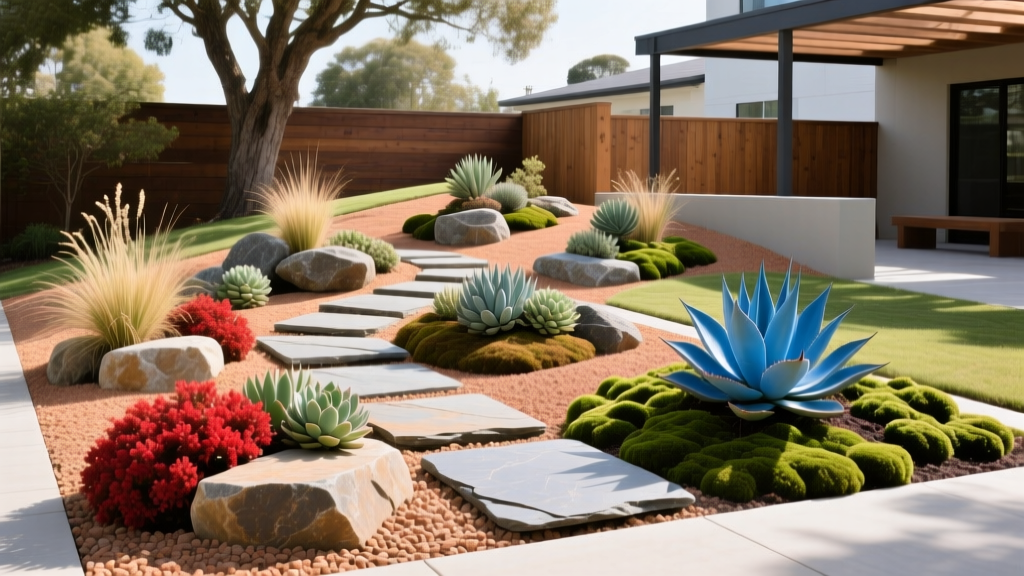
7 Small Rock Garden Ideas for Tight Yards and Slopes
The Spatial Challenge: Why Rock Gardens Solve Tight Yard Problems
When dealing with under 100 square feet of usable yard space, traditional turfgrass fails. Narrow side yards, steep slopes, and awkward patio corners suffer from poor drainage, heavy shade, or mower inaccessibility. Implementing targeted small rock garden ideas transforms these dead zones into high-impact, drought-tolerant landscapes that require zero mowing and minimal watering.
Unlike sprawling alpine rockeries, micro-rock gardens demand precise material selection. A 4x6 foot bed cannot support massive limestone boulders or aggressive spreading junipers. This guide details exact dimensions, specific stone types, and specialized soil mixes required to build small-scale rock gardens that thrive in constrained environments.
The Anatomy of a Successful Micro-Rock Garden
Before executing any design, you must engineer the base. The most common failure in small rock gardens is weed intrusion and soil compaction. According to Rutgers University Extension, proper drainage is the single most critical factor for alpine and rock garden plant survival.
Pro-Tip: The 4-Layer Base System
- Layer 1: 4 inches of compacted crushed stone base (road base or 3/4-inch minus gravel).
- Layer 2: 4.8 oz woven geotextile fabric (e.g., Mirafi 500X). Never use black plastic sheeting; it traps water and shreds within two seasons.
- Layer 3: 2 inches of coarse drainage sand or pumice.
- Layer 4: 2-3 inches of decorative surface gravel or planting soil mix.
7 Small Rock Garden Ideas for Specific Yard Challenges
1. The Dry Creek Bed Illusion (For Drainage Issues)
If your tight side yard acts as a runoff channel during heavy rain, a dry creek bed is the ultimate functional rock garden. Dig a shallow trench (18 inches wide, 4 inches deep) with gentle S-curves. Line it with 4.8 oz geotextile fabric. Fill the center with 3-to-5-inch smooth river cobbles, and border the edges with 1-inch pea gravel. Plant Sedum rupestre 'Angelina' along the banks to stabilize the soil. This design handles thousands of gallons of runoff while looking like a natural water feature.
2. The Corner Zen Micro-Garden (For Dead Space)
Awkward 3x3 foot corners next to AC units or fences benefit from minimalist Zen designs. Use 1/4-inch crushed basalt or silver sand as the base, which can be raked into patterns. Anchor the space with a single, slow-growing specimen plant, such as a dwarf mugo pine (Pinus mugo 'Slowmound') or a Japanese maple grafted onto a 2-foot standard. Place one asymmetrical, moss-covered basalt boulder (roughly 12x18 inches) using the rule of thirds to create visual weight without overcrowding.
3. Terraced Slope Retaining Rockery (For Grades)
Steep slopes under 50 square feet are impossible to mow safely. Build a micro-terrace using 6-to-12-inch fieldstone. Critical structural detail: You must "batter" the stones—tilting them backward 1 inch for every 12 inches of vertical height—so gravity locks them into the hill. Backfill the terraced pockets with a specialized alpine mix (detailed below) and plant cascading species like creeping thyme (Thymus serpyllum) or rock cress (Aubrieta deltoidea).
4. The Patio Edge River Rock Transition
Eliminate the difficult task of string-trimming grass right up against a concrete patio slab. Dig a 12-inch wide, 4-inch deep trench along the patio perimeter. Install aluminum or Corten steel edging on the lawn side to prevent grass rhizomes from invading. Fill the trench with Mexican beach pebbles or 3/4-inch river jack. This creates a clean, permanent transition that protects the concrete from soil moisture and mower damage.
5. The Shade-Tolerant Boulder Cluster
Rock gardens are typically associated with full sun, but shaded areas under large trees can support them if you choose the right stone. Use porous rocks like tufa or limestone, which absorb and slowly release ambient moisture. Avoid granite in deep shade, as it remains too dry. Pair these moisture-retaining boulders with shade-loving rockery plants like Heuchera 'Palace Purple', Japanese painted ferns, and miniature hostas.
6. The Vertical Trough Rock Garden
When you have zero ground space, build up. Hypertufa or natural stone troughs elevated on pedestals create a rock garden at eye level. A standard 24x12 inch trough requires only 2 cubic feet of soil. The Royal Horticultural Society (RHS) recommends trough gardens for rare alpine species that would otherwise be outcompeted in ground-level beds. Fill with a gritty mix and plant tight rosette succulents like Sempervivum (hens and chicks).
7. The Gravel Pathway Integration
Turn a narrow walkway into a rock garden by using 3/4-inch crushed angular gravel (like decomposed granite or crushed limestone) instead of round pea gravel. Angular gravel mechanically locks together underfoot, creating a firm walking surface that doubles as a planting bed for low-growing creeping groundcovers. Avoid round gravel in walkways; it acts like ball bearings and constantly shifts under shoes.
Material Cost Breakdown (Per 50 Square Feet)
Budgeting accurately prevents mid-project stalls. Below are estimated material costs for a standard 50-square-foot micro-rock garden, based on 2026 landscaping supply averages. Labor is excluded.
| Material | Quantity Needed | Estimated Cost |
|---|---|---|
| 3/4" Minus Base Gravel | 0.6 Cubic Yards | $45 - $70 |
| 4.8 oz Woven Geotextile | 75 Sq Ft Roll | $55 - $85 |
| Decorative Surface Stone | 0.4 Cubic Yards | $60 - $120 |
| Feature Boulders (1-2 ft) | 3 to 5 Stones | $80 - $150 |
| Alpine/Rockery Plants | 8 to 12 Plugs/1-Gal | $90 - $180 |
| Total Material Cost | -- | $330 - $605 |
The Alpine Soil Mix Recipe
Standard topsoil or bagged potting mix will rot the roots of rock garden plants. You must mix a high-drainage substrate. Combine the following by volume:
- 33% Coarse Sand or 3/8-inch Pumice: Provides permanent aeration and prevents compaction.
- 33% High-Quality Topsoil: Provides minimal nutrients and structure.
- 33% Expanded Shale or Perlite: Drastically increases drainage capacity.
- Amendment: Add exactly 1 cup of bone meal per cubic foot of mix to encourage root development without pushing excessive, weak foliage growth.
Plant Selection Matrix for Micro-Rock Gardens
| Plant Species | Light Requirement | Max Spread | Best Application |
|---|---|---|---|
| Sedum spurium 'Dragon's Blood' | Full Sun | 18 inches | Creeping over boulders |
| Sempervivum tectorum | Full Sun | 6 inches | Troughs and tight crevices |
| Campanula carpatica | Part Shade | 12 inches | Terraced slope pockets |
| Armeria maritima (Thrift) | Full Sun | 10 inches | Pathway borders |
Step-by-Step Installation Guide
- Excavate and Grade: Dig the area to a depth of 6 inches. Slope the base slightly (1/4 inch per foot) away from home foundations to ensure positive drainage.
- Compact the Subgrade: Use a hand tamper to compact the native soil. If the soil is heavy clay, add 2 inches of crushed base gravel and tamp again.
- Lay the Fabric: Unroll the woven geotextile. Overlap seams by at least 6 inches. Secure the edges with 6-inch landscape staples every 3 feet.
- Place the Boulders First: Always place your largest feature stones before adding the surface gravel. Bury the bottom 20% of each boulder into the base to make it look naturally grounded, rather than dropped on the surface.
- Add Surface Gravel and Soil: Spread your alpine soil mix in the planting pockets, and the decorative gravel in the negative spaces. Keep the gravel 1 inch below the top edge of any adjacent borders.
- Plant and Mulch: Dig small holes through the fabric (cut an X, do not tear large circles). Plant your specimens, then top-dress the soil around the plant crown with 1/2-inch grit to prevent crown rot.
Warning: The "Organic Mulch" Mistake
Never use shredded bark, wood chips, or pine straw in a rock garden. Organic mulches retain moisture against the crowns of alpine plants and succulents, guaranteeing fungal rot. Furthermore, as organic mulch decomposes, it creates a rich topsoil layer that invites aggressive weed seeds to germinate. Always use inorganic gravel mulch (grit, pea gravel, or crushed stone) to maintain the sterile, high-drainage environment rock garden plants require.
Maintenance and Long-Term Care
A properly constructed small rock garden requires less than 10 minutes of maintenance per month. In early spring, use a leaf blower on a low setting to remove debris from the gravel crevices. Avoid raking, which will displace the stones. If weeds do penetrate the geotextile fabric, pull them immediately before they establish taproots. Do not use broad-spectrum herbicides near rock gardens, as the chemical runoff will pool in the gravel and damage the shallow root systems of your alpine plants. Instead, use a targeted glyphosate gel applied directly to weed leaves with a cotton swab for zero-impact eradication.

