
Landscaping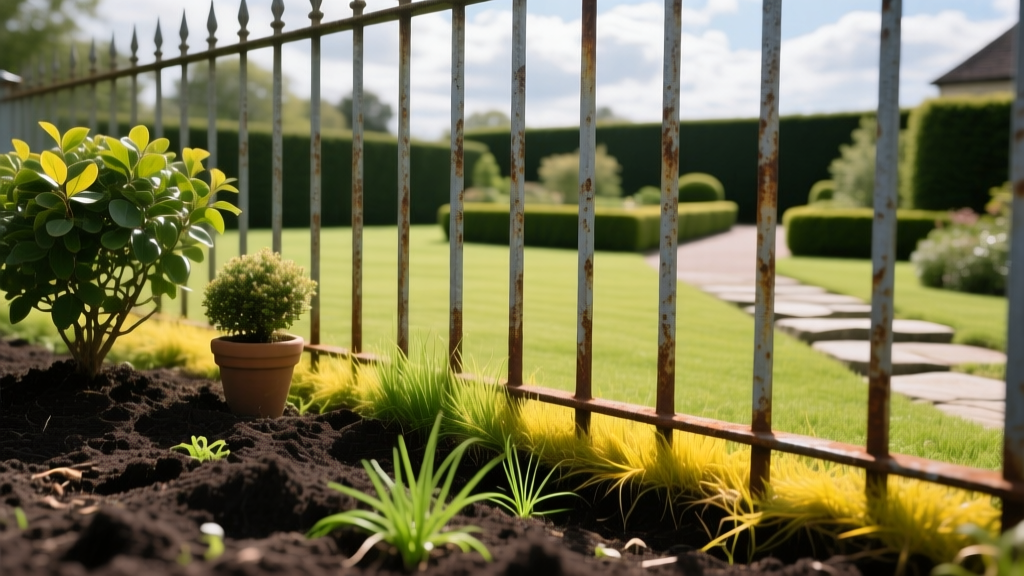
Soil Nutrition and Iron Chlorosis Management Near an Iron Rod Fence
The Hidden Microclimate of Fence-Line Soils
Landscaping along an iron rod fence introduces a highly specific, often overlooked soil microclimate that drastically alters nutrient availability. While the fence itself provides structural and aesthetic value, the installation process and the materials used create a hostile environment for shallow-rooted, iron-sensitive plants. The primary culprit is not the iron metal of the fence itself, but the calcium-rich concrete footings used to anchor the posts, combined with the localized compaction and altered drainage patterns typical of perimeter zones.
When soil pH rises above 7.2, iron oxidizes into insoluble iron hydroxide, rendering it completely unavailable to plant roots. This results in interveinal chlorosis—the yellowing of leaf tissue while veins remain green. According to University of Minnesota Extension, high-pH soils are the leading cause of iron deficiency in landscape plants, a condition severely exacerbated by the alkaline leaching from hardscape footings.
⚠️ The Concrete-Alkalinity Connection: Standard concrete mixtures used to set iron rod fence posts have an initial pH of 11 to 12. As they cure and weather, they continuously leach calcium carbonate into the adjacent 12 to 18 inches of soil. This acts as a permanent liming agent, buffering the fence-line soil to a pH of 7.5 or higher, effectively locking up naturally occurring iron and manganese.
Diagnostic Matrix: Fence-Line Nutrient Deficiencies
Before applying any fertilizers, accurately diagnosing the specific nutrient lockout caused by the fence perimeter environment is critical. Total soil iron tests are virtually useless in these zones; you must request a DTPA-extractable iron test from your local agronomic lab to measure what the plant can actually absorb.
| Symptom Profile | Primary Cause | Soil Test Indicator | Targeted Intervention |
|---|---|---|---|
| New growth is pale yellow, older leaves remain green | Iron Chlorosis (High pH lockout) | pH > 7.4; DTPA-Fe < 4.5 ppm | Fe-EDDHA chelate application |
| Leaf margins turn brown and crispy; stunted growth | Potassium displacement by excess Calcium | Base saturation Ca > 75%; K < 2% | Sulfate of Potash (0-0-50) banding |
| Uniform yellowing of oldest leaves first | Nitrogen deficiency due to poor microbial activity in compacted fence soil | SME-Nitrate < 10 ppm | Methylene urea slow-release nitrogen |
| Dark green, abnormally thick leaves with purple undersides | Phosphorus lockout via calcium phosphate precipitation | Olsen P < 10 ppm despite high total P | Foliar phosphite spray or mycorrhizal inoculant |
Chelated Iron Chemistry: Selecting the Right Molecule
The most common mistake homeowners and landscapers make when treating plants near an iron rod fence is purchasing the wrong iron chelate. Chelates are organic molecules that wrap around the iron ion, protecting it from binding with hydroxyl ions in alkaline soils. However, not all chelates survive high-pH environments.
The EDDHA Advantage for Alkaline Perimeters
For soils buffering above pH 7.2 due to concrete leaching, Fe-EDDHA is the only reliable soil-applied chelate. It remains stable up to pH 9.0. However, EDDHA comes in different isomeric forms, and understanding this distinction is where professional soil nutrition diverges from amateur guesswork:
- Ortho-Ortho EDDHA: The most stable and effective isomer for high-pH soils. It is highly expensive (typically $35–$45 per pound in 2026 markets) but guarantees iron delivery to roots even in heavily calcareous soils near fence footings.
- Ortho-Para EDDHA: Offers moderate stability. Useful for soils with a pH between 7.0 and 7.5, but will break down if the concrete leaching has pushed the pH higher.
- Para-Para EDDHA: Highly unstable in alkaline conditions. Often sold as a cheap 'EDDHA' blend, it provides almost zero benefit in fence-line soils and should be avoided.
Conversely, Fe-DTPA is only stable up to pH 7.5, and Fe-EDTA breaks down rapidly above pH 6.5. Applying EDTA or DTPA to soil adjacent to concrete-set fence posts is effectively pouring money into the dirt, as the calcium carbonate will strip the iron from the chelate within days, resulting in immediate oxidation and precipitation.
Step-by-Step Soil Amendment Protocol for Fence Perimeters
Correcting the soil nutrition profile along an iron rod fence requires a dual approach: lowering the localized pH and physically improving the soil structure to combat compaction from the installation process.
- Core Aeration and Vertical Mulching: Use a 2-inch auger to drill holes 12 inches deep, spaced 18 inches apart along the fence line, keeping at least 6 inches away from the post concrete to avoid structural undermining. Fill these holes with a 50/50 mix of expanded shale and elemental sulfur.
- Elemental Sulfur Application: To lower soil pH by 1.0 unit in a standard loam soil, apply 1.5 pounds of 90% wettable elemental sulfur per 100 square feet. Note that sulfur relies on Thiobacillus bacteria to oxidize into sulfuric acid; this process takes 3 to 6 months and requires soil temperatures above 55°F.
- Organic Matter Integration: Top-dress the fence line with 1 inch of fully composted pine bark (pH 4.5 to 5.0). Avoid mushroom compost or manure-based composts, as these often contain high levels of residual calcium and soluble salts that will counteract your pH-lowering efforts.
- Targeted Chelate Drench: Dissolve 1 ounce of ortho-ortho Fe-EDDHA per 10 gallons of water and apply as a soil drench directly over the root zones of chlorotic shrubs. Repeat every 45 days during the active spring and early summer growth flushes.
💡 Pro Tip for Soil Testing: When pulling soil samples near an iron rod fence, never mix the soil from the immediate 6 inches next to the concrete post with the soil 2 feet away. The pH gradient can drop from 7.8 to 6.5 over just 18 inches. Test these zones separately to avoid skewed fertilizer recommendations.
Edge Case: Iron Toxicity from Rust Leachate
While iron deficiency is the norm in alkaline fence-line soils, an edge case exists in regions with naturally acidic soils (pH < 5.5) and poor drainage. If your iron rod fence is heavily rusting and leaching iron oxide into poorly aerated, acidic clay, you may encounter iron toxicity. Symptoms include bronze or brown necrotic speckling on older leaves and severe root stunting. According to Penn State Extension, managing acidic soils requires the application of agricultural lime to raise the pH and precipitate the excess iron, alongside the installation of French drains to eliminate the anaerobic conditions that keep reduced iron (Fe2+) in a highly soluble, toxic state.
'Root mapping against physical barriers like iron fences creates a high-density, circling root mass that rapidly depletes localized nutrients. Without targeted, deep-root fertilization, the perimeter plants will always lose the nutrient competition to the interior landscape.' — Dr. Alan Smith, Urban Soil Ecology Research.
Iron-Efficient Plant Selection for Fence Perimeters
The most sustainable approach to landscaping near an iron rod fence is selecting plant species that possess highly efficient iron-uptake mechanisms (Strategy I and Strategy II plants) capable of acidifying their own rhizosphere to dissolve insoluble iron.
- Highly Tolerant (Iron-Efficient): Juniperus species (Junipers), Thuja occidentalis (Arborvitae), Berberis thunbergii (Barberry), and most ornamental grasses like Panicum virgatum (Switchgrass). These plants actively exude protons and reductases to mine iron from high-pH soils.
- Highly Susceptible (Iron-Inefficient): Ilex species (Hollies), Rhododendron/Azaleas, Hydrangea macrophylla, and Pin oaks (Quercus palustris). Planting these within 3 feet of concrete-set fence posts guarantees a lifelong, expensive battle with chlorosis and should be strictly avoided in perimeter designs.
By understanding the chemical warfare occurring between concrete footings, soil pH, and iron availability, you can transform the barren, yellowing strip along your iron rod fence into a thriving, deeply rooted landscape border.

