
Landscaping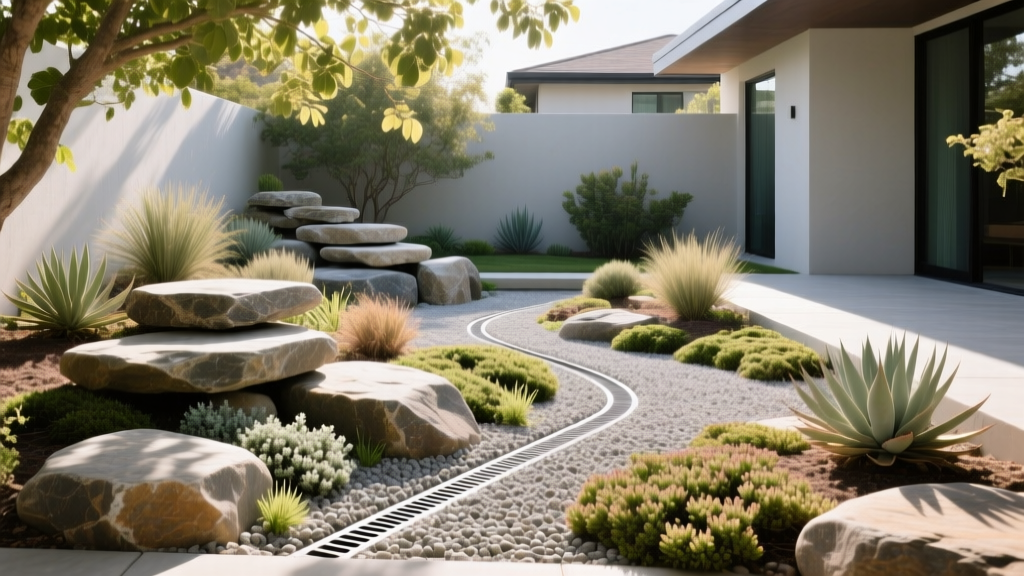
Solving Drainage & Weeds: Ideas for Small Rock Gardens
Why Most Small Rock Gardens Fail Within 24 Months
Homeowners often treat rock gardens as a simple "dump and spread" solution for problematic yard zones. However, when executed without addressing underlying site mechanics, these features quickly degrade into muddy, weed-choked eyesores. Before exploring specific ideas for small rock gardens, you must diagnose the three fatal flaws that cause 90% of rock garden failures: the bathtub effect, the weed fabric myth, and thermal baking.
Flaw 1: The "Bathtub Effect" (Poor Drainage)
Excavating a shallow depression in heavy clay soil and filling it with rock creates an underground bathtub. Water pools at the bottom, drowning plant roots and creating anaerobic, foul-smelling mud beneath the stones. According to drainage standards outlined by the National Association of Landscape Professionals, any rock feature in clay-heavy soils requires a positive drainage outlet or an elevated profile.
Flaw 2: The Weed Fabric Myth
Laying woven polypropylene weed fabric beneath rocks is a common but fundamentally flawed practice. Within 18 months, wind-blown organic dust settles on top of the fabric. Weed seeds germinate in this dust layer, and their roots easily punch through the woven plastic into the soil below. Once rooted, pulling the weeds tears the fabric, rendering it useless and creating a tangled mess of plastic and roots.
Flaw 3: Thermal Baking
Dark-colored rocks like black basalt or dark river stone absorb intense solar radiation. In mid-summer, surface temperatures on these stones can exceed 130°F, transferring lethal heat to the shallow root systems of alpine and succulent plants commonly used in rock landscaping.
Problem-Solving Ideas for Small Rock Gardens
Once you understand the failure points, you can implement designs that actively solve these site problems. Here are three engineered concepts tailored for challenging spaces.
Idea 1: The Dry Creek Swale (Solves Pooling & Runoff)
If your yard suffers from localized pooling or roof runoff, design a dry creek bed that functions as a French drain.
- The Trench: Dig a swale 18 inches wide and 12 inches deep, sloping at a minimum 1% grade (1 inch of drop per 8 feet of length) toward a daylight exit or dry well.
- The Core: Lay a 4-inch NDS EZ-Flow perforated pipe wrapped in non-woven geotextile at the base.
- The Fill: Cover the pipe with 2 inches of 3/4-inch crushed angular gravel (never use round pea gravel, which shifts and clogs).
- The Cap: Top with 3-to-5 inch smooth river cobbles for aesthetic appeal, leaving the center slightly lower than the edges to channel water.
Idea 2: Elevated Corten Steel Crevice Garden (Solves Weeds & Clay Soil)
For areas with impenetrable clay or severe weed pressure, bypass the native soil entirely by building an elevated crevice garden using 14-gauge Corten steel edging. Corten steel develops a protective rust patina that halts further corrosion, lasting decades in outdoor environments.
Construct a raised bed 24 inches wide and 18 inches tall. Instead of standard topsoil, fill the bed with a specialized alpine mix: 50% expanded shale (like Permatill) and 50% composted pine bark fines. This mix provides the sharp drainage that succulents demand while completely eliminating native weed seeds. Plant tightly in vertical crevices to mimic natural alpine scree slopes.
Idea 3: The Tufa & Alpine Mound (Solves Thermal Baking)
If your garden faces south or west and receives brutal afternoon sun, avoid heat-absorbing dark stones. Instead, use Tufa stone or light-colored limestone. Tufa is a highly porous, calcium-rich rock that stays remarkably cool even in direct sunlight and wicks moisture to plant roots. Build a berm at least 18 inches high using a sandy loam base, embed the Tufa rocks deeply (burying at least 30% of their mass to keep them stable and cool), and plant heat-tolerant alpines directly into the rock pores.
Rock Material Comparison Matrix
Choosing the wrong aggregate guarantees failure. Use this matrix to select the right material for your specific site conditions. Pricing reflects average 2026 regional bulk delivery rates.
| Material | Avg Cost / Cubic Yard | Drainage Rate | Weed Resistance | Best Use Case |
|---|---|---|---|---|
| 3/4" Crushed Angular Gravel | $45 - $65 | Excellent | High (locks together) | Base layers, French drains, structural paths |
| 5/8" Minus Lava Rock | $85 - $110 | Very Good | Moderate | Heat-tolerant succulent beds, aridscapes |
| Decomposed Granite (DG) | $50 - $75 | Poor (compacts) | Low (weeds easily) | Level walkways, patio bases (avoid for planting beds) |
| 1" - 3" River Cobbles | $70 - $95 | Excellent | High (deep layer) | Dry creek beds, drainage swales, water features |
Site Preparation: The "Perk Test" Framework
Before ordering materials, perform a mandatory percolation test to determine your base preparation needs.
- Dig a hole 12 inches deep and 6 inches wide in the proposed garden center.
- Fill it with water and let it drain completely (this pre-soaks the soil).
- Refill the hole and measure the water level drop after exactly one hour.
Diagnostic Result:
Over 2 inches per hour: Your soil drains well. You can place a 3-inch layer of angular rock directly over the native soil without fabric.
Under 2 inches per hour: You have a drainage problem. You must excavate 8 inches of native soil and replace it with a 3/4-inch angular gravel base layer before adding your decorative surface rock.
Over 2 inches per hour: Your soil drains well. You can place a 3-inch layer of angular rock directly over the native soil without fabric.
Under 2 inches per hour: You have a drainage problem. You must excavate 8 inches of native soil and replace it with a 3/4-inch angular gravel base layer before adding your decorative surface rock.
Selecting the Right Plant Pairings
The Royal Horticultural Society emphasizes that rock garden plants must be matched not just to the sun exposure, but to the specific thermal mass of the rocks used. Avoid standard nursery topsoil when planting; always backfill with a gritty, fast-draining mix.
- For Hot Lava Rock Beds: Use Delosperma cooperi (Hardy Ice Plant) and Agastache rupestris (Sunset Hyssop). These thrive in high-heat, low-moisture environments.
- For Cool Tufa/Limestone Crevice Gardens: Use Saxifraga varieties and Sempervivum tectorum (Hens and Chicks). These require the alkaline, cool-root environment that porous calcareous rocks provide.
- For Shaded Dry Creek Edges: Use Heuchera 'Palace Purple' and shade-tolerant ferns like Polystichum acrostichoides (Christmas Fern), utilizing the Missouri Botanical Garden Plant Finder to verify exact hardiness zones for your specific microclimate.
Frequently Asked Troubleshooting Questions
How deep should the rock layer be in a small garden?
For purely decorative, non-planted areas, a 2-to-3-inch layer of 3/4-inch rock is sufficient to block sunlight and suppress weed germination. If the layer is too thick (over 4 inches), it creates a habitat for rodents and makes it difficult to blow out fallen autumn leaves without displacing the stones.
Can I use landscape fabric if I am planting succulents?
No. Cutting holes in landscape fabric for succulents defeats the purpose of the fabric, and the fabric will restrict the lateral spread of shallow succulent roots. Furthermore, it traps moisture against the root crown, leading to fatal stem rot in species like Echeveria and Sedum. Rely on a thick layer of inorganic gravel mulch directly over well-draining soil instead.
My existing rock garden is full of weeds. How do I fix it without starting over?
Use a specialized iron rake with narrow, rigid tines to vigorously comb through the top 2 inches of the rock bed. This uproots shallow annual weeds like spurge and oxalis. Follow this with a targeted application of a 20% horticultural vinegar solution on a hot, windless day to burn down remaining broadleaf weeds without leaving toxic soil residues that harm your established rock garden perennials.

