
Landscaping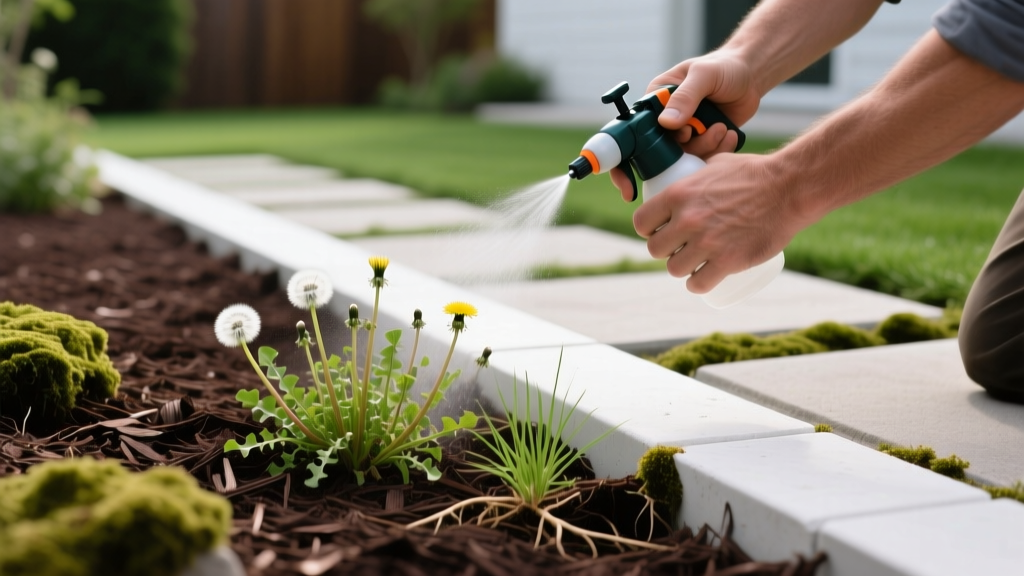
Spot-Treating Backyard Weeds in Hardscapes and Mulch Beds
The Hardscape Hazard: Why Patio and Walkway Weeds Resist Standard Treatments
When backyard weeds infiltrate hardscapes, retaining walls, and ornamental beds, broadcast spraying is both ineffective and dangerous to surrounding flora. Paver joints, gravel walkways, and fence lines create unique microclimates where weed seeds trap moisture and germinate deep within the substrate. Standard broad-spectrum herbicides often fail here because the active ingredient binds to the organic matter in the joint sand before reaching the root zone, or the chemical leaves an unsightly white residue on natural stone.
According to the University of California Integrated Pest Management (IPM) program, weeds in landscapes require species-specific identification and targeted application methods to prevent collateral damage to desirable ornamentals and hardscape materials. Spot-treating backyard weeds in these complex zones demands a surgical approach: matching the exact active ingredient to the weed's biology and the substrate's chemical sensitivity.
Material Warning: Never use standard glyphosate concentrates or surfactant-heavy herbicides on dark bluestone, travertine, or stamped concrete. The surfactants can strip the sealant, and the chemical salts leave permanent white hazing that requires professional acid-washing to remove.
Species-Specific Spot Treatment Matrix
The following matrix outlines the most effective active ingredients for specific weed species commonly found in landscaped zones, along with current market pricing and application rates.
| Target Weed Species | Primary Location | Active Ingredient | Product Example & Cost |
|---|---|---|---|
| Yellow Nutsedge | Paver Joints / Gravel | Halosulfuron-methyl | SedgeHammer (~$25 / 13.5g box) |
| Creeping Charlie | Fence Lines / Walls | Triclopyr | Ortho Brush-B-Gon (~$15 / quart) |
| Annual Bluegrass | Driveway Cracks | 20% Acetic Acid | Green Gobbler Vinegar (~$25 / gallon) |
| Prostrate Spurge | Mulch Beds | Ammonium nonanoate | Ortho GroundClear (~$20 / gallon) |
Fence Line and Retaining Wall Perennials
Fence lines and the base of retaining walls are notorious harbors for aggressive perennials like field bindweed (Convolvulus arvensis) and poison ivy (Toxicodendron radicans). These weeds develop massive, deep taproots that store carbohydrates, allowing them to survive superficial top-growth burn-downs.
The 'Paint, Don't Spray' Technique
Spraying herbicides near wooden fences or vinyl siding risks chemical drift, which can defoliate nearby ornamental shrubs or stain the fence material. Instead, utilize the 'paint' method using a systemic herbicide containing Triclopyr or a Triclopyr/2,4-D blend.
- Timing: Apply in late summer or early fall when the plant is actively transporting carbohydrates down to the root system for winter storage.
- Preparation: Mix the Triclopyr concentrate according to the label (typically 2 to 4 ounces per gallon of water) and add a non-ionic surfactant to help the solution penetrate the leaf's waxy cuticle.
- Application: Wearing heavy-duty nitrile gloves, dip a standard foam craft brush into the solution. Paint the herbicide directly onto the upper surfaces of the largest leaves. Do not drench the plant; a light coating is sufficient for systemic translocation.
This method ensures the chemical enters the plant's vascular system without dripping onto the soil or hardscape below. According to Penn State Extension, systemic herbicides applied via foliar painting can take 10 to 14 days to show complete necrosis, as the chemical must travel through the phloem to the root crown.
Mulch Bed Protocols: Shielding Desirable Roots
Treating backyard weeds in mulch beds presents a unique challenge: the weeds are often intertwined with the shallow feeder roots of desirable ornamentals like azaleas, hydrangeas, or hostas. Using residual herbicides or soil-sterilants in these zones can cause severe phytotoxicity to your landscape plants.
Pro-Tip: For post-emergent spot treatment in mulch beds, use Ammonium nonanoate (a fatty acid soap). Unlike glyphosate, which can persist in the soil and be absorbed by non-target roots, ammonium nonanoate breaks down into harmless nitrogen and carbon dioxide within 48 hours, leaving no soil residue.
To execute a safe spot-treatment in a dense mulch bed:
- Deploy a Physical Shield: Use a commercial plastic spray shield or a rigid piece of corrugated cardboard. Place the shield between the target weed and the desirable plant to block any microscopic spray drift.
- Adjust the Nozzle: Switch your pump sprayer from a fan tip to a pinpoint stream or a low-pressure cone tip. High-pressure fan tips atomize the liquid, creating drift that floats over your shield.
- Target the Crown: Aim for the center rosette or crown of the weed (like dandelions or plantain) rather than just the outer leaves. This ensures the active ingredient reaches the meristematic tissue where growth occurs.
Preventative Hardscape Sealing and Joint Sand
Eradicating existing weeds is only half the battle; preventing reinfestation in paver joints and walkway cracks is where long-term landscaping success is determined. Standard masonry sand washes out easily, creating voids where weed seeds lodge.
Upgrading to Polymeric Sand
Polymeric sand contains silica and proprietary binding agents that harden when exposed to water, creating a flexible but impenetrable barrier against weeds and insects. A 50-pound bag typically costs between $30 and $40 and covers approximately 100 square feet of paver joints.
Crucial Installation Step: The most common failure mode with polymeric sand is improper activation. After sweeping the sand into the joints and compacting it with a plate compactor, you must mist the surface with a gentle shower nozzle. Flooding the joints with a high-pressure hose will wash the polymers out of the sand, leaving you with loose grit and zero weed protection. The EPA's guidelines on safe pest control emphasize that physical barriers and cultural controls, like proper joint sealing, drastically reduce the need for chemical interventions.
Frequently Asked Questions
Can I use boiling water to kill weeds in paver joints?
Yes, boiling water (212°F) is highly effective for spot-treating annual weeds in driveway cracks and paver joints. The thermal shock ruptures the plant's cell walls instantly. However, it will not kill the deep root systems of perennials like nutsedge or bindweed, and you must exercise extreme caution to avoid severe burns or thermal cracking on certain types of sealed concrete.
Why do weeds keep returning to my gravel walkway after spraying?
Gravel walkways lack a solid soil profile, meaning weed seeds germinate in the organic debris that accumulates on top of the gravel. If you only spray the top growth, the roots remain viable in the debris layer. To fix this, rake the gravel to expose the sub-layer, apply a pre-emergent granular herbicide like Preen (trifluralin) at a rate of 3 ounces per 100 square feet, and top-dress with an inch of fresh, washed river rock to smother existing seed banks.

