
Landscaping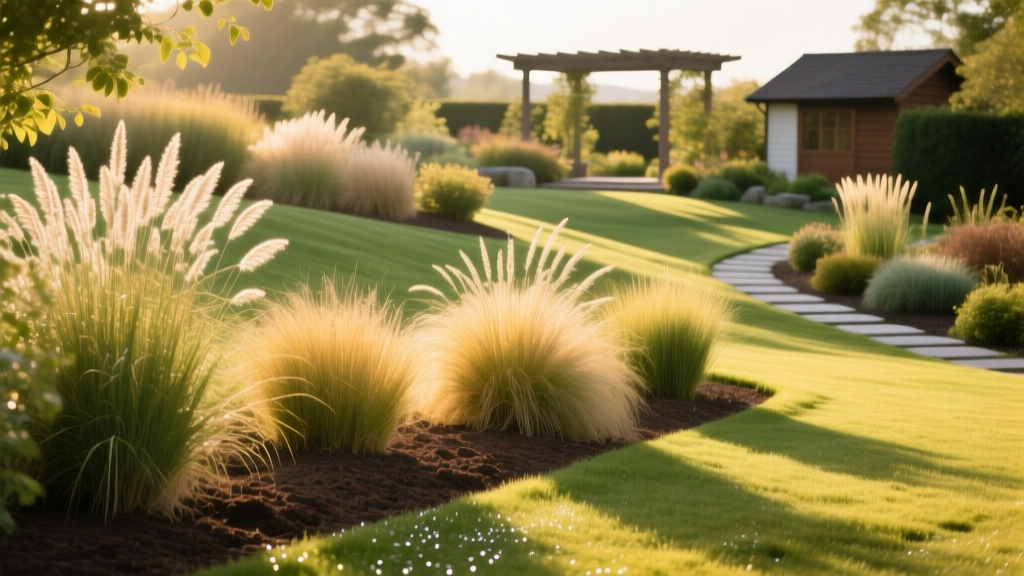
Best Tall Grasses for Landscaping: A Beginner's Planting Guide
The Role of Tall Grasses in Modern Landscape Design
Integrating tall grasses for landscaping transforms flat, static yards into dynamic, textured environments. Unlike traditional privacy hedges such as Arborvitae or Leyland Cypress, which demand heavy pruning and occupy massive root zones, ornamental grasses reaching 4 to 10 feet in height provide living screens, windbreaks, and architectural focal points with minimal upkeep. For beginners, the appeal lies in their drought tolerance, resistance to most pests, and ability to thrive in poor soils where traditional turfgrass fails.
According to the University of Minnesota Extension, ornamental grasses require significantly less water and fertilizer than standard lawn grasses once established, making them a cornerstone of sustainable xeriscaping and low-maintenance garden design.
Top 5 Tall Grasses for Beginners: Cultivar Comparison Matrix
Selecting the right cultivar prevents the most common beginner mistake: planting a grass that outgrows its designated space or fails to survive local winter temperatures. The table below outlines five reliable, non-invasive tall grasses that perform exceptionally well in residential landscapes.
| Cultivar Name | Botanical Name | Mature Height | Spread | USDA Zones | Avg. 2-Gallon Price (2026) |
|---|---|---|---|---|---|
| Karl Foerster Feather Reed | Calamagrostis x acutiflora | 5 - 6 ft | 2 - 3 ft | 4 - 9 | $28 - $34 |
| Cloud Nine Switchgrass | Panicum virgatum | 5 - 7 ft | 3 - 4 ft | 4 - 9 | $25 - $32 |
| Gracillimus Maiden Grass | Miscanthus sinensis | 5 - 7 ft | 3 - 4 ft | 5 - 9 | $30 - $40 |
| Ravenna Grass | Saccharum ravennae | 8 - 12 ft | 4 - 6 ft | 4 - 9 | $45 - $65 |
| Prairie Cordgrass | Spartina pectinata | 5 - 7 ft | 3 - 5 ft | 4 - 9 | $22 - $28 |
Warning: Avoid Invasive Pampas Grass
While Pampas grass (Cortaderia selloana) is heavily marketed on social media for its massive plumes, it is highly invasive in regions like California and the Pacific Northwest, and its razor-sharp leaf blades pose a severe laceration risk during maintenance. Opt for Ravenna Grass or Cloud Nine Switchgrass as safer, non-invasive alternatives that provide similar vertical impact.
While Pampas grass (Cortaderia selloana) is heavily marketed on social media for its massive plumes, it is highly invasive in regions like California and the Pacific Northwest, and its razor-sharp leaf blades pose a severe laceration risk during maintenance. Opt for Ravenna Grass or Cloud Nine Switchgrass as safer, non-invasive alternatives that provide similar vertical impact.
Step-by-Step Planting Protocol for Tall Grasses
Proper installation dictates whether your tall grasses for landscaping will thrive or succumb to crown rot within the first season. Follow this exact planting sequence:
- Site Preparation: Clear a 3-foot diameter circle of existing turf or weeds. Tall grasses struggle to compete with established Bermuda or Fescue root systems during their first year.
- Digging the Hole: Excavate a hole exactly twice the width of the nursery pot, but one inch shallower than the root ball depth.
- Crown Placement (Critical Step): Remove the grass from the pot. The "crown" (where the roots meet the stems) must sit slightly above the surrounding soil grade. Burying the crown causes fatal fungal rot. As noted by Penn State Extension, planting depth errors are the leading cause of ornamental grass mortality.
- Backfilling: Mix the native soil with 20% organic compost by volume. Avoid high-nitrogen synthetic fertilizers (like 24-8-16), which cause rapid, weak stem growth that will flop over in high winds.
- Initial Watering: Apply 2 gallons of water immediately to collapse air pockets. Maintain 1 inch of water per week for the first 90 days until deep taproots establish.
Spacing Frameworks: Privacy Screens vs. Focal Points
How you space tall grasses dictates their function in your landscape design. Use these mathematical guidelines based on the plant's mature spread:
1. The Living Privacy Screen
To create a dense, opaque visual barrier by late summer, multiply the plant's mature spread by 0.6. For example, if planting Cloud Nine Switchgrass (which spreads 4 feet), space the center of each plant 2.4 feet apart (48 inches x 0.6 = 28.8 inches). Stagger the plants in a zig-zag pattern across two parallel rows for maximum density.
2. The Architectural Specimen
When using a massive grass like Ravenna Grass as a standalone focal point at the corner of a patio or the edge of a driveway, apply the "Rule of Thirds." Ensure the planting bed width is at least one-third the mature height of the grass. A 10-foot tall Ravenna grass requires a minimum 40-inch wide mulch bed to prevent the foliage from drooping onto walkways and to allow for proper air circulation, which prevents rust fungus.
Pro-Tip: The Bungee Cord Pruning Method
Never attempt to cut back a 6-foot clump of dormant grass in late winter without binding it first. Wrap a heavy-duty bungee cord tightly around the grass clump at knee height (about 18 inches from the ground). This bundles the stems into a single, manageable pillar, allowing you to use a cordless hedge trimmer to slice through the entire bundle in one clean pass, saving hours of frustrating work.
Never attempt to cut back a 6-foot clump of dormant grass in late winter without binding it first. Wrap a heavy-duty bungee cord tightly around the grass clump at knee height (about 18 inches from the ground). This bundles the stems into a single, manageable pillar, allowing you to use a cordless hedge trimmer to slice through the entire bundle in one clean pass, saving hours of frustrating work.
Seasonal Maintenance and Cutting Back Schedule
Beginners often mistakenly cut their tall grasses down in late autumn. This destroys winter landscape interest and exposes the vulnerable crown to freezing rain and snowmelt. Adhere to this seasonal maintenance calendar:
- Autumn (September - November): Do nothing. Allow the foliage to turn its natural bronze, gold, or red hues. The seed heads provide critical overwintering habitat for native birds.
- Winter (December - February): Leave standing. The dried plumes catch frost and snow, creating striking structural elements in an otherwise barren yard.
- Early Spring (Late February - Early March): Cut the entire clump down to 4 to 6 inches above the soil line using a cordless hedge trimmer (such as the Milwaukee M18 or Ryobi 18V ONE+). Do this before you see new green shoots emerging from the base; otherwise, you will shear off the new growth tips, resulting in blunt, stunted stems for the entire summer.
- Spring Division (Every 3-4 Years): If the center of the grass clump turns brown and dies out (a condition known as "donuting"), it is time to divide. Dig up the entire root mass in early April and use a sharp, flat-edged nursery spade to chop the root ball into three or four separate wedges. Replant one wedge and compost or share the rest.
Frequently Asked Questions
Do tall grasses require frequent fertilization?
No. Ornamental grasses thrive in lean soils. Applying a single top-dressing of half-inch compost in early spring provides all necessary nutrients. Excess nitrogen causes weak stems that collapse under the weight of summer rainstorms.
Will tall grasses spread and take over my garden beds?
The cultivars listed above are primarily "clump-forming," meaning they slowly expand their base circumference by a few inches each year but do not send out aggressive underground runners (rhizomes) to invade adjacent lawns. Avoid running grasses like Ribbon Grass or Bamboo if you want low-maintenance borders.
Can I grow tall grasses in heavy clay soil?
Yes, but you must amend the planting hole. Switchgrass (Panicum virgatum) and Prairie Cordgrass (Spartina pectinata) are naturally adapted to heavy clay and poorly drained sites, making them the superior choices for yards with unamended clay subsoils.

