
Landscaping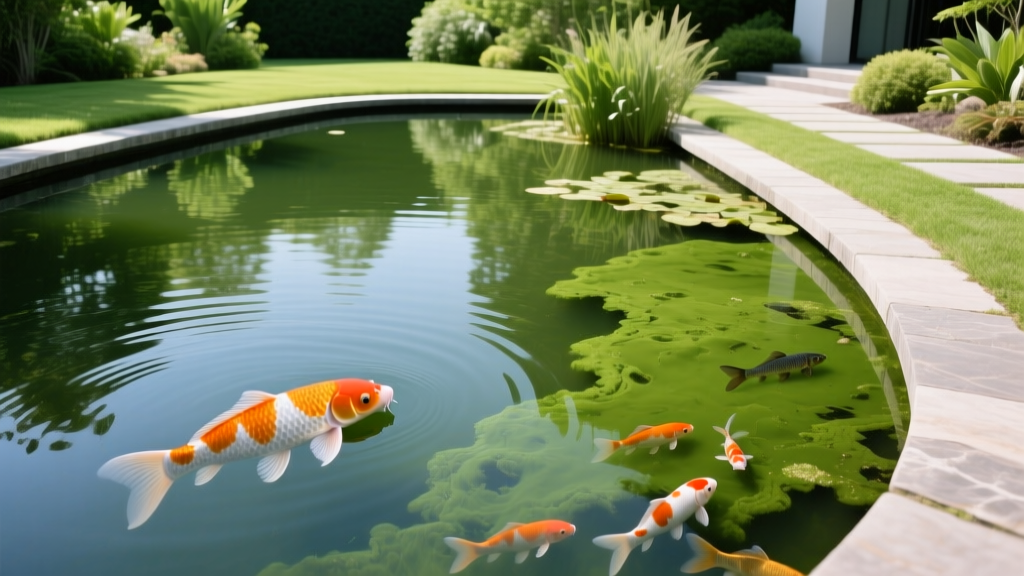
Pond and Koi Problem Diagnosis: Fixing Green Water and Sick Fish
The Diagnostic Framework: Reading Your Pond's Symptoms
A backyard pond and koi ecosystem is a delicate, closed-loop biological engine. When water clarity drops or fish behavior shifts, amateur pond keepers often react by dumping algaecides or water conditioners into the basin. This masks the symptom while accelerating the underlying biological crash. True problem diagnosis requires a systematic approach: test the water chemistry, observe the mechanical filtration, and interpret the biological indicators before applying a targeted solution.
According to Texas A&M AgriLife Extension's Water Quality Resources, dissolved oxygen, pH, and nitrogenous waste compounds dictate the viability of any closed aquatic system. Below is a targeted diagnostic guide for the four most critical failures in residential koi ponds, complete with exact chemical thresholds and mechanical corrections.
Symptom 1: Pea-Soup Green Water & String Algae
Green water is caused by free-floating, single-celled phytoplankton. String algae (filamentous algae) is a multi-cellular organism that clings to rocks and liner edges. While both indicate an excess of dissolved nutrients (specifically phosphates and nitrates) and excessive UV sunlight, their treatment protocols differ entirely.
Mechanical Fixes for Green Water
Algaecides will kill green water algae, but the resulting massive die-off will deplete dissolved oxygen and trigger a lethal ammonia spike as the dead cells decompose. The permanent solution is an ultraviolet (UV) clarifier paired with adequate mechanical pre-filtration. UV light ruptures the algae cell wall as water passes through the chamber, causing the cells to clump together so the skimmer filter can catch them.
UV Sizing Matrix for Koi Ponds
| Pond Volume | Target Flow Rate | Required UV Wattage | Recommended Model |
|---|---|---|---|
| 1,000 Gallons | 1,500 GPH | 15W | Aqua Ultraviolet Classic 15W |
| 2,500 Gallons | 3,750 GPH | 25W | Aqua Ultraviolet Classic 25W |
| 5,000 Gallons | 7,500 GPH | 40W | Aqua Ultraviolet Classic 40W |
Note: Flow rate must not exceed the UV unit's maximum contact time rating, or the water will pass through too quickly for the UV rays to penetrate the cells.
Biological Fixes for String Algae
String algae thrives in low-flow dead zones and areas with high phosphate accumulation. Manually remove visible mats, then install an Oase BioTec ScreenMatic 2 self-cleaning sieve filter to continuously extract microscopic organic debris before it breaks down into phosphates. For persistent outbreaks, apply a granular beneficial bacteria blend specifically formulated to consume phosphates, such as Microbe-Lift PL.
Symptom 2: Koi Flashing, Gasping, or Lethargy
When koi rub their sides against rocks (flashing), hang vertically at the water surface (gasping), or isolate themselves at the bottom of the pond (lethargy), they are signaling acute environmental distress. Do not assume parasites immediately; 80% of these behaviors are triggered by invisible water chemistry spikes.
The Water Parameter Testing Protocol
Strip tests are notoriously inaccurate for sensitive koi ponds. Use a liquid reagent kit like the API Pond Master Test Kit. The EPA's Volunteer Water Quality Monitoring Guide emphasizes that liquid titration and colorimetric reagent tests provide the precision necessary for managing closed aquatic ecosystems.
| Parameter | Ideal Range | Danger Zone | Immediate Action Required |
|---|---|---|---|
| Ammonia (NH3) | 0.0 ppm | > 0.25 ppm | 25% water change + Seachem Prime detoxifier |
| Nitrite (NO2) | 0.0 ppm | > 0.5 ppm | Add pond salt to 0.3% to block gill uptake |
| pH | 7.2 - 8.2 | < 6.8 or > 8.8 | Test KH; add crushed coral to skimmer if low |
| KH (Carbonate) | 150 - 250 ppm | < 100 ppm | Dissolve sodium bicarbonate (baking soda) |
Critical Warning: The pH-Ammonia Relationship
Total Ammonia Nitrogen (TAN) is divided into non-toxic Ammonium (NH4+) and highly toxic un-ionized Ammonia (NH3). The ratio is dictated by pH and temperature. At a pH of 7.0 and 75°F, only 0.6% of your total ammonia is toxic. However, if your pH spikes to 8.5, that toxic fraction jumps to over 15%. Never treat a pond for ammonia without simultaneously checking and stabilizing your pH and KH levels.
Symptom 3: Flashing Without Chemical Spikes (Parasite Protocol)
If your water tests return perfect parameters but koi continue to flash aggressively, you are likely dealing with gill flukes (Dactylogyrus), skin flukes (Gyrodactylus), or Costia. Before reaching for harsh chemical treatments like potassium permanganate, utilize a therapeutic salt bath.
Calculating a 0.3% Pond Salt Treatment
Salt (Sodium Chloride) at a 0.3% concentration reduces osmotic stress, promotes a thick protective slime coat, and interferes with the osmoregulation of single-celled parasites. To calculate the exact dosage:
- Determine exact pond volume: Multiply Length (ft) x Width (ft) x Average Depth (ft) x 7.48 = Total Gallons.
- Calculate water weight: 1 gallon of water weighs 8.34 lbs.
- Apply the 0.3% multiplier: For a 1,000-gallon pond (8,340 lbs of water), 0.3% equals exactly 25 lbs of non-iodized, pure sodium chloride (water softener salt or dedicated pond salt).
Dissolve the salt in a bucket of pond water before broadcasting it across the surface. Leave the salt in the pond for 14 days; it will not evaporate and will only be removed through water changes or splash-out.
Symptom 4: Sudden Water Level Drops (Leaks vs. Evaporation)
Losing an inch of water a week in the summer is normal evaporation. Losing three inches overnight indicates a structural failure in the EPDM liner, a cracked PVC pressure line, or a settling waterfall weir. Before draining the pond to patch the liner, perform the definitive diagnostic: The Bucket Test.
Step-by-Step Bucket Test
- Place a clean 5-gallon bucket on the first or second stone shelf inside the pond.
- Fill the bucket with pond water so the water level inside the bucket exactly matches the water level of the pond outside the bucket.
- Mark both water lines with a grease pencil or duct tape.
- Turn off the waterfall and auto-fill valve for exactly 24 hours.
- The Diagnosis: If the pond level drops lower than the bucket level, you have a liner leak. If both drop equally, it is evaporation. If the pond only drops when the waterfall is turned on, the leak is located in the plumbing line or the waterfall basin.
Advanced Aeration Upgrades for High-Biomass Ponds
As koi grow, their oxygen demand scales exponentially, particularly during warm summer nights when water holds less dissolved oxygen. A standard waterfall provides surface agitation but often fails to oxygenate the deep benthic zone where toxic gases accumulate.
Install a bottom-diffused aeration system. The Laguna PowerJet Aerator or a custom setup using a linear piston compressor (like the Gast brand) paired with EPDM membrane diffuser discs will drive oxygen directly into the lower water column. Aim for a minimum of 40 liters per minute (LPM) of airflow per 1,000 gallons of pond volume to maintain dissolved oxygen above 6.0 mg/L during peak summer heat.
Summary Checklist for Pond Recovery
- Test liquid parameters (Ammonia, Nitrite, pH, KH) before adding any chemicals.
- Size UV clarifiers strictly by pond volume and maximum flow rate contact time.
- Use precise mathematical dosing for salt treatments (25 lbs per 1,000 gallons for 0.3%).
- Isolate leaks using the 24-hour bucket test before disturbing the pond liner.
- Supplement surface agitation with bottom-diffused aeration for deep-water oxygenation.

