
Landscaping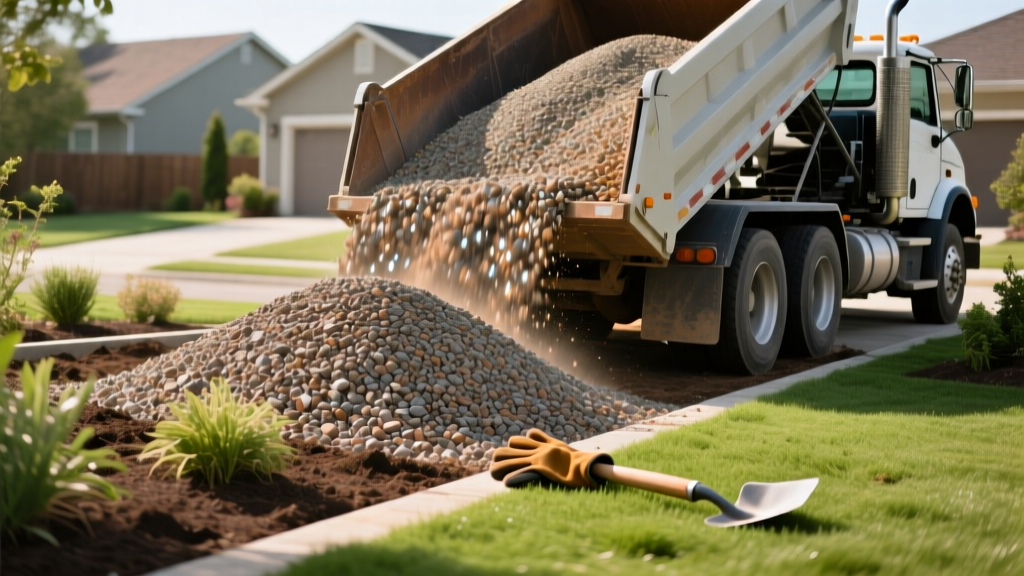
How Much Is a Truckload of Gravel? 2026 Cost & Coverage
The Real Cost of a Truckload of Gravel
When planning a driveway extension, patio base, or drainage project, understanding bulk material logistics is critical. The short answer to 'how much is a truckload of gravel' depends entirely on the truck's capacity and the material type. In 2026, a standard tandem-axle dump truck holds approximately 15 tons of gravel. With material and delivery costs averaging $35 to $75 per ton, a full tandem truckload typically costs between $525 and $1,125 delivered.
However, ordering bulk gravel involves more than just the per-ton price of the stone. Freight distances, fuel surcharges, and specific aggregate grades drastically alter the final invoice. Below is a comprehensive breakdown of truck capacities, material costs, and the hidden fees that impact your final landscaping budget.
Dump Truck Capacities and Pricing Tiers
Quarries and landscape suppliers dispatch different vehicles based on your order volume and site accessibility. Ordering the wrong truck size can result in paying for 'short load' fees or dealing with excess material you cannot store.
| Truck Type | Capacity (Tons) | Capacity (Cubic Yards) | Estimated Delivered Cost (2026) | Best Use Case |
|---|---|---|---|---|
| Pickup / Small Trailer | 1 - 2 tons | 0.7 - 1.5 yd³ | $75 - $180 | Small garden paths, minor pothole repairs |
| Single-Axle Dump (Tri-Axle) | 5 - 8 tons | 3.5 - 5.5 yd³ | $250 - $550 | Residential walkways, small patio bases |
| Tandem-Axle Dump Truck | 12 - 15 tons | 8.5 - 10.5 yd³ | $525 - $1,125 | Standard driveways, large drainage beds |
| Semi-Transfer / Super 10 | 20 - 25 tons | 14 - 18 yd³ | $900 - $1,800+ | Long rural driveways, commercial pads |
⚠️ Weight Warning: A fully loaded tandem-axle dump truck can weigh over 54,000 pounds. Before ordering a 15-ton load, verify that your driveway culverts, bridges, and soft shoulders can support this immense point-load weight to avoid catastrophic structural failure.
Material Costs by Gravel Type
The aggregate you choose dictates both the structural integrity of your project and your budget. According to the U.S. Geological Survey (USGS), crushed stone remains one of the most heavily consumed raw materials, with pricing heavily tied to regional quarry availability and transportation networks.
1. #57 Crushed Stone (Washed)
- Cost: $30 - $50 per ton
- Characteristics: Angular, golf-ball-sized stones with no stone dust.
- Application: The gold standard for driveway base layers, French drains, and retaining wall backfill. The angular edges lock together, while the lack of dust ensures rapid water permeability.
2. Pea Gravel
- Cost: $40 - $65 per ton
- Characteristics: Smooth, rounded stones (1/4 to 3/8 inch) naturally weathered by water.
- Application: Decorative pathways, playground surfaces, and xeriscaping. Because the stones are rounded, they do not lock together and will shift under vehicle tires, making them unsuitable for driveways.
3. Crusher Run (Quarry Process / Dense Grade Aggregate)
- Cost: $25 - $45 per ton
- Characteristics: A mix of crushed stone and fine stone dust.
- Application: Top-layer driveway surfacing and patio sub-bases. When compacted with a vibratory plate compactor, the stone dust binds the aggregate into a nearly concrete-like surface.
4. Decomposed Granite (DG)
- Cost: $45 - $75 per ton
- Characteristics: Finely weathered granite that compacts tightly but remains somewhat permeable.
- Application: High-end patio surfaces, fire pit rings, and ADA-compliant pathways. Often stabilized with a polymeric binder to prevent erosion.
Hidden Fees That Inflate Your Invoice
When requesting a quote from a local quarry or landscape supply yard, the 'per-ton' price rarely reflects the final out-of-pocket cost. Factor in these logistical variables:
- Delivery & Freight Surcharges: Most suppliers include delivery within a 10 to 15-mile radius. Beyond that, expect a mileage fee of $3.50 to $5.00 per loaded mile.
- Short Load Fees: If you order less than the truck's minimum capacity (usually 5 tons for a single-axle), suppliers charge a 'short load' penalty of $75 to $150 to compensate for the wasted fuel and time.
- Tarping Fees: In municipalities with strict anti-litter and dust-control ordinances, trucks must tarp their loads. This manual labor adds $25 to $50 per trip.
- Environmental / Tipping Fees: Many counties impose a $2 to $5 per ton environmental reclamation fee on extracted aggregates, which is passed directly to the consumer.
- Spreading Services: Dump trucks drop the load in a single pile. Hiring the driver to 'tailgate spread' (slowly driving forward with the bed raised) costs an extra $50 to $100, provided the site is flat and free of overhead obstructions.
Coverage Calculator: How Far Does a Truckload Go?
To avoid over-ordering or paying for a second delivery, you must calculate your exact tonnage requirements. The National Stone, Sand & Gravel Association (NSSGA) notes that aggregate density varies, but the industry standard rule of thumb is that 1 cubic yard of gravel weighs approximately 1.4 tons (2,800 lbs).
The Gravel Tonnage Formula
Step 1: Calculate Cubic Yards
(Length in feet × Width in feet × Depth in inches) ÷ 324 = Cubic Yards
Step 2: Convert to Tons
Cubic Yards × 1.4 = Tons Required
Example: A driveway measuring 50 ft long, 12 ft wide, and requiring a 3-inch depth.
(50 × 12 × 3) ÷ 324 = 5.55 cubic yards.
5.55 × 1.4 = 7.77 tons. (Always order 10% extra to account for compaction and subgrade settling, bringing the final order to 8.5 tons).
Coverage of a Standard 15-Ton Tandem Truckload
If you order a full 15-ton tandem load, here is the square footage it will cover at various installation depths:
| Installation Depth | Total Coverage Area (Sq. Ft.) | Typical Application |
|---|---|---|
| 2 Inches | ~1,600 sq. ft. | Decorative top-dressing, pathways |
| 3 Inches | ~1,080 sq. ft. | Standard residential driveway top coat |
| 4 Inches | ~810 sq. ft. | Heavy-duty base layer, drainage trenches |
| 6 Inches | ~540 sq. ft. | Deep foundation pads, retaining wall backfill |
Site Preparation and Receiving Your Delivery
A dump truck driver is not a landscaper. They will drop the material exactly where you instruct them, but they will not grade it. Proper site prep ensures your investment is not wasted.
- Install Geotextile Fabric: Never lay gravel directly on bare soil. Over time, the gravel will sink into the mud, and weeds will infiltrate the stone. Lay a heavy-duty, non-woven geotextile separation fabric before the truck arrives.
- Mark Utilities: Call 811 at least three business days before delivery day to mark underground gas, water, and fiber-optic lines. The point-load weight of a dump truck tire can crush shallow PVC irrigation lines or utility conduits.
- Establish a Drop Zone: Use wooden stakes and high-visibility flagging tape to mark the exact drop zone. Ensure there are no overhanging tree branches lower than 14 feet, as the raised dump bed will easily snap limbs or catch on power lines.
Frequently Asked Questions
Can a dump truck drive on my grass lawn?
No. A loaded tandem-axle truck exerts over 100 PSI per tire footprint. Driving on a residential lawn will cause severe subsoil compaction, rutting, and turf death. Always have the truck back onto an existing driveway or a prepared, compacted base.
Is it cheaper to buy gravel in bags or by the truckload?
By the truckload, overwhelmingly so. A 50-lb bag of pea gravel at a big-box hardware store costs about $5.00 (equating to $200 per ton). A bulk truckload delivered to your site averages $40 to $60 per ton. Bulk purchasing saves roughly 70% on material costs for any project requiring more than half a ton.
How long does it take to spread a truckload of gravel?
For a professional landscaping crew using a skid steer (Bobcat) and a landscape rake, spreading and roughly grading a 15-ton load takes 2 to 3 hours. Spreading the same amount by hand with wheelbarrows and steel rakes will take a DIY homeowner approximately 12 to 16 hours of intense physical labor.

