
Landscaping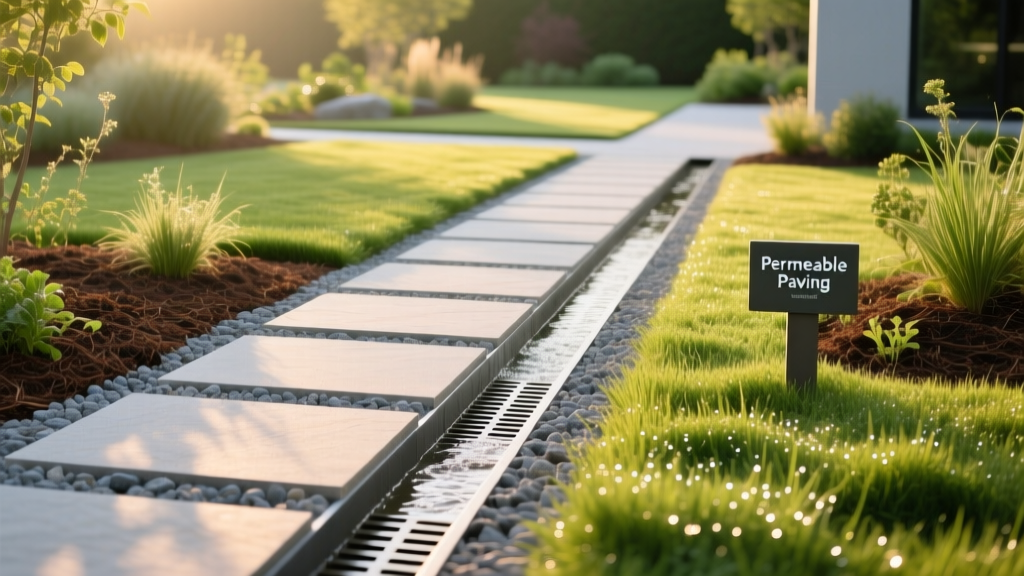
Problem-Solving Walkway Ideas: Fixing Drainage, Heaving, and Weeds
Most walkway failures—cracked concrete slabs, heaving pavers, and weed-choked gravel paths—stem from a single root cause: ignoring the soil and water dynamics beneath the surface. When evaluating walkway ideas for problematic yards, aesthetics must take a backseat to structural engineering. A beautiful bluestone path is useless if it turns into a skating rink in winter or a swamp in spring.
This diagnostic guide breaks down the three most common landscape pathway failures and prescribes specific, engineered walkway ideas to solve them. We will cover exact material specifications, base preparation depths, and 2026 installation costs to ensure your next hardscape project survives the elements.
Diagnostic Matrix: Symptom to Solution
Before selecting materials, identify the primary failure mode of your current or planned pathway. Use this matrix to match your yard's problem with the correct structural solution.
| Primary Symptom | Root Cause | Recommended Walkway Idea | Critical Base Spec |
|---|---|---|---|
| Cracking, uneven slabs, frost heave | Expansive clay soils, freeze/thaw cycles, rigid surfaces | Flexible Permeable Interlocking Concrete Pavers (PICP) | 8-12 inches of open-graded ASTM D448 #57 stone |
| Pooling water, muddy edges, runoff | Impermeable surfaces, negative slope, compacted subgrade | Resin-bound aggregate or French-drain integrated gravel | Minimum 2% cross-slope (1/4 inch per foot) |
| Weed intrusion, joint washout, loose stones | Organic topsoil in base, windblown seeds, poor edging | Mortar-set flagstone or steel-edged composite pathways | Non-woven geotextile fabric + 14-gauge steel edging |
Problem 1: Frost Heave and Shifting Soil
In regions with severe freeze/thaw cycles, clay-rich soils absorb water and expand when frozen, pushing rigid surfaces upward. When the ice melts, the soil contracts, leaving voids. Poured concrete walkways will inevitably crack under this tension. Mortar-set brick will split at the joints.
The Solution: Flexible Permeable Paver Systems
Instead of fighting the soil's movement, flexible walkway ideas accommodate it. Permeable Interlocking Concrete Pavers (PICP) are designed to shift slightly without breaking, and their open joints allow water to bypass the surface entirely, preventing the subgrade from becoming saturated in the first place.
According to the EPA's Green Infrastructure guidelines, permeable pavements significantly reduce stormwater runoff and prevent the hydrostatic pressure buildup that causes frost heave. To execute this properly, you must abandon traditional dense-graded base materials.
- Subgrade: Excavate 12 to 16 inches below the final grade. Line the trench with a non-woven geotextile fabric to prevent clay migration.
- Base Course: Fill with 8 to 10 inches of clean, open-graded crushed stone (ASTM D448 #57 or #57/8 blend). This stone has no 'fines' (dust), creating void spaces that act as an underground reservoir for water.
- Bedding Course: Apply a 2-inch layer of ASTM No. 8 or No. 9 chipped stone. Never use masonry sand or concrete sand for permeable systems; it will clog the joints and defeat the drainage purpose.
- Joint Fill: Sweep in 3/8-inch clean crushed granite to lock the pavers while maintaining permeability.
Problem 2: Poor Drainage and Pooling Water
If your walkway acts as a dam, diverting water into your home's foundation or creating muddy sinkholes in your lawn, the issue is a combination of impermeability and improper grading. Standard gravel paths often fail here because the stones compact into the underlying dirt over time, creating an impermeable pan.
The Solution: Resin-Bound Aggregate and Grading Corrections
Resin-bound gravel is a premier problem-solving walkway idea for drainage-heavy zones. By mixing natural aggregate with a clear, UV-stable polyurethane resin, you create a surface that is completely porous but structurally rigid. Water passes directly through the surface at a rate of over 50 liters per square meter per minute, eliminating surface pooling.
However, material choice is only half the battle. You must enforce strict grading parameters during installation:
The 2% Slope Rule
Every walkway must feature a minimum cross-slope of 2% (a 1/4-inch drop for every 12 inches of width) to encourage lateral sheet flow. If the walkway is adjacent to a structure, a 5% slope away from the foundation is mandatory. Use a digital laser level during the subgrade compaction phase to verify this pitch before laying any surface materials.
Problem 3: Weed Intrusion and Joint Washout
Loose gravel paths and pavers filled with standard polymeric sand are notorious for weed growth and joint erosion. Polymeric sand relies on a chemical binder that degrades under constant moisture and freeze/thaw cycles, leading to washout. Once the joints are empty, windblown organic matter settles in, creating a perfect seedbed for weeds.
The Solution: Epoxy Jointing and Steel Containment
To eliminate maintenance, upgrade your jointing and edging materials. For paver or flagstone walkways, replace polymeric sand with a two-part epoxy jointing compound (such as Rompox or Gator Epoxy). Epoxy resins are impervious to water, will not wash out during heavy rains, and create a surface so dense that weed roots cannot penetrate it.
For gravel or decomposed granite (DG) walkways, the failure point is almost always the edge. Without rigid containment, the aggregate migrates into the lawn, and lawn grass creeps into the path. Solve this by installing 14-gauge galvanized steel landscape edging. Unlike plastic or aluminum bender board, 14-gauge steel will not warp under the pressure of compacted DG and provides a razor-sharp barrier that rhizomatous grasses (like Bermuda or Zoysia) cannot breach.
2026 Material Cost and Lifespan Comparison
When budgeting for problem-solving walkway ideas, factor in the total lifecycle cost, not just the initial installation. Prices below reflect 2026 national averages for professional installation, including base preparation.
| Walkway Material | Installed Cost (per sq. ft.) | Expected Lifespan | Maintenance Requirement |
|---|---|---|---|
| Standard Gravel (Crusher Run) | $3.50 - $6.00 | 5 - 10 Years | High (annual raking, weed control, top-dressing) |
| Resin-Bound Aggregate | $16.00 - $24.00 | 15 - 20 Years | Low (occasional power washing) |
| Permeable Pavers (PICP) | $14.00 - $19.00 | 30+ Years | Medium (vacuuming joints every 3-5 years) |
| Mortar-Set Bluestone | $28.00 - $42.00 | 40+ Years | Low (sealing every 5 years) |
Expert Warning: The National Association of Landscape Professionals (NALP) consistently reports that 80% of hardscape failures are due to improper base preparation, not surface material defects. If a contractor quotes you a price significantly lower than the averages above, they are likely skipping the geotextile fabric or reducing the base aggregate depth. Always demand a written specification sheet detailing the exact base materials and depths before signing a contract.
Final Diagnosis: Matching the Path to the Property
There is no universal 'best' material. If your property suffers from heavy clay and frost heave, flexible permeable pavers are the only logical choice. If surface runoff is destroying your lawn grading, resin-bound aggregate combined with aggressive cross-sloping will solve the hydrology issue. If you are tired of pulling weeds from your gravel path every weekend, invest in steel edging and epoxy jointing.
By diagnosing the specific environmental stressors in your yard first, you can select walkway ideas that function as permanent infrastructure rather than temporary cosmetic fixes. Specify the correct ASTM aggregates, enforce the 2% slope rule, and your walkway will remain level, dry, and weed-free for decades.

