
Landscaping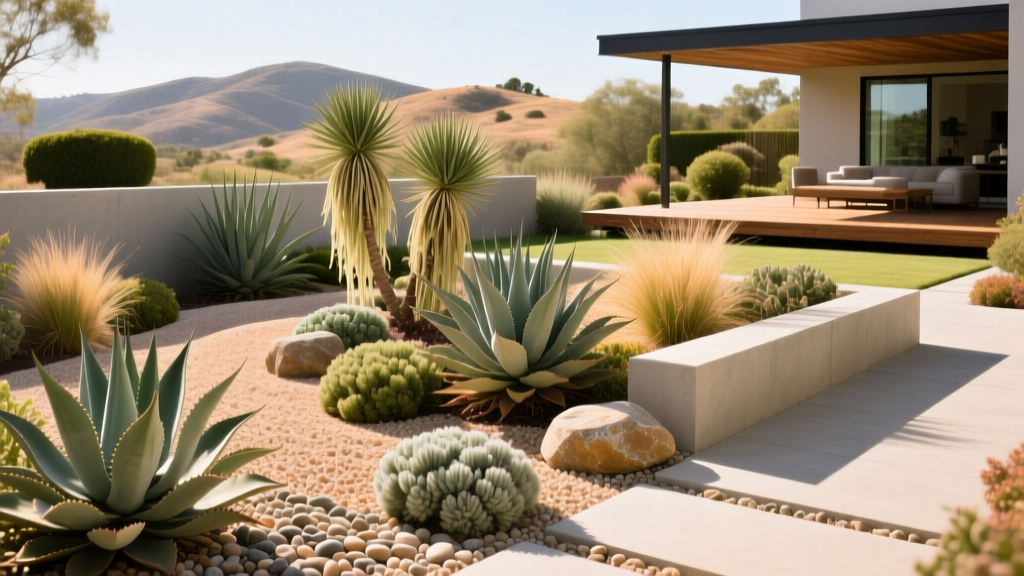
What Is Xeriscaping? The Complete Guide to Water-Wise Landscaping
Defining Xeriscaping: Beyond the 'Zero-Scape' Myth
The term xeriscaping is frequently—and incorrectly—interchanged with "zeroscaping," a pejorative term that evokes barren yards filled with scorched earth, a single dying cactus, and endless expanses of hot gravel. In reality, xeriscaping is a sophisticated, horticulturally sound approach to landscape design that prioritizes water conservation without sacrificing aesthetic appeal. Coined in 1981 by Denver Water, the word combines the Greek root xeros (meaning dry) with landscaping.
According to the U.S. Environmental Protection Agency (EPA), outdoor water use accounts for nearly 30% of total residential water consumption, a figure that spikes to 60% in arid regions during summer months. Xeriscaping directly addresses this deficit by utilizing drought-tolerant plants, strategic hydrozoning, and advanced soil management to reduce landscape water use by 50% to 75% compared to traditional Kentucky Bluegrass or Fescue lawns.
"Xeriscaping is not about eliminating irrigation entirely; it is about applying water precisely where and when it is needed, maximizing soil retention, and selecting plant materials genetically adapted to the local microclimate."
The Economics: Traditional Turf vs. Xeriscape Installation
Homeowners often hesitate at the upfront costs of xeriscaping. While traditional sod installation is cheaper on day one, the long-term return on investment (ROI) for a water-wise landscape heavily favors xeriscaping, particularly in regions with tiered municipal water pricing or active drought surcharges.
| Metric | Traditional Turf Lawn | Professional Xeriscape |
|---|---|---|
| Initial Installation Cost (per sq. ft.) | $1.50 – $2.50 | $12.00 – $25.00 |
| Annual Water Usage (per 1,000 sq. ft.) | 40,000 – 55,000 gallons | 8,000 – 15,000 gallons |
| Maintenance Hours (Yearly) | 40 – 60 hours (mowing, edging) | 8 – 12 hours (pruning, weeding) |
| Estimated 10-Year Water Cost* | $3,200 – $4,500 | $600 – $1,100 |
| Fertilizer & Chemical Costs (Yearly) | $150 – $300 | $0 – $40 |
*Water costs based on a national average of $2.00 per 1,000 gallons, though arid Western municipalities frequently charge $4.00 to $8.00+ per 1,000 gallons for tier-3 usage.
Hydrozoning: The Blueprint of Water-Wise Design
The most critical technical element of xeriscaping is hydrozoning—the practice of grouping plants with identical water, sunlight, and soil requirements into distinct irrigation zones. Mixing a high-water fern with a low-water succulent on the same drip valve guarantees that one plant will drown while the other desiccates.
The Four Primary Hydrozones
- Routine Irrigation Zone (10-20% of yard): High-traffic areas near patios or entrances. Utilizes moderate-water plants or limited turf alternatives like UC Verde Buffalo Grass (Buchloe dactyloides). Watered 1-2 times per week.
- Reduced Irrigation Zone (30-40% of yard): Transitional spaces. Features plants that require deep, infrequent watering once established, such as Russian Sage (Perovskia atriplicifolia) or Autumn Sage (Salvia greggii). Watered every 10-14 days.
- Occasional Irrigation Zone (30-40% of yard): Perimeter beds and background plantings. Utilizes highly adapted native species like Desert Spoon (Dasylirion wheeleri) or Texas Ranger (Leucophyllum frutescens). Watered only during extreme heat or prolonged drought (monthly).
- Non-Irrigated Zone (10-20% of yard): Distant corners or naturalized areas. Relies entirely on natural precipitation. Ideal for deep-rooted native trees like Mesquite or established Palo Verde.
Pro Tip: The Percolation Test. Before designing your hydrozones, test your soil's infiltration rate. Dig a hole 12 inches deep and 12 inches wide. Fill it with water and let it drain. Refill it and measure the drop in water level after one hour. Ideal xeriscape soil drains at 1 to 2 inches per hour. If your clay soil drains at less than 0.5 inches per hour, you must amend it with 30% expanded shale or pumice by volume to prevent root rot in drought-adapted plants.
Plant Palette: High-Performing Xeric Selections
A successful xeriscape relies on genetic adaptation. According to Colorado State University Extension, selecting plants native to or adapted from similar global climates (such as the Mediterranean or South African fynbos) ensures survival with minimal inputs. Below are top-tier selections categorized by function:
Structural and Focal Point Plants
- Agave parryi (Parry’s Agave): USDA Zones 7-10. Forms a striking, symmetrical rosette of blue-gray leaves. Reaches 2 feet tall and 3 feet wide. Requires zero supplemental water once established in well-draining soil.
- Yucca rostrata (Beaked Yucca): USDA Zones 5-10. Provides vertical architectural interest with a trunk that can reach 10 feet. Highly cold-hardy compared to other yuccas, surviving down to -10°F.
Groundcovers and Turf Replacements
- Thymus serpyllum (Creeping Thyme): USDA Zones 4-9. Handles light foot traffic, grows 2-4 inches tall, and produces pink/purple blooms that attract pollinators. Requires 75% less water than traditional fescue.
- Delosperma cooperi (Hardy Ice Plant): USDA Zones 5-9. A succulent groundcover that creates a dense mat of magenta flowers in early summer. Excellent for stabilizing slopes and preventing erosion.
Ornamental Grasses for Movement
- Muhlenbergia capillaris (Pink Muhly Grass): USDA Zones 6-9. Grows 3 feet tall and produces a massive, cloud-like inflorescence of pink plumes in autumn. Extremely heat and drought-tolerant.
- Nassella tenuissima (Mexican Feather Grass): USDA Zones 7-10. Features fine, hair-like foliage that catches the wind. Note: Can self-seed aggressively; deadhead in late summer if unwanted spreading is a concern.
Hardscape and Mulch Engineering
Mulch is the unsung hero of xeriscaping. It lowers soil temperatures by up to 15°F, suppresses water-stealing weeds, and drastically reduces surface evaporation. However, choosing the wrong mulch can destroy a xeriscape.
Organic vs. Inorganic Mulch
For the Routine and Reduced Irrigation zones, use 2 to 3 inches of shredded hardwood or pine bark. Organic mulches decompose, feeding soil microbes and improving soil structure over time. However, for the Occasional Irrigation zone featuring succulents and agaves, organic mulch holds too much moisture against the plant's crown, inviting fungal pathogens.
In these dry zones, utilize inorganic mulches like 3/8-inch crushed decomposed granite (DG) or washed river rock. Apply at a depth of 1.5 to 2 inches. Never use plastic weed barriers beneath inorganic rock mulch. Plastic blocks soil gas exchange, kills beneficial mycorrhizal fungi, and eventually shreds into microplastics. Instead, use a heavy-duty, permeable woven geotextile fabric if weed suppression is absolutely necessary, or rely on a 2-inch depth of tightly packed DG, which naturally suppresses weed germination.
Common Xeriscaping Mistakes to Avoid
Warning: The 'Drip' Misconception. Many homeowners install drip irrigation but leave the emitters running on the same schedule as their old spray heads. Drip emitters typically output 0.5 to 2.0 Gallons Per Hour (GPH). To deliver the equivalent of one inch of rain (0.62 gallons per square foot) to a 4-foot shrub, a 1.0 GPH emitter must run for 4 to 6 hours, not 15 minutes. Use a smart controller like the Rachio 3 or Hunter Hydrawise to calculate run times based on local evapotranspiration (ET) rates.
Over-Amending the Soil
It is a common instinct to dump bags of rich compost into planting holes for xeric plants. This creates a "bathtub effect" in heavy clay soils. The porous, compost-rich hole retains water, while the surrounding native clay acts as an impermeable wall. The roots of your drought-tolerant plant will circle inside the compost, eventually drowning or failing to anchor into the native soil. Always plant xeric species slightly elevated (1-2 inches above grade) and backfill with the native soil you just dug out, amending the entire bed uniformly rather than just the hole.
Frequently Asked Questions
Does xeriscaping increase property value?
Yes. In drought-prone regions like the American Southwest and California, real estate appraisers increasingly recognize water-wise landscaping as a premium feature. A well-designed xeriscape with mature structural plants and functional hardscaping can yield a 10% to 15% return on investment at resale, largely driven by buyer demand for low-maintenance, eco-conscious homes.
Can I convert my existing lawn to a xeriscape myself?
Yes, but the demolition phase requires specific techniques. Do not use a rototiller to remove existing grass, as this chops up weed roots and rhizomes, guaranteeing a massive weed outbreak later. Instead, use a sod cutter to remove the top 2 inches of turf, or employ sheet mulching (layering cardboard and 4 inches of wood chips) over the grass for 8 to 12 weeks to smother it naturally before planting.
Do xeriscaped yards attract pests like snakes or scorpions?
This is a persistent myth. Xeriscapes do not inherently attract venomous pests any more than traditional yards. In fact, dense, overgrown traditional shrubbery often harbors more rodents (and the snakes that hunt them). Keeping your xeriscape well-pruned, maintaining a 6-inch clearance between mulch and your home's foundation, and avoiding thick, undisturbed rock piles near the house will effectively deter unwanted wildlife.

