
Landscaping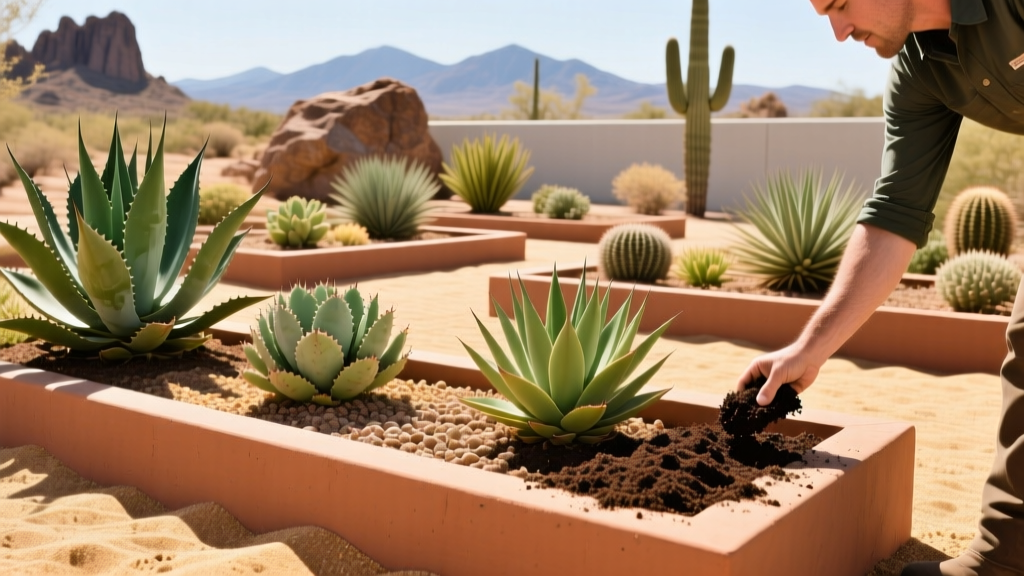
Soil & Fertilizer Guide for a Xeriscape Garden Scottsdale AZ
The Scottsdale Soil Reality: Caliche, Alkalinity, and Low Organics
Designing a successful xeriscape garden Scottsdale AZ requires more than just selecting drought-tolerant plants like palo verde, lantana, and agave. The underlying soil chemistry dictates whether your landscape thrives or slowly declines. Scottsdale’s native Sonoran Desert soils are characterized by three major constraints: a highly alkaline pH (typically 7.8 to 8.5), severe compaction from caliche hardpan layers, and critically low organic matter (often less than 1%).
Unlike temperate climates where adding 50% compost to a planting hole is standard practice, doing so in Scottsdale creates a 'bathtub effect.' The highly amended soil retains too much water, while the surrounding native caliche drains poorly, leading to fatal root rot in desert-adapted species. According to the University of Arizona Cooperative Extension, xeriscape soil management relies on minimal organic amendment and targeted chemical interventions to unlock bound nutrients.
⚠️ The 'Less is More' Xeriscape Fertilizer Rule: Desert plants evolved in nutrient-poor environments. Over-fertilizing with high-nitrogen synthetic blends forces rapid, weak, and 'leggy' growth. This not only increases the plant's water requirements—defeating the purpose of xeriscaping—but also makes the tissue highly susceptible to frost damage and aphid infestations.
Diagnosing Desert Nutrient Deficiencies
Because high alkalinity locks up essential micronutrients, visual symptoms in a xeriscape garden Scottsdale AZ often mimic drought stress or disease. Use this diagnostic matrix to identify the actual nutritional bottleneck before applying unnecessary fertilizers.
| Symptom | Primary Cause in Alkaline Soil | Targeted Fix |
|---|---|---|
| New leaves turn yellow, but veins remain dark green | Iron Chlorosis (Iron is present but bound by pH > 7.5) | Apply EDDHA-chelated iron directly to soil |
| Older leaves turn pale green/yellow uniformly | Nitrogen deficiency (rare, usually due to leaching) | Top-dress with low-N organic granular (3-4-3) |
| Leaves develop purple/red tints; stunted root growth | Phosphorus lockout (Calcium binds P in high pH) | Use mycorrhizal inoculants to extend root reach |
| Leaf margins scorch and curl inward; weak stems | Potassium deficiency or salt accumulation | Deep leach salts; apply potassium sulfate |
Step-by-Step Soil Amendment Strategy for New Xeriscape Beds
When installing a new xeriscape garden Scottsdale AZ, proper initial soil preparation eliminates years of corrective maintenance. Follow this exact protocol to break up hardpan and establish a biologically active root zone.
1. Fracture the Caliche Hardpan
Caliche can form an impermeable layer 6 to 18 inches below the surface. If water pools for hours after planting, you have a caliche problem. Use a rock bar or a heavy-duty earth auger to drill 12-inch deep holes through the hardpan. Fill these fractures with agricultural gypsum (calcium sulfate) at a rate of 20 to 30 lbs per 100 square feet. The calcium displaces sodium, gradually flocculating the clay particles and improving deep drainage.
2. The 10% Compost Rule
Do not rototill massive amounts of organic matter into the entire bed. Instead, limit compost to a maximum of 10% by volume of the backfill soil for individual planting holes. Use locally sourced, fully aged pecan wood compost or dairy manure compost. This provides enough microbial inoculation without creating a drastic textural boundary that traps water.
3. Inoculate with Mycorrhizae
Desert plants rely heavily on symbiotic fungi to scavenge phosphorus and water. Dust the root ball of every new planting with a granular endomycorrhizal and ectomycorrhizal blend (such as MycoApply Endo/Ecto). This expands the effective root surface area by up to 100 times, which is critical for surviving Scottsdale’s 110°F+ summer peaks.
Choosing the Right Fertilizer for Desert Adapted Plants
The City of Scottsdale Water Conservation Department emphasizes that established xeriscape plants rarely need fertilizer if planted correctly. However, for seasonal color plants (like lantana or bougainvillea) or to correct specific deficiencies, use the following framework.
Organic Granular (e.g., Espoma Tree-Tone 3-4-3)
Best for: Palo verde, mesquite, and desert trees.
Pros: Slow nutrient release, builds soil biology, low burn risk.
Cons: Takes weeks to break down in dry desert soil; requires deep watering to activate.
Synthetic Slow-Release (e.g., Osmocote 19-6-12)
Best for: Potted xeriscape specimens and high-demand seasonal color.
Pros: Predictable release rates, exact NPK ratios.
Cons: Polymer coatings can degrade too rapidly in extreme Scottsdale soil heat, risking fertilizer burn.
Liquid Chelates (e.g., Sprint 138)
Best for: Acute iron chlorosis rescue.
Pros: Immediate availability to roots, bypasses soil pH lockout.
Cons: Expensive per ounce, requires precise measuring, temporary fix if soil pH isn't managed.
The Iron Chelate EDDHA Imperative
This is the most common failure point for homeowners maintaining a xeriscape garden Scottsdale AZ. Most hardware stores sell standard iron supplements chelated with EDTA or DTPA. These chemical bonds break down and become completely useless in soils with a pH above 7.5. Since Scottsdale soils routinely test at 8.0 or higher, you must purchase iron chelated with EDDHA (such as Sprint 138 or Sequestra-Six). EDDHA remains stable up to pH 9.0. While a 1-pound bag costs around $40-$50, the application rate is only 1 to 2 teaspoons per plant, making it highly cost-effective over time.
Seasonal Application and Watering Protocol
Fertilizing without proper irrigation activation is a wasted effort and can scorch roots. Follow this timing and watering schedule:
- Early Spring (Late February - Early March): Apply organic granular fertilizer just as soil temperatures hit 60°F. Follow immediately with a deep irrigation cycle that wets the soil to a depth of 18-24 inches for trees, and 12 inches for shrubs.
- Early Fall (Late September): Apply a light dose of potassium sulfate (0-0-50) to promote root hardiness and frost tolerance before winter. Do not apply nitrogen in the fall, as it will trigger tender new growth that will be destroyed by December freezes.
- Summer Blackout: Never fertilize between June and August. Desert plants enter a survival semi-dormancy during peak heat. Forcing growth during this window exhausts the plant's carbohydrate reserves.
Frequently Asked Questions
Can I use standard lawn fertilizer on my xeriscape borders?
No. Standard turf fertilizers (often 24-8-16 or higher) contain massive amounts of nitrogen and fast-release salts. Applying these to xeriscape plants will cause explosive, weak growth that snaps in monsoon winds and requires double the water to sustain.
How do I lower the pH of my Scottsdale soil permanently?
You cannot permanently lower the pH of native desert soil due to the massive buffering capacity of free calcium carbonate (lime). Instead of fighting the pH, manage the symptoms: use EDDHA chelates for iron, apply elemental sulfur in small, localized planting zones for acid-loving specimens (like certain citrus), and rely on mycorrhizae to unlock phosphorus.
Should I mulch my xeriscape garden, and does it affect fertilization?
Yes, a 2-to-3-inch layer of inorganic decomposed granite (DG) or organic wood chips is vital for moisture retention. If using organic wood mulch, it will slowly break down and provide trace nutrients, slightly reducing your need for supplemental fertilization over a 3-to-5-year period. Keep all mulch and fertilizer at least 3 inches away from the base of tree trunks to prevent crown rot.

