
Landscaping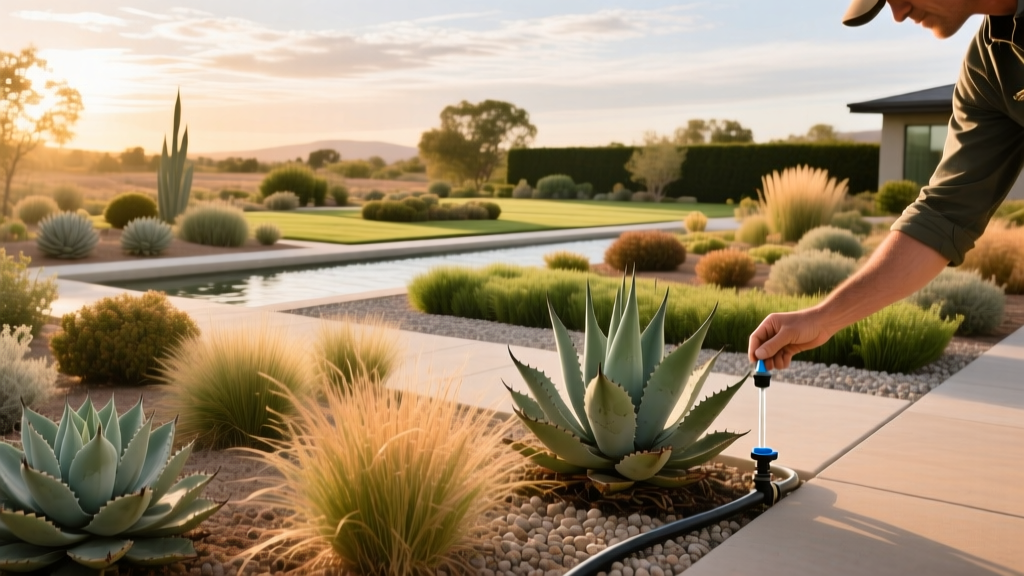
The True Xeriscape Meaning: Hydrozoning, Plant Selection, and Water-Smart Design
The term xeriscape is frequently misunderstood by homeowners and even some landscaping contractors. Often wrongly equated with 'zeroscaping'—a barren aesthetic of river rock, plastic turf, and a single lonely cactus—the actual xeriscape meaning is rooted in water conservation through intelligent design, not the elimination of vegetation.
Etymology & Origin: Coined in 1981 by Denver Water, the word combines the Greek root xeros (meaning 'dry') with 'landscape'. It was created as a trademarked term to describe landscaping that reduces or eliminates the need for supplemental irrigation.
According to the EPA WaterSense program, outdoor water use accounts for nearly 30% of total household water consumption, spiking to 60% in arid regions during summer. True xeriscaping addresses this by integrating soil science, hydrology, and botany to create lush, resilient environments that thrive on minimal water.
The 7 Core Principles of Xeriscaping
To execute a legitimate xeriscape, landscape architects follow the original seven principles established by the Denver Water task force:
- Planning and Design: Mapping sun exposure, wind patterns, and topography before selecting plants.
- Soil Improvement: Amending clay or sandy soils to optimize water retention and drainage.
- Practical Turf Areas: Limiting high-water grass to functional zones (e.g., play areas) rather than using it as default filler.
- Efficient Irrigation: Utilizing drip systems and smart controllers rather than broadcast spray heads.
- Mulch: Applying 2 to 4 inches of organic or inorganic mulch to reduce evaporation and suppress weeds.
- Low-Water Plants: Selecting species adapted to the local microclimate.
- Appropriate Maintenance: Pruning, weeding, and adjusting irrigation schedules seasonally.
Decoding the Xeriscape Meaning: The Engine of Hydrozoning
The most critical technical component of xeriscaping is hydrozoning. This is the practice of grouping plants with similar water, sun, and soil requirements into distinct irrigation zones. Mixing a high-water hydrangea with a low-water agave on the same drip valve guarantees that one will drown while the other desiccates.
Professional landscape designers typically divide a xeriscape property into three distinct hydrozones:
| Hydrozone Type | Water Requirement | Plant Examples | Irrigation Method |
|---|---|---|---|
| Zone 1: Oasis | High (0.5 - 1.0 inch/week) | Kentucky Bluegrass, Hydrangea, Ferns | Rotary nozzles or high-flow drip |
| Zone 2: Transitional | Moderate (0.25 inch/week) | Buffalograss, Russian Sage, Daylilies | Pressure-compensating drip tubing |
| Zone 3: Arid | Low (Rainfall only post-establishment) | Agave, Yucca, Creosote Bush, Lantana | Deep, infrequent manual watering or micro-bubblers |
Expert Tip: Never place an Oasis zone at the bottom of a slope without a French drain, and avoid placing Arid zones in low-lying areas where rainwater naturally pools. Topography dictates hydrozone viability just as much as plant biology.
Plant Identification: Drought-Tolerant vs. Native Species
A common mistake in xeriscaping is assuming 'native' and 'drought-tolerant' are synonymous. While native plants are adapted to local rainfall patterns, some riparian (riverbank) natives require constant moisture. Conversely, many non-native Mediterranean plants exhibit extreme drought tolerance.
Top Structural Plants for Modern Xeriscapes
When designing for architectural interest without high water demands, specify these exact cultivars:
- Agave parryi (Parry's Agave): A striking, compact succulent hardy to USDA Zone 5. Forms a symmetrical rosette up to 2 feet wide. Requires zero supplemental water once established in well-draining soil.
- Salvia yangii (formerly Perovskia atriplicifolia / Russian Sage): Provides a 3-foot haze of periwinkle blue flowers from mid-summer to frost. Highly resistant to deer and thrives in poor, alkaline soils.
- Muhlenbergia reverchonii (Seep Muhly Grass): A superior alternative to traditional pink muhly. Tolerates heavy clay and extreme heat, producing delicate pinkish-red inflorescences in autumn.
- Hesperaloe parviflora (Red Yucca): Not a true yucca, this evergreen perennial produces 5-foot spikes of coral-red flowers that attract hummingbirds. Tolerates temperatures down to -10°F.
The Economics of Xeriscaping: 2026 Costs, Rebates, and ROI
Transitioning from a traditional turf lawn to a xeriscape requires upfront capital, but the return on investment is accelerated by municipal rebate programs and drastically reduced utility bills.
Installation Cost Breakdown (Per Square Foot)
- Turf Removal & Disposal: $1.50 – $3.00 / sq. ft. (Sod cutting and hauling).
- Soil Amendment & Grading: $1.00 – $2.50 / sq. ft. (Incorporating 3/8-inch pumice or expanded shale for drainage).
- Hardscape & Mulch: $4.00 – $12.00 / sq. ft. (Decomposed granite with a stabilizing binder is the most cost-effective permeable hardscape; flagstone is at the premium end).
- Plants & Irrigation: $3.50 – $8.00 / sq. ft. (Includes Netafim Techline EZ drip tubing and 5-gallon specimen plants).
- Total Professional Installation: $10.00 – $25.00+ per square foot, depending on hardscape complexity.
Cash for Grass: Maximizing Municipal Rebates
Many water districts in the American West pay homeowners to remove turf. For example, the Southern Nevada Water Authority (SNWA) offers up to $3.00 per square foot of grass removed and replaced with desert landscaping. A 1,000-square-foot front yard conversion can yield a $3,000 rebate, effectively subsidizing 30% to 50% of the total xeriscape installation cost. Always check your local water provider's 'Water Smart' or 'Cash for Grass' portal before breaking ground, as pre-approval is almost always required.
Common Xeriscape Failure Modes and How to Avoid Them
Even with the right plants, xeriscapes fail when construction details are ignored. Watch for these specific edge cases:
⚠️ Warning: The Establishment Period Paradox
The most frequent cause of xeriscape plant death is underwatering during year one. A 'drought-tolerant' plant is only drought-tolerant after its root system has fully developed. For the first 12 to 18 months, drought-tolerant shrubs like Texas Ranger (Leucophyllum frutescens) require deep watering every 5 to 7 days. Programming a smart controller to 'xeriscape' settings on day one will kill the plants before they establish.
1. The Plastic Weed Barrier Mistake
Never use solid black plastic sheeting under rock or mulch. Plastic prevents water and oxygen from reaching the soil microbiome, essentially sterilizing the earth beneath it and causing runoff. Instead, use a woven, permeable geotextile fabric (minimum 3 oz per square yard weight) if a barrier is necessary, or rely on a 3-inch layer of coarse arborist woodchips, which naturally suppress weeds while feeding the soil.
2. Incorrect Mulch Selection for Succulents
While organic wood mulch is excellent for Zone 2 transitional plants, it retains too much moisture around the crowns of Zone 3 succulents and cacti, leading to root rot. Use a 2-inch layer of inorganic mulch—such as 3/4-inch crushed granite, pea gravel, or decomposed granite—around the base of agaves, aloes, and yuccas to ensure rapid surface drainage.
3. Drip Emitter Clogging in Hard Water Zones
In regions with high calcium and magnesium in the municipal water supply (hard water), standard drip emitters will calcify and clog within two seasons. Specify pressure-compensating (PC) emitters with self-flushing diaphragms (such as those made by Rain Bird or Toro) that physically push out mineral deposits every time the system pressurizes.
Summary: Redefining Your Landscape
Understanding the true xeriscape meaning shifts the focus from 'what to remove' to 'how to optimize'. By rigorously applying hydrozoning, selecting botanically appropriate specimens, and leveraging modern drip irrigation technology, homeowners can cultivate vibrant, ecologically responsible landscapes that reduce water consumption by up to 75% without sacrificing aesthetic appeal.

