
Landscaping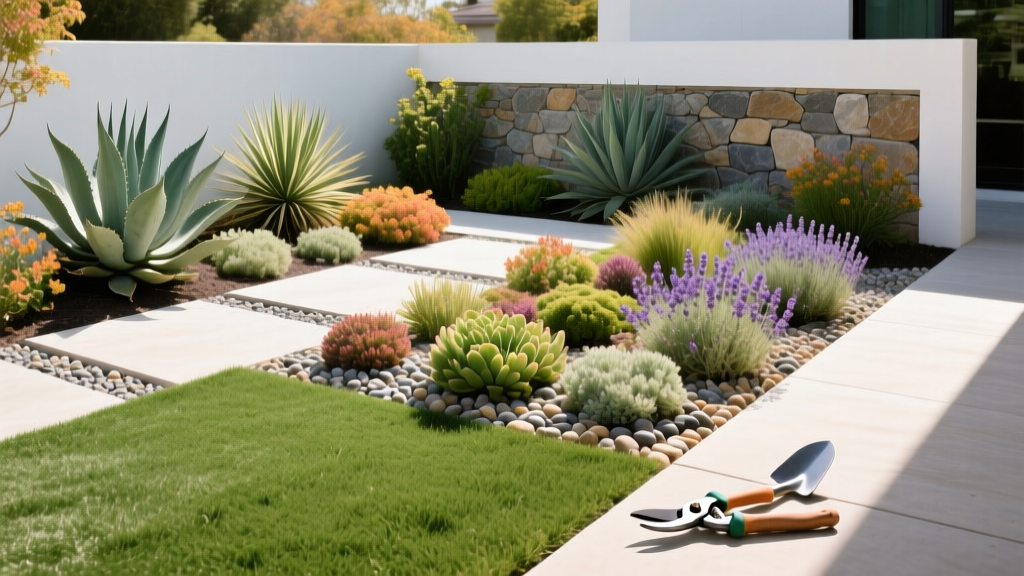
Xeriscaping Definition & Beginner Guide to Water-Wise Landscaping
The True Xeriscaping Definition: Beyond 'Zero-Scaping'
The exact xeriscaping definition stems from the Greek word xeros, meaning 'dry.' Coined in 1981 by Denver Water, xeriscaping refers to a landscape design methodology that reduces or eliminates the need for supplemental irrigation. It is a common misconception that xeriscaping means 'zeroscaping'—a barren yard of rocks, gravel, and a single lonely cactus. True xeriscaping is a lush, vibrant, and ecologically balanced system that relies on hydrozoning, native plant palettes, and soil biology to thrive on natural rainfall once established.
'Xeriscape is not a specific look, but a set of water-conserving principles that can be applied to any landscape style, from formal English gardens to modern minimalist designs.' — Colorado State University Extension
For beginners, understanding this definition is the first step toward lowering utility bills, eliminating weekend mowing, and qualifying for local municipal turf-replacement rebates, which in 2026 frequently range from $2.00 to $4.00 per square foot of removed grass.
Xeriscaping vs. Traditional Turf: 2026 Cost & Resource Matrix
Transitioning from a Kentucky Bluegrass or St. Augustine lawn to a xeriscape requires an upfront investment, but the long-term resource savings are substantial. Below is a breakdown of the real-world metrics comparing a 1,000-square-foot front yard conversion.
| Metric | Traditional Turf Lawn | Designed Xeriscape |
|---|---|---|
| Initial Installation Cost | $1,500 - $2,500 (Sod & Soil Prep) | $3,500 - $6,000 (Plants, Hardscape, Drip) |
| Annual Water Usage | 40,000 - 60,000 Gallons | 4,000 - 8,000 Gallons (Establishment Only) |
| Yearly Maintenance Hours | 40 - 60 Hours (Mowing, Edging, Aerating) | 8 - 12 Hours (Pruning, Weeding, Flushing Drip) |
| Fertilizer & Chemicals | $150 - $300 / year | $0 - $50 / year (Top-dressing compost) |
| Estimated 5-Year ROI | Negative (Ongoing Costs) | Positive (Water savings + Rebates offset install) |
The 5-Step Beginner Framework for Lawn Conversion
Do not simply rototill your existing lawn and drop rocks. This leads to massive weed infestations and soil compaction. Follow this structured conversion process.
Step 1: Turf Removal (Sheet Mulching vs. Solarization)
For small areas under 500 sq ft, use the sheet mulching method. Mow the grass to 1 inch, lay down overlapping layers of uncoated corrugated cardboard (overlap seams by 6 inches), and wet it thoroughly. For larger areas, solarization using clear 2-mil UV-resistant plastic during peak summer heat (July-August) will cook the turf and weed seeds in 4 to 6 weeks. Avoid using landscape fabric; it traps moisture, degrades into microplastics within three years, and makes future planting a nightmare.
Step 2: Soil Amendment & Percolation Testing
Xeric plants fail most often from root rot in heavy clay soils, not from drought. Dig a 12-inch test hole and fill it with water. If it drains slower than 1 inch per hour, you have clay. Amend the top 6 inches of soil with a mix of 30% expanded shale or pumice by volume. Avoid peat moss, which becomes hydrophobic (water-repellent) when it dries out in arid climates.
Step 3: Hydrozoning and Drip Irrigation Layout
Group plants by water needs (hydrozoning). Zone 1 (oasis) near the house handles higher-water plants. Zone 3 (perimeter) handles native, rain-only plants. Install sub-surface drip irrigation before mulching. Use pressure-compensating inline drip tubing like Netafim Techline CV (0.9 GPH emitters spaced every 12 inches) to deliver water directly to root zones without wind drift or evaporation.
Step 4: Plant Selection & Placement
Choose plants suited to your specific USDA Hardiness Zone and microclimates. Plant in the early fall to allow roots to establish over the winter and spring before the stress of summer heat.
Step 5: Inorganic Mulching
Apply a 2 to 3-inch layer of 3/4-inch minus crushed granite or decomposed granite (DG). Keep the mulch 3 inches away from the base (crown) of succulents and woody shrubs to prevent collar rot. Avoid organic bark mulch in fire-prone zones, as it acts as combustible kindling.
Beginner Tip: The 'Establishment Period' Paradox
The biggest mistake beginners make is assuming 'drought-tolerant' means 'no water required on day one.' Xeric plants require deep, regular watering for their first 12 to 18 months to build an extensive root system. Water newly planted 1-gallon xeric shrubs with 2 gallons twice a week for the first month, then taper off gradually. Failure to do this is the #1 cause of first-year xeriscape mortality.
Beginner-Friendly Plant Palette
Build your landscape using these high-success, low-maintenance categories. These selections offer year-round structural interest and support local pollinator populations.
- Groundcovers (Turf Replacements): Delosperma cooperi (Cooper's Hardy Ice Plant) for a low-growing, magenta-flowering carpet. Bouteloua gracilis (Blue Grama Grass) for a native, low-water meadow look that requires mowing only once a year.
- Structural Accents (Focal Points): Agave parryi 'Truncata' (Artichoke Agave) provides striking architectural geometry. Hesperaloe parviflora (Red Yucca) offers tall, hummingbird-attracting bloom spikes with zero summer water needs once established.
- Mid-Level Fillers (Color & Texture): Salvia greggii (Autumn Sage) for continuous red/purple blooms from spring to frost. Ruschia nana (Dwarf Carpet of Stars) as a durable, walkable alternative to grass in light-traffic areas.
Warning: The Gravel Mulch Mistake
Never place gravel mulch directly over landscape fabric. Weeds will blow in, their roots will tangle in the fabric, and pulling them will tear the fabric, creating a messy, unmanageable bed. Instead, lay cardboard directly on the soil, wet it, and place gravel directly on top. The cardboard will decompose in 6-9 months, feeding the soil biome while suppressing initial grass weeds.
Navigating Local Rebates and HOA Rules
Before breaking ground, check the EPA WaterSense Landscaping Guidelines and your local water utility's website. In 2026, many municipalities in the Southwest and Mountain West offer 'Cash for Grass' programs. These programs often require you to take 'before' photos, submit a design plan showing at least 50% living plant coverage (to avoid heat-island effects from too much bare rock), and use specific smart-irrigation controllers. Additionally, review your Homeowner Association (HOA) covenants; many states have recently passed legislation preventing HOAs from banning xeriscaping, but you may still need to submit a formal landscape plan for approval.

