
Lawn Care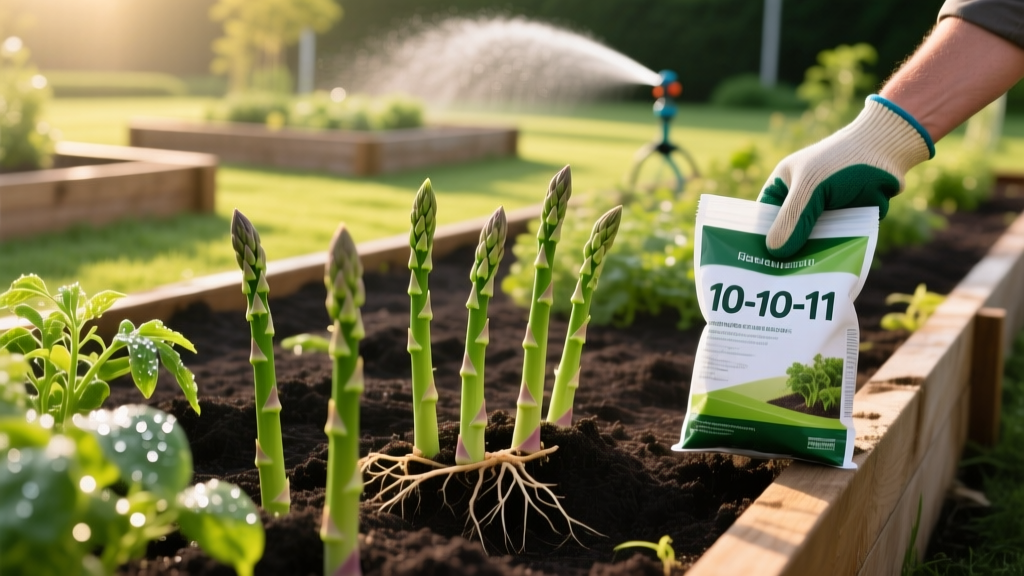
Using 10-10-10 Fertilizer for Asparagus: Rates and Timing Guide
The N-P-K Breakdown: Why 10-10-10 Works for Asparagus
Asparagus (Asparagus officinalis) is a heavy-feeding perennial that requires a precise nutrient balance to sustain a 15- to 20-year harvest cycle. The numbers on a fertilizer bag represent the percentage by weight of Nitrogen (N), Phosphorus (P), and Potassium (K). A 10-10-10 formulation provides an equal ratio of these three macronutrients, making it a versatile baseline for home gardeners establishing new crowns or maintaining young beds.
Nitrogen drives the vigorous fern growth required to recharge the crown's carbohydrate reserves after the spring harvest. Phosphorus is critical for deep root expansion and crown development, while Potassium regulates water uptake and improves winter hardiness. According to the University of Minnesota Extension, a balanced synthetic fertilizer like 10-10-10 is highly effective in the first three years of bed establishment when the plant's root system is aggressively expanding and requires readily available phosphorus.
⚠️ Agronomy Warning: The Phosphorus Trap
While 10-10-10 is excellent for young beds, continuous use on mature asparagus (Year 4+) often leads to excessive soil phosphorus buildup. If your soil test reveals phosphorus levels above 50 ppm (Mehlich-3 extraction), cease using 10-10-10 immediately. Excess phosphorus binds with zinc and iron, causing micronutrient deficiencies that manifest as interveinal chlorosis on the ferns.
Soil Testing: The Prerequisite to Application
Never apply 10-10-10 blindly. Asparagus thrives in a soil pH between 6.5 and 7.0. If your pH drops below 6.0, phosphorus from the 10-10-10 fertilizer becomes chemically locked in the soil, rendering it inaccessible to the asparagus crowns regardless of how much you apply.
Extract 5 to 6 core samples at a depth of 6 inches using a soil probe, mix them in a clean plastic bucket, and send them to a university extension lab. A standard mail-in soil test costs between $15 and $25 in 2026 and provides exact lime and fertilizer prescriptions. The Clemson University Home & Garden Information Center emphasizes that adjusting pH with pelletized lime must be done 3 to 6 months before your planned 10-10-10 application to ensure the nutrients are bioavailable when the spears emerge.
Application Rates and Timing Matrix
The most common mistake home gardeners make is applying fertilizer at the wrong stage of the asparagus growth cycle. Applying high-nitrogen synthetic fertilizers during the spear harvest window results in tender, weak spears that are highly susceptible to asparagus beetle damage and frost rot. Use the matrix below to determine your exact 10-10-10 dosage.
| Bed Age | Application Rate | Timing & Method |
|---|---|---|
| Year 1 (Trenching/Planting) | 1.5 lbs per 100 sq. ft. | Broadcast and incorporate into the top 4-6 inches of soil before setting crowns. |
| Year 2 (Establishment) | 1.0 lbs per 100 sq. ft. | Early spring, 2 weeks before expected spear emergence. Lightly scratch into soil surface. |
| Year 3 (First Light Harvest) | 1.0 lbs per 100 sq. ft. | Apply immediately after the final spear harvest (mid-to-late June) to fuel summer fern growth. |
| Year 4+ (Mature Beds) | 0.5 to 1.0 lbs per 100 sq. ft. | Post-harvest only. Note: Transition to higher N / lower P fertilizer if soil P is high. |
Step-by-Step Application Protocol
Granular 10-10-10 has a moderate salt index. If granules rest directly against emerging asparagus spears or young ferns, they will cause localized tissue necrosis (fertilizer burn). Follow this protocol for safe distribution:
- Clear the Bed: Remove all winter mulch, dead fern debris, and weeds. Rake the soil surface lightly to expose the soil line without damaging the shallow crown roots.
- Calibrate the Spreader: For a standard broadcast spreader (like the Scotts EdgeGuard Mini), set the dial to 3.5 for 10-10-10 granules. If using a drop spreader, set it to 5.0 to ensure the granules fall directly between the rows rather than on top of the crowns.
- Apply the Granules: Walk at a steady pace of 3 feet per second. Overlap your wheel tracks by 2 inches to prevent striping (under-fertilized bands that result in weak, spindly spears the following spring).
- Incorporate and Water: Use a bow rake to gently work the granules into the top 1 inch of soil. Immediately apply 0.5 inches of water via sprinkler or drip tape to dissolve the prills and move the nutrients into the root zone.
10-10-10 vs. Organic Alternatives: A Cost and Efficacy Comparison
While a 40-pound bag of synthetic 10-10-10 (such as Lesco or Sunniland) retails for roughly $18 to $26 in 2026 and covers up to 4,000 square feet at establishment rates, organic alternatives offer different release profiles. Synthetic 10-10-10 is 100% water-soluble and available to the plant within 48 hours. Organic options require soil microbes to break them down, which takes 2 to 4 weeks depending on soil temperature.
Synthetic 10-10-10
- Pros: Immediate nutrient availability; precise N-P-K ratio; highly cost-effective per square foot.
- Cons: Does not build soil organic matter; high salt index risks fern burn; contributes to phosphorus runoff if over-applied.
Composted Poultry Manure
- Pros: Adds vital organic matter; improves soil moisture retention; slow-release nitrogen prevents fern burn.
- Cons: N-P-K ratio is unpredictable (usually around 3-2-2); requires massive volumes (40 lbs per 100 sq ft); can introduce weed seeds if not properly hot-composted.
Troubleshooting Common Fertilization Failures
- Symptom: Spears are thin, spindly, and lack vigor.
Cause: Nitrogen deficiency or crown exhaustion. Fix: Ensure your post-harvest 10-10-10 application was completed by late June. Late applications (August or later) push tender fern growth that will be killed by the first autumn frost, preventing the crown from storing carbohydrates for next year's spears. - Symptom: Fern tips turn brown and curl (marginal necrosis).
Cause: Potassium deficiency or fertilizer salt burn. Fix: Check your spreader calibration. If you applied more than 1.5 lbs per 100 sq. ft. in a single pass, you likely burned the foliage. Flush the bed with 1 inch of water to leach excess salts below the root zone. - Symptom: Spears emerge but quickly turn yellow and collapse.
Cause: Fusarium crown rot, often exacerbated by excessive nitrogen pushing weak, succulent tissue. Fix: Halt all fertilization. Improve drainage and avoid working in the bed when the soil is wet to prevent spreading the fungal spores.
Expert FAQs
Can I use 10-10-10 fertilizer on asparagus in the fall?
No. Fall applications of nitrogen stimulate late-season fern growth that depletes the crown's winter carbohydrate reserves and increases susceptibility to frost heaving. Limit 10-10-10 applications to early spring (pre-emergence) or immediately after the summer harvest concludes.
How long does it take for 10-10-10 to break down in the soil?
Because 10-10-10 is a synthetic, water-soluble salt-based fertilizer, it does not require microbial breakdown. Once watered in with at least 0.5 inches of irrigation or rainfall, the granules dissolve and the nutrients enter the soil solution within 24 to 48 hours, becoming immediately available to the asparagus roots.
Is 10-10-10 safe to use if I have dogs that roam the garden?
Standard granular 10-10-10 is moderately toxic to dogs if ingested directly from the bag or if they lick freshly applied granules off the soil surface. Always water the fertilizer in thoroughly until the granules are completely dissolved and the soil surface is clear. Keep pets out of the asparagus bed for 24 hours after application to allow the soil surface to dry.

