
Lawn Care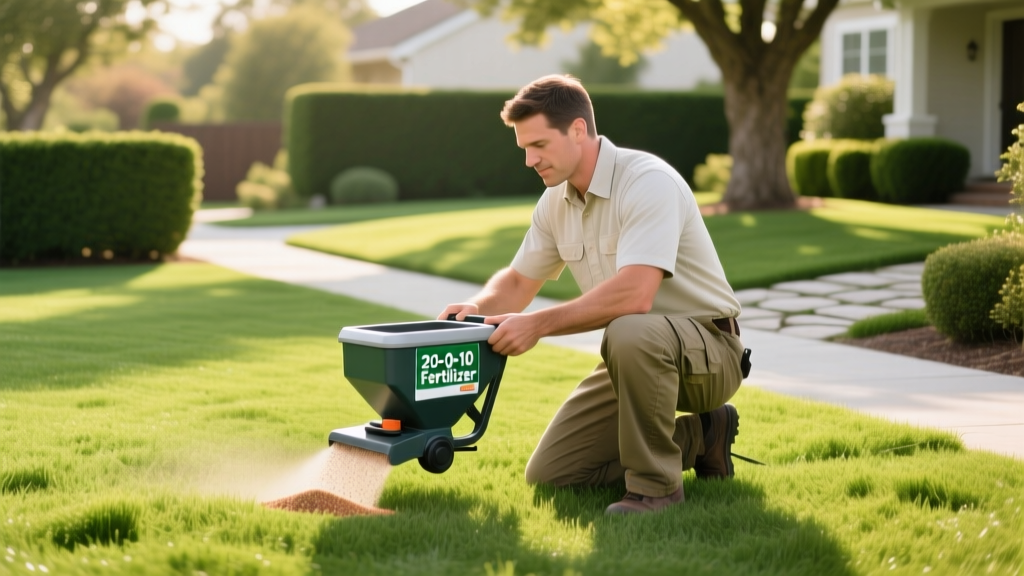
When and How to Apply 20 0 10 Fertilizer to Lawns
The Shift Toward Zero-Phosphorus Turf Nutrition
For decades, the standard approach to lawn care relied heavily on balanced NPK ratios like 10-10-10. However, modern soil science and environmental regulations have fundamentally shifted how we feed established turf. A 20 0 10 fertilizer represents a highly targeted nutritional profile designed specifically for mature lawns that require vigorous top-growth and stress tolerance without the ecological risks of excess phosphorus. Understanding when to deploy this specific ratio—and more importantly, when to avoid it—is the difference between a resilient, dark-green lawn and a polluted local watershed.
This guide breaks down the exact agronomic mechanics of 20 0 10 fertilizer, provides precise application mathematics, and reveals the hidden ingredient differences that separate premium turf products from cheap agricultural fillers.
Decoding the 20 0 10 NPK Profile
The three numbers on any fertilizer bag represent the percentage by weight of Nitrogen (N), Phosphorus (P), and Potassium (K). Here is what a 20-0-10 formulation actually delivers to your soil ecosystem:
20% Nitrogen: The Vegetative Engine
Nitrogen is the primary driver of chlorophyll production and blade elongation. A 20% concentration provides a robust dose of growth-stimulating nutrients. However, the source of this nitrogen dictates the fertilizer's performance. Premium 20 0 10 blends utilize slow-release nitrogen sources like Polymer-Coated Urea (PCU) or Methylene Urea (MU), which feed the grass steadily over 8 to 12 weeks. Cheap alternatives rely entirely on fast-release Urea or Ammonium Sulfate, which can cause rapid flushes of growth followed by severe nutrient leaching and turf burn during summer heat.
0% Phosphorus: The Environmental Safeguard
Phosphorus is essential for root development and seedling establishment. So why zero? According to the Environmental Protection Agency (EPA), phosphorus runoff is a primary catalyst for harmful algal blooms and eutrophication in freshwater systems. Most established lawns in the United States already possess decades of "legacy phosphorus" locked in the soil profile from years of historical fertilizer applications. Adding more phosphorus to a mature lawn provides zero agronomic benefit while significantly increasing environmental liability. Consequently, states like New York, Michigan, and Minnesota have enacted strict bans on phosphorus fertilizers for established turf, making 20 0 10 formulations legally necessary and ecologically responsible.
10% Potassium (Potash): The Stress Shield
Potassium regulates the opening and closing of stomata (pores) on grass blades, directly controlling water retention and osmoregulation. A 10% concentration fortifies the turf against drought stress, heavy foot traffic, and extreme temperature fluctuations. It is the critical component that transitions a lawn from merely "green" to genuinely resilient.
⚠️ Critical Warning for New Lawns: Never use a 20 0 10 fertilizer on newly seeded lawns, bare patches, or freshly laid sod. New grass requires high phosphorus (e.g., a 10-18-10 starter fertilizer) to develop a viable root system. Applying zero-phosphorus fertilizer to seedlings will result in shallow roots and high mortality rates.
Scenario Comparison: Which NPK Ratio Do You Need?
Selecting the right fertilizer requires matching the NPK ratio to your lawn's current life stage and soil test results. Use the matrix below to determine if 20 0 10 is the correct choice for your current application window.
| NPK Ratio | Primary Use Case | Application Timing | Soil Test Requirement |
|---|---|---|---|
| 20-0-10 | Maintenance, greening, and stress tolerance for mature turf. | Late Spring, Early Fall | High/Adequate Phosphorus levels confirmed. |
| 10-18-10 | Starter fertilizer for new seed, overseeding, or sod establishment. | During seeding/sodding | Phosphorus deficiency or new construction soil. |
| 32-0-10 | Heavy nitrogen push for rapid spring green-up on highly depleted soils. | Early Spring | Low Nitrogen, High Phosphorus. |
| 0-0-20 | Winterizer applications to boost cold-hardiness without stimulating top growth. | Late Fall (Post-mowing) | Adequate N and P, low Potassium. |
The Mathematics of Application: Calculating Exact Rates
The most common mistake homeowners make is applying fertilizer by the "bag coverage" estimate rather than calculating the exact nitrogen load per square foot. The agronomic standard for cool-season and warm-season grasses is generally 1 pound of actual Nitrogen per 1,000 square feet per application.
Here is the exact mathematical framework for applying a 20 0 10 fertilizer to achieve this rate:
- Determine the Nitrogen Weight: A standard 50-pound bag of 20-0-10 contains 20% Nitrogen. Multiply 50 lbs × 0.20 = 10 pounds of actual Nitrogen in the bag.
- Calculate Coverage: If you need 1 lb of N per 1,000 sq ft, and the bag contains 10 lbs of N, the bag will cover exactly 10,000 square feet.
- Determine Spreader Output: To cover 10,000 sq ft with 50 lbs of product, you must apply 5 pounds of granular product per 1,000 square feet.
According to Penn State Extension's Turf Management Program, applying more than 1.5 lbs of soluble nitrogen per 1,000 sq ft in a single application drastically increases the risk of foliar burn and nitrate leaching into groundwater. Always calibrate your rotary or drop spreader using the "tarp method" (spreading over a 10x10 ft tarp, weighing the collected granules, and multiplying by 10) to ensure your mechanical output matches the 5 lbs/1,000 sq ft target.
Ingredient Sourcing: The Hidden Quality Indicators
Not all 20 0 10 fertilizers are manufactured equally. The guaranteed analysis on the front of the bag tells you the percentages, but the derived from section on the back reveals the quality. When evaluating products at your local garden center, look for these specific ingredient distinctions:
Potassium Source: SOP vs. MOP
The source of the 10% Potassium heavily influences turf safety.
- Muriate of Potash (MOP / Potassium Chloride): The cheapest and most common source. It carries a high salt index, which can dehydrate grass roots and cause tip-burn if applied during drought conditions or on sandy soils.
- Sulfate of Potash (SOP / Potassium Sulfate): The premium standard. SOP has a significantly lower salt index and provides a secondary macronutrient (Sulfur), which is vital for amino acid synthesis. If your soil test indicates high salinity or you are fertilizing during summer heat, insist on a 20 0 10 blend derived from SOP.
Nitrogen Source: The WIN Metric
Check the label for "Water Insoluble Nitrogen" (WIN). A high-quality 20 0 10 turf fertilizer should derive at least 50% to 70% of its total nitrogen from slow-release WIN sources (like sulfur-coated urea, PCU, or methylene urea). If the WIN is below 30%, the product will act like a fast-acting liquid fertilizer, requiring frequent re-application and increasing the risk of nutrient runoff during heavy rain events.
Common Application Failures to Avoid
🛑 Avoid the "Overlap Burn" Stripes: When using a rotary spreader, failing to close the hopper before turning around at the end of a pass results in double-application at the lawn's edges. This localized 2 lb/1,000 sq ft overload will chemically burn the grass, leaving distinct brown semicircles. Always close the hopper, turn, and reopen only when moving forward in a straight line.
Additionally, avoid applying 20 0 10 fertilizers to dormant warm-season grasses (like Bermuda or Zoysia) in late fall. The high nitrogen content will force tender new growth that will be immediately killed by the first frost, depleting the plant's carbohydrate reserves for the following spring. Reserve high-nitrogen formulations for the active growing season, and transition to a 0-0-20 or low-nitrogen winterizer as soil temperatures drop below 55°F.
Expert Soil Nutrition FAQs
Can I use 20 0 10 fertilizer on my vegetable garden?
No. While the nitrogen will promote massive leafy growth in plants like lettuce or spinach, fruiting and root crops (tomatoes, peppers, carrots, potatoes) require substantial phosphorus for flower, fruit, and tuber development. Applying a zero-phosphorus fertilizer to a vegetable garden will result in large, lush plants with little to no edible yield.
How soon after applying 20 0 10 should I water the lawn?
You must water the lawn within 24 to 48 hours of application to dissolve the granular prills and move the nutrients into the root zone. Apply approximately 0.25 inches of irrigation. Leaving urea-based nitrogen on the surface of dry soil for more than three days allows it to volatilize into ammonia gas, literally wasting your money into the atmosphere.
Does 20 0 10 fertilizer expire or lose potency?
Granular synthetic fertilizers do not expire if stored properly. As long as the 20 0 10 product is kept in a sealed, climate-controlled environment away from high humidity, the NPK nutrients will remain chemically stable indefinitely. However, if the bag is exposed to moisture, the granules will clump and degrade, making accurate spreader calibration impossible.

