
Lawn Care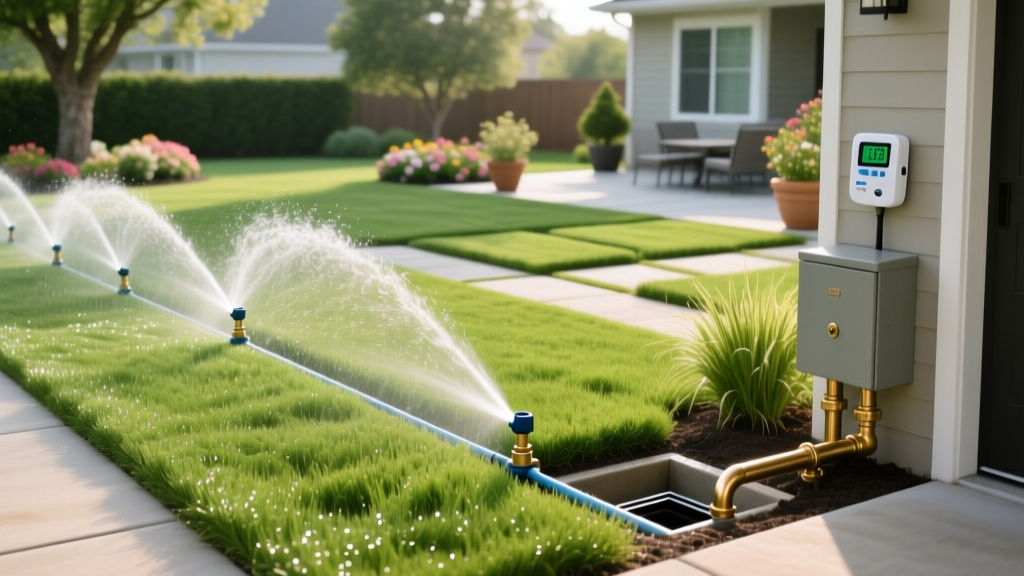
2026 Sprinkler Installation Cost Guide: Per Zone & Material Breakdown
The True Cost of Irrigation in 2026
Estimating a sprinkler system requires moving past vague square-foot averages and calculating exact zone dosages, trenching linear footage, and material grades. In 2026, the national average for a professional underground sprinkler installation on a standard 1/4-acre lot (approx. 10,890 sq. ft.) ranges between $3,600 and $5,200. However, pricing fluctuates wildly based on soil composition, local water pressure constraints, and the specific precipitation rates required for your turfgrass species.
This guide bypasses generic estimates to provide a granular, per-zone cost matrix, material dosage requirements, and the hidden trenching variables that dictate your final invoice.
2026 Sprinkler Installation Cost by Yard Size
Contractors typically bid by the zone rather than the square foot, as a single zone requires a dedicated valve, wiring run, and specific pipe sizing. The table below outlines expected costs based on standard residential lot sizes and average zone requirements.
| Lot Size | Estimated Zones | Linear Feet of Trench | 2026 Average Cost Range | Cost Per Sq. Ft. |
|---|---|---|---|---|
| 1/8 Acre (5,445 sq ft) | 3 - 4 | 800 - 1,200 ft | $1,800 - $2,600 | $0.33 - $0.47 |
| 1/4 Acre (10,890 sq ft) | 5 - 7 | 1,500 - 2,200 ft | $3,600 - $5,200 | $0.33 - $0.47 |
| 1/2 Acre (21,780 sq ft) | 8 - 12 | 2,800 - 4,000 ft | $6,500 - $9,800 | $0.29 - $0.45 |
| 1 Acre (43,560 sq ft) | 15 - 20+ | 5,500 - 8,000 ft | $12,000 - $18,500 | $0.27 - $0.42 |
The 'Per Zone' Pricing Model Explained
If a contractor quotes you $550 per zone, what exactly are you paying for? A standard rotor or spray zone breaks down into three cost centers:
- Materials ($120 - $180): Includes 3/4-inch or 1-inch lateral pipe, 3 to 5 sprinkler heads (e.g., Hunter PGP Ultra or Rain Bird 5000), fittings, PVC primer/cement, and one 1-inch anti-siphon or inline valve.
- Trenching & Labor ($300 - $450): Mechanical trenching using a Ditch Witch or vibratory plow, pipe laying, backfilling, and sod replacement.
- Electrical & Controller Allocation ($80 - $120): Splicing 14-gauge multi-strand irrigation wire, waterproofing connections with silicone-filled wire nuts, and programming the zone into the main controller.
Zone Dosage: Matching GPM to Household Supply
A critical failure point in DIY or budget installations is overdosing a zone's Gallons Per Minute (GPM) beyond the home's water meter capacity. Most residential 5/8-inch or 3/4-inch water meters supply 8 to 12 GPM. If you install five spray heads on a single zone, each drawing 3 GPM, the zone demands 15 GPM. This results in a 20% pressure drop, causing poor head-to-head coverage and dry spots.
The Fix: Utilize low-precipitation nozzles. According to the EPA WaterSense program, swapping standard spray nozzles (1.5 inches/hour precipitation rate) for multi-stream rotator nozzles (0.4 inches/hour) reduces zone GPM demand by up to 70%, allowing you to group more heads per zone without exceeding your meter's flow limit.
Material Cost Matrix: PVC vs. Poly vs. Drip
The pipe material selected for your mainline and lateral lines heavily influences both the upfront sprinkler installation cost and the system's lifespan. Below is a comparison of the three primary materials used in 2026.
| Material Type | Cost Per Linear Foot | Lifespan | Best Application | Drawbacks |
|---|---|---|---|---|
| Schedule 40 PVC | $1.15 - $1.45 | 30 - 40+ Years | Mainlines, high-traffic areas, rocky soil. | Requires trenching; glued joints can fail if poorly primed. |
| Class 200 PVC | $0.85 - $1.10 | 20 - 30 Years | Lateral lines in standard suburban soil. | Thinner walls; prone to crushing under heavy vehicle loads. |
| Polyethylene (Poly) | $0.55 - $0.75 | 15 - 25 Years | Rocky terrain, freezing climates (expands without cracking). | Requires insert fittings and hose clamps; slower installation. |
| Drip Tubing (1/2') | $0.30 - $0.45 | 10 - 15 Years | Flower beds, shrubs, narrow lawn strips. | Easily damaged by aerators, pets, and UV exposure if uncovered. |
⚠️ Hidden Cost Warning: Trenching in Bedrock & Clay
The $8 to $12 per linear foot trenching average assumes standard topsoil. If your property features heavy caliche, bedrock, or dense blue clay, contractors will upcharge for rock saws or jackhammer labor. Expect trenching costs to spike to $18 - $25 per linear foot in these conditions. Always mandate a soil test or test pit dig before signing a fixed-price contract.
Required System Components & Dosage
Beyond the pipes and heads, a complete system requires central components. Here is the exact dosage and cost for a standard 6-zone residential setup:
- Backflow Preventer ($140 - $220): A Watts 007 Dual Check Valve or a Febco 765 Pressure Vacuum Breaker (PVB). Required by code to prevent contaminated lawn water from siphoning back into the municipal drinking supply.
- Valve Manifold ($150 - $210): Six 1-inch Hunter PGV or Rain Bird DV valves, housed in a 14x19 inch polyethylene valve box.
- Master Valve ($45 - $65): Installed immediately after the backflow preventer to shut off all water flow when the controller is idle, preventing catastrophic leaks if a lateral line breaks.
- Wire & Connectors ($85 - $120): 500 feet of 14-gauge, 8-strand UF (underground feeder) direct-bury wire, plus a box of 3M DBR/Y-6 silicone-filled wire nuts.
Smart Controllers and the Water Savings ROI
Upgrading from a standard timer to an EPA WaterSense-labeled smart controller is no longer optional for water-conscious homeowners; it is a financial necessity. Models like the Rachio 3 ($279) or the Hunter Hydrawise Pro-HC ($325) utilize hyper-local weather data and soil moisture algorithms to skip unnecessary watering cycles.
For precise irrigation scheduling and head-to-head coverage design, refer to the Penn State Extension guidelines on landscape water conservation, which emphasize that smart controllers reduce outdoor water use by 20% to 50%. For a household paying $8 per 1,000 gallons, saving 15,000 gallons annually yields a $120 yearly return. The smart controller pays for itself in roughly 2.5 years, making the upfront cost negligible over a 10-year system lifespan.
Your Pre-Quote Checklist for Contractors
When soliciting bids, ensure the contractor's proposal explicitly addresses the following variables to avoid mid-project change orders:
- Utility Locates: Confirm the contractor will call 811 to mark public utilities. Note that 811 does not mark private lines (e.g., dog fences, landscape lighting, private sewer laterals). Budget $150-$300 for a private utility locator if your yard has extensive hardscaping.
- Head-to-Head Coverage: The proposal must state 'head-to-head coverage' (where the spray from one head reaches the adjacent head). Edge-only spacing guarantees brown centers in your turf during July heat.
- Sod Restoration: Verify if the quote includes hand-cutting sod before trenching and replacing it after backfilling, or if they are simply blowing dirt over the trench (which kills the grass and leaves a muddy scar).
- Winterization Protocol: Ensure the system is designed with manual or automatic drain valves, or blow-out ports, to facilitate autumn winterization using an air compressor (typically 80-100 CFM).
By calculating your lot's exact zone requirements, selecting the appropriate pipe grade for your soil type, and mandating smart-weather integration, you can accurately forecast your sprinkler installation cost and ensure a system that delivers precise coverage without inflating your municipal water bill.

