
Lawn Care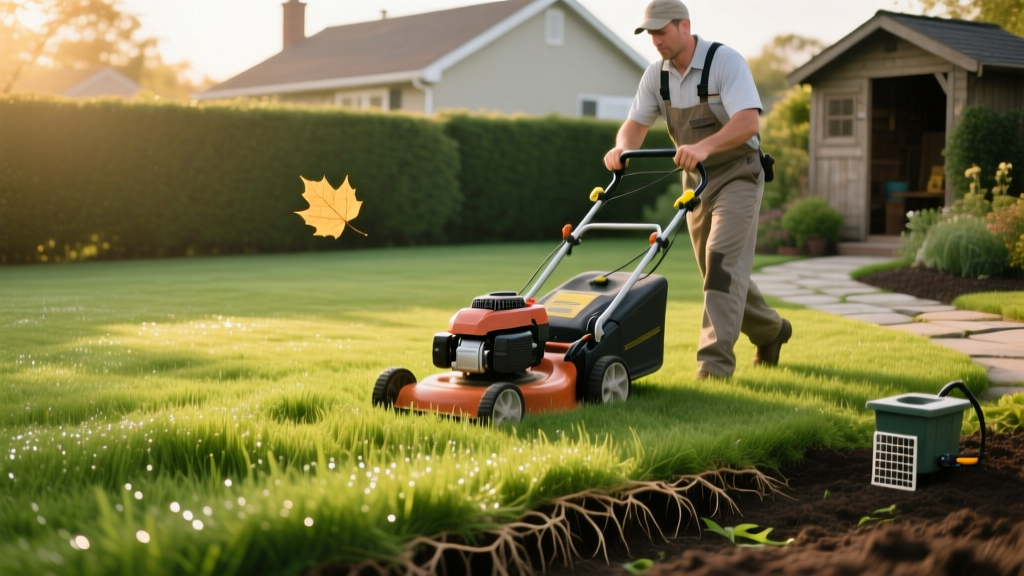
How to Maximize Grass Cover: Step-by-Step Lawn Maintenance Guide
The Science of Turf Density: Why Grass Cover Matters
Achieving a thick, uniform lawn is not just about aesthetics; it is the primary biological defense against weeds, soil erosion, and moisture loss. In agronomic terms, "grass cover" refers to the percentage of soil surface shielded by living turfgrass and its lateral stolons or rhizomes. When your grass cover drops below 85%, opportunistic weeds like crabgrass, prostrate spurge, and nutsedge exploit the exposed soil, germinating rapidly in sunlight. To build and maintain a 95%+ grass cover, you must shift from reactive lawn care to a proactive, step-by-step maintenance protocol that prioritizes root zone health, lateral tillering, and canopy density.
Pro Tip: Before starting any renovation, extract a soil core with a trowel. If the thatch layer (the spongy brown organic matter between the green grass and the soil) exceeds 0.5 inches, your grass cover will suffer from hydrophobic dry spots and shallow rooting. Dethatching or aggressive core aeration is mandatory before seeding.
Phase 1: Soil Profiling and Root Zone Preparation
Dense grass cover is impossible in compacted or chemically imbalanced soil. Turfgrass roots require a balance of oxygen, water, and nutrients. The first step in our maintenance procedure is establishing a viable root zone.
Step 1: Comprehensive Soil Testing
Do not guess your soil's needs. Send a composite soil sample to a reputable lab (such as Logan Labs or your local university extension) for a Mehlich-3 extraction test. You are looking for three critical metrics:
- pH Level: Ideal range is 6.2 to 6.8. If below 6.0, apply pelletized calcitic limestone at 20-30 lbs per 1,000 sq ft to unlock bound nutrients.
- Phosphorus (P): Crucial for root development and seedling establishment. If your lab report shows "Low" or "Medium" P, you will need a starter fertilizer during overseeding.
- Cation Exchange Capacity (CEC): This measures your soil's ability to hold nutrients. Sandy soils with a CEC below 10 require more frequent, lighter fertilizer applications to sustain grass cover without leaching.
Step 2: Deep Core Aeration
Liquid aerators (surfactants) have their place for maintenance, but to physically fracture compacted clay and restore grass cover in high-traffic areas, mechanical core aeration is non-negotiable. According to the University of Minnesota Turfgrass Science program, core aeration alleviates soil compaction, improves water infiltration, and creates micro-environments for seed-to-soil contact.
Execution Specs: Rent a walk-behind core aerator with hollow tines. Ensure the machine pulls plugs that are at least 0.5 inches in diameter and 3 inches deep. Run the aerator over the lawn in two perpendicular directions (a grid pattern) to achieve a hole spacing of roughly 2 to 3 inches apart. Leave the extracted cores on the lawn; they will break down and top-dress the turf with beneficial soil microbes within two weeks.
Phase 2: Strategic Overseeding for Canopy Closure
Once the soil is fractured and receptive, it is time to introduce new genetics to thicken the grass cover. Overseeding is not merely broadcasting seed; it requires precise calibration based on your turf species.
Step 3: Seed Selection and Application Rates
Choose a seed blend that matches your existing lawn and microclimates. For shaded areas where grass cover naturally thins, select fine fescues (Creeping Red, Chewings, or Hard Fescue) which require 50% less sunlight than Kentucky Bluegrass. Avoid "contractor grade" mixes containing annual ryegrass, which acts as a temporary nurse crop but ultimately competes with your permanent turf for water.
| Turfgrass Species | Overseeding Rate (per 1,000 sq ft) | Planting Depth | Germination Window |
|---|---|---|---|
| Kentucky Bluegrass | 1.5 - 2.5 lbs | 1/8 to 1/4 inch | 14 - 28 days |
| Tall Fescue (Turf-Type) | 6.0 - 8.0 lbs | 1/4 to 1/2 inch | 7 - 14 days |
| Perennial Ryegrass | 5.0 - 7.0 lbs | 1/8 to 1/4 inch | 5 - 10 days |
| Bermudagrass (Seeded) | 1.0 - 2.0 lbs (hulled) | 1/8 inch max | 10 - 21 days |
For best results, use a mechanical slit-seeder (also known as a slice seeder) rather than a rotary drop spreader. Slit-seeders cut shallow trenches into the soil and drop the seed directly into the furrow, ensuring the vital seed-to-soil contact necessary for a dense grass cover.
Phase 3: Nutrient Loading and Moisture Management
Seed will not germinate, and existing turf will not tiller laterally, without the correct chemical signals provided by fertilizers and consistent moisture.
Step 4: Targeted Fertilization
Immediately after overseeding, apply a high-phosphorus starter fertilizer (such as a 18-24-12 or 36-6-4 N-P-K ratio). Phosphorus is immobile in the soil and is the primary catalyst for early root development. Apply exactly 1.0 lb of actual Phosphorus (P2O5) per 1,000 sq ft. Once the new grass reaches mowing height, transition to a slow-release nitrogen source like Polyon or methylene urea. Quick-release nitrogen (like urea) causes rapid vertical blade growth at the expense of lateral stolon development, which is counterproductive when your goal is horizontal grass cover.
Step 5: The Germination Irrigation Protocol
Watering for grass cover establishment is entirely different from watering an established lawn. For the first 21 days post-seeding, the top 1/2 inch of soil must never dry out. Program your smart irrigation controller for 3 to 4 short cycles per day (e.g., 5 minutes at 8 AM, 12 PM, and 4 PM). Once the new grass reaches 2 inches tall, reduce frequency to once daily but increase the duration to encourage deeper root penetration.
Warning: Avoid watering in the late evening (after 6 PM). Prolonged leaf wetness for over 14 hours creates the perfect environment for Pythium Blight and Brown Patch fungi, which can wipe out newly established grass cover in less than 48 hours.
Phase 4: Mowing for Lateral Tillering and Canopy Density
How you mow dictates the physiological growth habit of the turf. To maximize grass cover, you must force the plant to grow outward, not just upward.
Step 6: Implementing the 1/3 Rule and Height Calibration
According to Penn State Extension turfgrass guidelines, removing more than one-third of the leaf blade in a single mowing shocks the plant, causing it to shed root mass to support the remaining leaves. This root dieback creates microscopic gaps in the soil, weakening the overall grass cover.
Calibrate your mower deck based on your species:
- Tall Fescue: Maintain at 3.5 to 4.0 inches. The taller canopy shades the soil, retaining moisture and preventing weed seed germination.
- Kentucky Bluegrass: Maintain at 2.5 to 3.0 inches to encourage rhizomatous spread.
- Bermudagrass / Zoysia: Maintain at 1.0 to 2.0 inches (preferably with a reel mower) to force dense lateral stolon growth.
Keep your mower blades razor-sharp. A dull blade tears the grass tissue, leaving a frayed, white tip that loses moisture rapidly and invites foliar pathogens, directly degrading the visual and physical integrity of your grass cover.
Troubleshooting Matrix: Why is My Grass Cover Thinning?
If you have followed the steps above but still suffer from sparse turf, use this diagnostic matrix to identify the underlying failure mode.
| Symptom | Probable Cause | Corrective Action |
|---|---|---|
| Thinning exclusively under tree canopies | Light deprivation and root competition | Prune lower branches to raise the canopy; switch to shade-tolerant fine fescues. |
| Bare patches in high-traffic pathways | Severe soil compaction (bulk density > 1.6 g/cm³) | Double-pass core aeration; top-dress with compost; overseed with traffic-tolerant perennial ryegrass. |
| Grass pulls up easily like carpet; shallow roots | White grub feeding or hydrophobic thatch layer | Apply preventative GrubEx (chlorantraniliprole) in early June; mechanically power-rake to remove thatch. |
Maximizing grass cover is a compounding process. By systematically addressing soil structure, introducing dense-growing genetics, and mowing to promote lateral tillering, you will build a resilient turf canopy that naturally suppresses weeds and withstands environmental stress year after year.

