
Lawn Care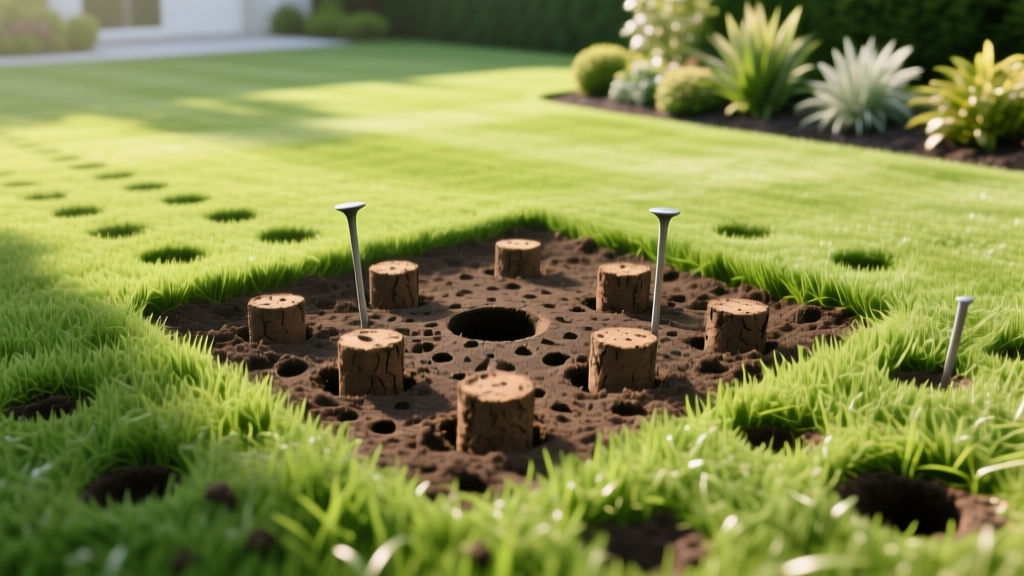
Aerator Meaning Explained: Core vs Spike Types for Soil Health
The True Aerator Meaning in Turfgrass Science
When homeowners search for the aerator meaning, they often find simplified definitions describing a tool that "pokes holes in the dirt." However, in professional turfgrass management, an aerator is a precision mechanical device designed to alleviate soil compaction, reduce thatch accumulation, and restore gas exchange in the rhizosphere. Soil compaction occurs when soil particles are pressed together, reducing the pore space between them. When soil bulk density exceeds 1.4 g/cm³ in clay loams or 1.6 g/cm³ in sandy soils, root penetration is physically restricted, and water infiltration drops dramatically.
Technical Definition: A lawn aerator is a mechanical implement that extracts cylindrical cores of soil (coring) or fractures the soil profile (spiking) to increase macroporosity, thereby facilitating oxygen diffusion to the root zone and allowing carbon dioxide to escape.
Understanding the deeper aerator meaning requires looking at the biological impact on your lawn. Grass roots require oxygen for cellular respiration. In compacted soils, anaerobic conditions develop, which stifle root growth and promote shallow, drought-susceptible turf. By physically removing soil cores, you create channels that allow water, oxygen, and liquid fertilizers to reach the deep root zone, fundamentally altering the soil's physical structure.
Core vs. Spike Aeration: A Technical Comparison
Not all aeration methods yield the same results. The most common debate in lawn care centers on core (plug) aeration versus spike aeration. According to research from the University of Minnesota Extension, core aeration is vastly superior for long-term soil health because it physically removes mass from the ground, whereas spike aeration merely displaces soil laterally, which can actually worsen compaction in heavy clay soils.
| Feature | Core (Plug) Aeration | Spike Aeration |
|---|---|---|
| Mechanism | Hollow tines extract 2-3 inch soil plugs | Solid tines push into soil, displacing it |
| Impact on Compaction | Relieves compaction by removing mass | Can increase lateral compaction in clay |
| Thatch Reduction | Excellent; brings soil microbes to surface to decompose thatch | Poor; does not interact with thatch layer |
| Best Soil Type | Heavy clay, compacted loams, high-traffic areas | Sandy soils, lightly compacted areas, temporary fixes |
| Average Cost (DIY) | $85 - $120 per day (walk-behind rental) | $30 - $60 (manual push spike aerator) |
Identifying When Your Lawn Needs Aeration
Before renting equipment or hiring a professional, you must verify that soil compaction is actually the limiting factor for your turf. Aeration is a disruptive process; performing it unnecessarily stresses the grass and opens the canopy to weed invasion. Use the following diagnostic framework to assess your lawn's aeration needs.
The Screwdriver Penetration Test
This is the most reliable field test for residential lawn compaction. Take a standard 6-inch flathead screwdriver and attempt to push it into the soil using only your hand pressure (do not hammer it).
- Optimal Soil: The screwdriver sinks to the handle with minimal resistance.
- Moderate Compaction: You can push it in 3 to 4 inches, but it requires significant body weight and stops abruptly.
- Severe Compaction: The screwdriver barely penetrates the top 1 inch, or bends under pressure. This indicates an immediate need for deep core aeration.
Visual and Hydrological Symptoms
Beyond physical testing, look for these secondary indicators of compacted soil:
- Puddling and Runoff: Water pools on the surface during irrigation or light rain rather than infiltrating within 10 minutes.
- Thatch Accumulation: A thatch layer exceeding 0.5 inches thick often correlates with compacted subsoil, as microbial activity (which breaks down thatch) is stifled by lack of oxygen.
- Wear Patterns: High-traffic areas (like the path from the back door to the patio) show thin, yellowing grass and exposed dirt, while surrounding areas remain thick.
Warning: Never aerate a lawn that is currently experiencing drought stress or dormant from extreme summer heat. The open holes will accelerate moisture loss from the soil profile, potentially killing the turf. Always water the lawn deeply (applying 1 inch of water) 24 to 48 hours before aeration to ensure the tines can penetrate 3 inches deep.
Equipment Breakdown: Choosing the Right Aerator
The market offers several tiers of aeration equipment. Selecting the right tool depends on your lawn size, soil type, and budget.
1. Manual Core Aerators (Under 2,000 sq. ft.)
For small urban lawns or targeted high-traffic zones, manual tools are highly effective and cost-efficient. The Yard Butler Lawn Coring Aerator (Model CLT-4) retails for approximately $45. It features a 37-inch steel shaft and extracts 3.5-inch cores. While it requires significant physical exertion, it allows for precise targeting of compacted zones without the storage footprint of a motorized machine.
2. Tow-Behind Aerators (2,000 to 10,000 sq. ft.)
If you own a riding mower or ATV, a tow-behind unit is the most economical choice for mid-sized properties. The Agri-Fab 48-inch Tow Lawn Aerator (Model 45-0544) costs around $180. It features 32 galvanized steel coring knives. Critical operational note: Tow-behind aerators rely entirely on downward weight for penetration. You must load the weight tray with at least 100 to 150 lbs of concrete blocks or sandbags to achieve a 3-inch depth in clay soils.
3. Walk-Behind Motorized Aerators (5,000+ sq. ft. or Severe Clay)
For large properties or heavily compacted clay, rent a commercial-grade walk-behind aerator. The industry standard is the Billy Goat PL1800H, powered by a Honda GX160 engine. Rental rates typically range from $85 to $120 per day. This machine uses a cam-driven reciprocating action to pull the tines straight out of the ground, preventing the tearing and turf damage associated with rotating drum aerators. It leaves cores spaced precisely 2.5 inches apart, which is the optimal density for rapid recovery and overseeding.
Optimal Timing and Post-Aeration Protocol
Timing your aeration to coincide with your grass type's peak growing season is non-negotiable. Aerating during off-seasons leaves the turf vulnerable to weed invasion and environmental stress.
- Cool-Season Grasses (Kentucky Bluegrass, Tall Fescue, Perennial Ryegrass): Aerate in late summer to early fall (late August through early October). The soil is still warm, promoting rapid root growth into the aeration holes, and weed competition (like crabgrass) is declining.
- Warm-Season Grasses (Bermudagrass, Zoysiagrass, St. Augustine): Aerate in late spring to early summer (mid-May through June), immediately after the grass has fully greened up and entered its most aggressive vegetative growth phase.
The Post-Aeration Recovery Matrix
Aeration should never be an isolated event. The holes created are prime real estate for seed and fertilizer. Follow this 48-hour protocol to maximize your return on investment:
- Leave the Cores: Do not rake up or vacuum the extracted soil plugs. Allow them to dry and break down naturally over the next two to three mowings. The soil cores contain beneficial microbes that will inoculate the thatch layer and accelerate its decomposition.
- Overseed Immediately: Apply turfgrass seed at the recommended rate (e.g., 4-6 lbs per 1,000 sq. ft. for Tall Fescue) within 24 hours of aeration. The seed will fall directly into the aeration holes, ensuring perfect seed-to-soil contact and protecting it from birds and wind.
- Apply Starter Fertilizer: Use a high-phosphorus starter fertilizer (e.g., a 18-24-12 NPK ratio) to fuel rapid root development. The nutrients will wash directly down the aeration channels.
- Adjust Irrigation: Water lightly 2 to 3 times a day for the first 14 days to keep the top inch of soil consistently moist, ensuring the newly dropped seed germinates successfully.
By understanding the true aerator meaning and applying these technical specifications, you transition from basic lawn maintenance to advanced turfgrass management. Regular core aeration, performed with the correct equipment and timed to your specific grass species, is the single most effective mechanical intervention for reversing soil compaction and building a resilient, drought-tolerant lawn.

