
Lawn Care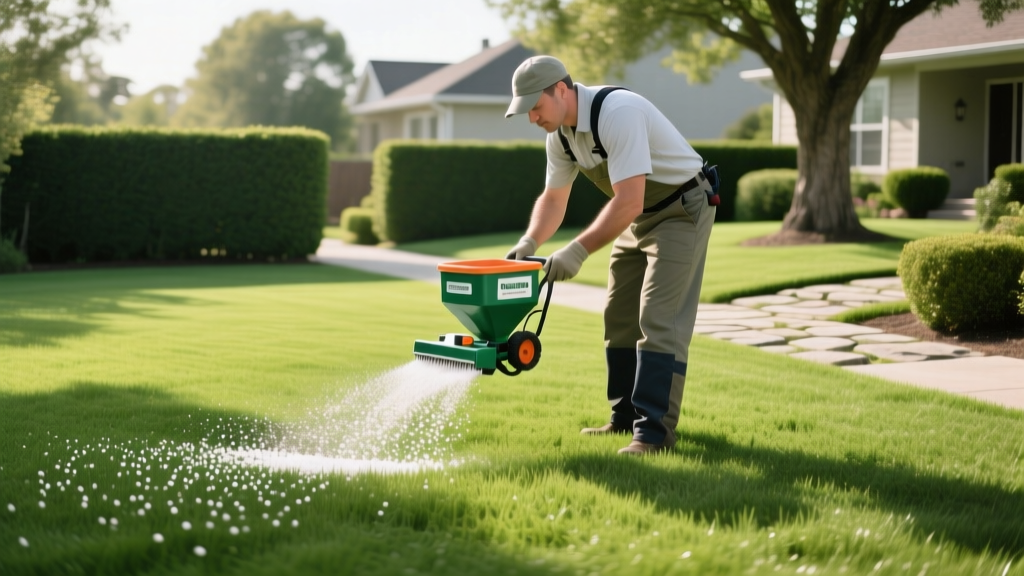
Ammonium Sulfate Fertilizer for Lawns: Complete Application Guide
The Chemistry of Ammonium Sulfate (21-0-0)
Ammonium sulfate is a highly specialized, dual-nutrient synthetic fertilizer with an N-P-K analysis of 21-0-0. Unlike balanced turf fertilizers, its primary value lies in its secondary macronutrient profile: it contains 24% sulfur in the highly soluble sulfate form. Chemically represented as (NH4)2SO4, it delivers nitrogen entirely in the ammonium (NH4+) state rather than the nitrate (NO3-) state.
This chemical distinction dictates how the grass absorbs it and how it interacts with the soil matrix. Because the nitrogen is in the ammonium form, it binds tightly to negatively charged clay and organic matter particles in the soil, preventing it from leaching out of the root zone during heavy rainfall. However, as soil bacteria convert this ammonium into nitrate through a process called nitrification, hydrogen ions are released into the soil solution. This biological conversion is what gives ammonium sulfate its most defining characteristic: a profound acidifying effect.
Quick Specs: Ammonium Sulfate
- Nitrogen (N): 21% (Ammoniacal)
- Sulfur (S): 24% (Sulfate)
- Salt Index: 69 (Moderate burn risk)
- Acidifying Effect: 5.3 lbs of calcium carbonate equivalent acidity per 1 lb of actual N
- Volatilization Risk: Near zero (unlike urea)
When to Deploy Ammonium Sulfate (and When to Avoid It)
Ammonium sulfate is not a general-purpose lawn fertilizer. Using it on the wrong soil type will actively damage your turf. It is a strategic tool reserved for specific soil chemistry corrections.
Ideal Target Scenarios
- High-pH Alkaline Soils (pH 7.5 - 8.5): The nitrification process actively lowers soil pH over time. According to Penn State Extension, maintaining a pH between 6.0 and 7.0 is critical for nutrient availability in cool-season grasses.
- Iron Chlorosis: In alkaline soils, iron becomes locked up and unavailable to grass, causing interveinal chlorosis (yellow blades with green veins). The sulfur in ammonium sulfate lowers the micro-pH around the root zone, solubilizing iron. As noted by The Mosaic Company, sulfate-based fertilizers are essential for correcting sulfur and micronutrient deficiencies in high-pH environments.
- Calcareous Soils: Soils with high free calcium carbonate levels benefit from the continuous, mild acidification provided by ammonium-based nitrogen sources.
Strict Avoidance Zones
- Acidic Soils (pH below 6.0): Applying ammonium sulfate to already acidic soils will drive the pH down into toxic aluminum and manganese ranges, destroying root systems.
- Sandy Soils with Low Buffering Capacity: Sands lack the cation exchange capacity (CEC) to buffer rapid pH swings. The acidifying effect will be too aggressive.
- Centipedegrass: While centipedegrass prefers acidic soils (pH 5.0-6.0), it is highly sensitive to the salt index of ammonium sulfate and sudden pH fluctuations.
Calculating Exact Application Rates
The standard turfgrass recommendation is to apply 1.0 pound of actual nitrogen per 1,000 square feet per application. Because ammonium sulfate is only 21% nitrogen, you must apply significantly more physical product than you would with urea (46-0-0).
The Application Math
To find the required product weight, divide your target nitrogen rate by the percentage of nitrogen in the fertilizer (expressed as a decimal):
1.0 lb N ÷ 0.21 = 4.76 lbs of ammonium sulfate per 1,000 sq ft.
If you have a 5,000 square foot lawn, you will need exactly 23.8 pounds of product. As of 2026, agricultural-grade ammonium sulfate typically retails between $18 and $28 for a 50-pound bag, making it a highly cost-effective sulfur and nitrogen source, provided your soil chemistry demands it.
Nitrogen Source Comparison Matrix
Understanding how ammonium sulfate stacks up against other common nitrogen sources highlights its specific utility in a lawn care program.
| Fertilizer Type | Analysis | Sulfur % | Salt Index | Volatilization Risk | Acidifying Effect |
|---|---|---|---|---|---|
| Ammonium Sulfate | 21-0-0 | 24% | 69 | None | Very High (5.3) |
| Urea | 46-0-0 | 0% | 75 | High (if not watered) | Moderate (1.8) |
| Ammonium Nitrate | 34-0-0 | 0% | 105 | None | Moderate (1.8) |
| Calcium Nitrate | 15.5-0-0 | 0% | 18 | None | Alkaline (Raises pH) |
Step-by-Step Application Protocol
Because of its salt index and high solubility, improper application will result in severe foliar burn. Follow this exact protocol:
- Test Soil pH First: Never apply ammonium sulfate without a recent soil test confirming a pH above 7.0. If your pH is 6.5 or lower, switch to urea or a calcium-based nitrate.
- Calibrate the Spreader: Set your rotary spreader to the manufacturer's setting for 4.7 lbs per 1,000 sq ft. If using a drop spreader, overlap wheel tracks by 2 inches to prevent striping.
- Apply to Dry Foliage: Ensure the grass blades are completely dry. Applying to wet grass will cause the granules to stick to the foliage, creating concentrated salt spots that will burn the tissue within 24 hours.
- Water In Immediately: This is the most critical step. Apply exactly 0.25 inches of irrigation immediately after spreading. This dissolves the granules, washes the salt off the leaf tissue, and moves the ammonium into the soil profile where the roots can access it.
- Monitor pH Annually: Because this fertilizer aggressively lowers pH, you must re-test your soil every spring. Once the pH drops to 6.5, transition back to a non-acidifying nitrogen source.
Troubleshooting Common Mistakes
Symptom: White or Brown Burn Patches on Grass Blades
Cause: Salt desiccation. This occurs when the fertilizer was applied to wet grass, or when the required 0.25 inches of post-application irrigation was skipped or delayed.
Fix: Flush the area immediately with 1 inch of water to dilute the salt concentration in the soil and wash remaining granules off the leaves. The damaged blades will not recover, but the crown will push new growth in 7-10 days.
Symptom: Grass Turns Dark Green but Soil Test Shows pH Dropping Rapidly
Cause: Over-application or continuous use without pH monitoring. The 5.3 lbs of lime-equivalent acidity per pound of N is cumulative.
Fix: Cease ammonium sulfate applications immediately. Apply pelletized calcitic lime at a rate of 40 lbs per 1,000 sq ft to buffer the soil and neutralize the excess hydrogen ions.
Symptom: Yellowing Persists Despite Application
Cause: The chlorosis may not be iron-related, or the soil pH is so high (above 8.0) that even the localized acidification from ammonium sulfate cannot solubilize the iron.
Fix: Switch to a chelated iron application (specifically Fe-EDDHA, which remains stable in high-pH soils) rather than relying solely on sulfur to lower the pH.
Frequently Asked Questions
Can I mix ammonium sulfate with herbicides?
Yes, ammonium sulfate is frequently used as a spray tank additive to condition hard water and improve the efficacy of systemic herbicides like glyphosate or 2,4-D. When used as a water conditioner in liquid sprays, the standard rate is 1 to 2 pounds per 100 gallons of water. However, do not mix it with herbicides that are sensitive to acidic tank environments, as the ammonium sulfate will lower the pH of the spray solution.
Does ammonium sulfate expire or lose potency?
No. Stored in a dry, climate-controlled environment, crystalline ammonium sulfate has an indefinite shelf life. It is highly hygroscopic, meaning it will absorb moisture from the air and clump if left in an open bag in a humid garage, but the chemical nutrient analysis remains completely stable.
Is it safe for pets and children?
Once watered into the soil and the grass blades have dried, it is safe. However, in its raw granular form, it is a mild irritant to paws and skin. Keep pets off the lawn during application and until the post-application irrigation has fully dried.

