
Lawn Care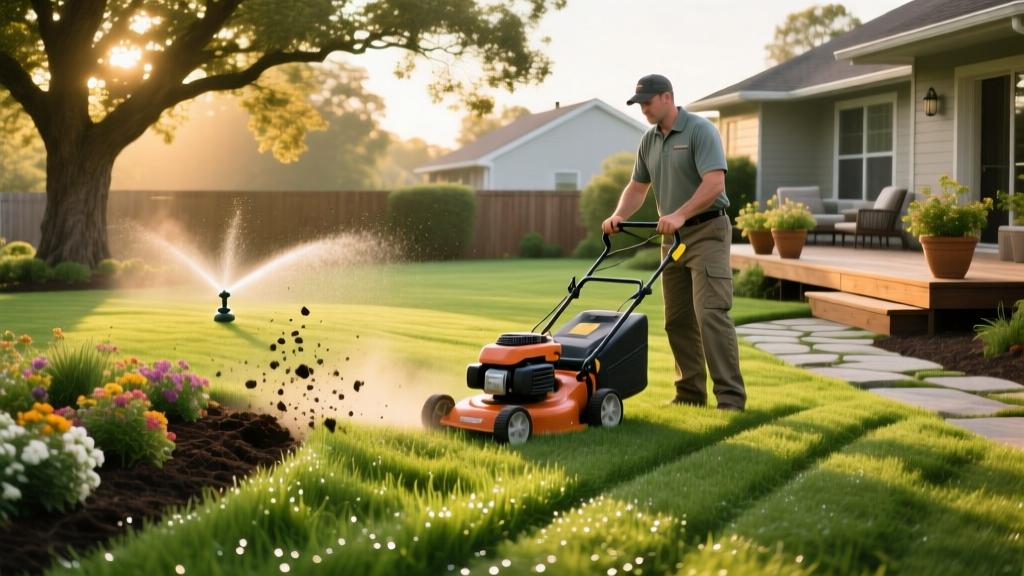
And the Green Grass Grew All Around: Step-by-Step Lawn Maintenance
The Agronomic Reality Behind the Rhyme
The old folk song promises that 'and the green grass grew all around' with minimal effort, but achieving true perimeter-to-perimeter turf density requires a calculated, step-by-step agronomic approach. Homeowners often struggle with patchy lawns, thinning canopies, and invasive weeds because they treat lawn care as a series of isolated chores rather than a compounding biological system. To ensure the green grass actually grows all around your property, you must execute a sequential maintenance protocol that addresses soil chemistry, mechanical disruption, cultivar selection, and precise canopy management.
This guide outlines the exact procedures, product specifications, and application rates used by professional turf managers to build resilient, high-density lawns. For foundational regional data, we rely on protocols established by the University of Minnesota Extension Lawn Care program and the NC State Turfgrass Maintenance Guidelines.
Step 1: Soil Diagnostics and Base Saturation
Never apply lime or fertilizer blindly. The first step in any professional lawn renovation is a comprehensive soil analysis. Skip the cheap hardware store color-metric kits; they only measure basic pH and are notoriously inaccurate.
The Testing Protocol
- Core Sampling: Use a stainless-steel soil probe to pull 10 to 15 cores from the top 4 inches of your lawn. Avoid areas near driveways or under dense tree canopies to prevent skewed data.
- Lab Selection: Ship the composite sample to a professional lab like Logan Labs or Waypoint Analytical. A standard turf panel costs between $25 and $35 and provides exact base saturation percentages.
- Target Metrics: Aim for a soil pH between 6.2 and 6.8. More importantly, look for a Calcium-to-Magnesium ratio of roughly 7:1. If your magnesium base saturation exceeds 20%, your soil structure will bind tightly, restricting oxygen to turf roots.
Expert Callout: The Gypsum Fix
If your soil test reveals high sodium levels or severe clay compaction (common in newer subdivisions), apply pelletized gypsum (calcium sulfate) at a rate of 40 lbs per 1,000 square feet. Gypsum displaces sodium and flocculates clay particles without altering your soil pH, creating vital macropores for root respiration.
If your soil test reveals high sodium levels or severe clay compaction (common in newer subdivisions), apply pelletized gypsum (calcium sulfate) at a rate of 40 lbs per 1,000 square feet. Gypsum displaces sodium and flocculates clay particles without altering your soil pH, creating vital macropores for root respiration.
Step 2: Mechanical Aeration and Thatch Disruption
Once soil chemistry is balanced, you must physically break up compaction. Thatch layers exceeding 0.5 inches act as a hydrophobic barrier, preventing water and nutrients from reaching the root zone.
Rent a walk-behind core aerator, such as the Billy Goat PL1800H or the Ryan Renair. Expect to pay $85 to $120 for a half-day rental. Do not use liquid aeration products or spike aerators; spike aerators actually increase subsurface compaction by punching holes without removing soil mass.
- Plug Depth: Adjust the machine to pull cores 3 to 4 inches deep.
- Spacing: Make two passes in perpendicular directions to achieve a hole density of one core every 3 to 4 inches.
- Timing: For cool-season grasses (Fescue, Kentucky Bluegrass), aerate in early fall when soil temperatures drop below 70°F. For warm-season grasses (Bermuda, Zoysia), aerate in late spring immediately after the green-up phase.
Step 3: Precision Overseeding and Cultivar Selection
To ensure the green grass grows all around, you must introduce modern, disease-resistant genetics into your turf canopy. Older grass varieties are highly susceptible to brown patch and dollar spot. When overseeding, use a slit-seeder or broadcast spreader immediately after aeration while the soil cores are still moist.
| Grass Type | Recommended Cultivars (2026) | Seeding Rate (lbs/1,000 sq ft) | Germination Window |
|---|---|---|---|
| Kentucky Bluegrass | Mazama, Midnight, Blue Note | 2.0 - 3.0 | 14 - 21 Days |
| Tall Fescue | Titan Ultra, G-TT, Firewall | 6.0 - 8.0 | 7 - 12 Days |
| Bermudagrass | Yukon, Rio, Princess 77 | 1.5 - 2.0 (Hulled) | 10 - 14 Days |
Critical Failure Mode Warning: Never apply a pre-emergent herbicide containing Prodiamine or Dithiopyr within 6 weeks prior to or 4 weeks after overseeding. These chemicals create a barrier that prunes the radicle (first root) of germinating seedlings, resulting in 100% seedling mortality. If you must seed in the fall, skip the fall pre-emergent and rely on post-emergent spot treatments for winter annual weeds.
Step 4: Strategic Fertilization and Weed Defense
Feeding the lawn requires matching the nutrient release curve to the grass's active growth phase. Avoid cheap, high-nitrogen synthetic fertilizers that force rapid, weak blade growth and deplete root carbohydrate reserves.
The 4-Step Nutrient Loading Schedule
- Early Spring (Soil Temp 50°F): Apply a carbon-based organic fertilizer like Milorganite (5-2-0) at 32 lbs per 2,500 sq ft. This feeds the soil microbiome without pushing excessive top growth.
- Late Spring (Pre-Emergent): Apply Prodiamine 65 WDG at 0.4 oz per 1,000 sq ft to create a chemical barrier against crabgrass and goosegrass. Water in with 0.5 inches of irrigation immediately.
- Early Fall (Overseeding): Use a phosphorus-rich starter fertilizer (e.g., 18-24-12) at 4 lbs per 1,000 sq ft to drive root development in new seedlings.
- Late Fall (Winterizer): Apply a fast-release synthetic nitrogen (like Urea 46-0-0) at a rate of 1.0 lb of actual nitrogen per 1,000 sq ft just before the grass goes dormant. This stores energy in the crown for explosive spring green-up.
Step 5: Mowing Mechanics and Canopy Management
The physical act of mowing dictates the lateral spread and density of your turf. The golden rule is the One-Third Rule: never remove more than 33% of the leaf blade in a single pass. Scalping the lawn exposes the soil to UV radiation, germinates weed seeds, and invites fungal pathogens.
Equipment Setup and Maintenance
- Deck Height: Set your mower deck to 3.5 to 4.0 inches for Tall Fescue and Kentucky Bluegrass. This shades the soil, reducing evaporation and preventing crabgrass germination.
- Blade Sharpness: Sharpen or replace your mower blades every 25 hours of operation. A dull blade tears the grass tissue, leaving a jagged, white tip that loses moisture rapidly and provides an entry point for Dollar Spot fungus.
- Mulching vs. Bagging: Leave the clippings. Grass clippings return up to 25% of the lawn's nitrogen requirements back to the soil and do not contribute to thatch buildup (thatch is composed of lignin-rich stems and roots, not soft leaf tissue).
Troubleshooting Common Turf Failure Modes
Even with perfect execution, environmental stressors can disrupt your lawn. Use this diagnostic matrix to identify and correct issues rapidly.
| Symptom | Probable Diagnosis | Agronomic Fix |
|---|---|---|
| Silver-dollar sized bleached spots with dark borders in high humidity. | Dollar Spot Fungus (Clarireedia jacksonii) | Apply 0.25 lb Nitrogen/1000 sq ft to push growth. If severe, apply Azoxystrobin (Heritage) fungicide at 0.4 oz/1000 sq ft. |
| Yellowing turf in distinct arching circles; soil smells sour. | Necrotic Ring Spot / Anaerobic Soil | Core aerate heavily. Apply Syringe applications of water during mid-day heat stress. Avoid heavy nitrogen in spring. |
| Grass pulls up easily with no roots attached; grubs visible. | White Grub Infestation (Japanese Beetle) | Apply Chlorantraniliprole (Acelepryn) in May for preventive control, or Trichlorfon (Dylox) for 24-hour curative kill. |
Frequently Asked Questions
How much water does my lawn actually need per week?
Most established cool-season lawns require 1.0 to 1.5 inches of water per week, including rainfall. Use the 'tuna can method': place empty tuna cans (which are roughly 1 inch deep) across your irrigation zones and time how long it takes your sprinklers to fill them. Water deeply and infrequently (e.g., 0.75 inches twice a week) rather than light daily watering, which promotes shallow, drought-prone root systems.
Can I mix Kentucky Bluegrass and Tall Fescue in the same lawn?
Yes, but with caution. A mix of 10% Kentucky Bluegrass and 90% Tall Fescue by seed weight is highly recommended. The Fescue provides deep drought tolerance and wear resistance, while the KBG spreads via rhizomes to fill in bare spots and repair divots. Do not exceed 20% KBG in a mix, or the differing leaf textures and growth habits will result in a clumpy, uneven appearance.
Why is my grass thinning out under large oak trees?
Turfgrass requires a minimum of 4 to 6 hours of direct, unfiltered sunlight to maintain density. Under dense tree canopies, the grass is starved of photosynthetic energy and outcompeted by tree roots for moisture. The agronomic fix is not to plant 'shade-tolerant' seed (which still requires 4 hours of light), but to perform canopy thinning on the trees to allow dappled sunlight, or to transition those specific zones to shade-tolerant groundcovers like Liriope or mulch beds.

