
Lawn Care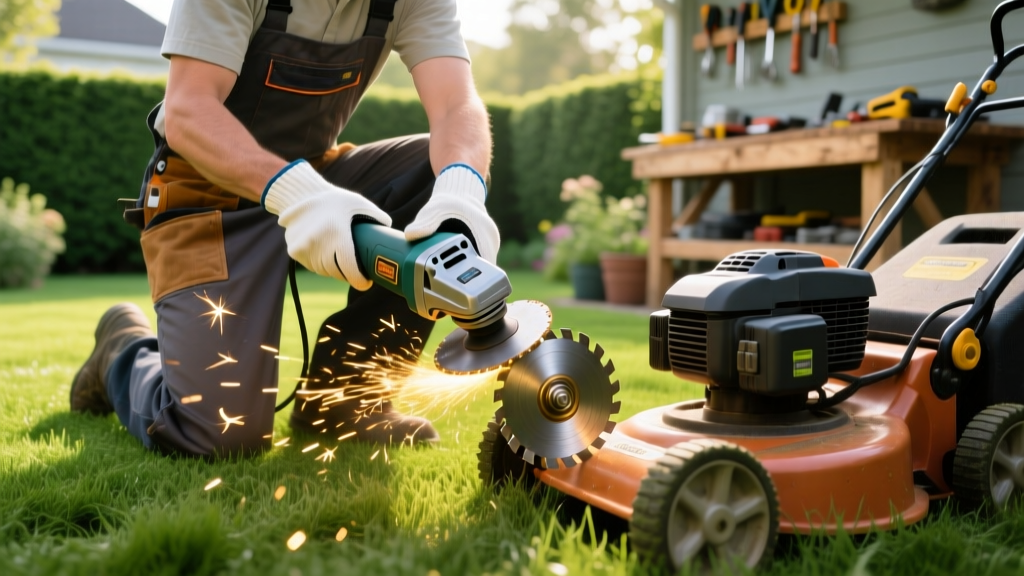
Using an Angle Grinder for Sharpening Lawn Mower Blades Safely
Dull mower blades tear grass tips rather than slicing them cleanly, leaving a jagged, brown edge that increases water loss and disease susceptibility. According to the University of Minnesota Extension, a sharp blade is the single most critical factor for overall turf health. While a flat bastard file works for light touch-ups, utilizing an angle grinder for sharpening lawn mower blades is the undisputed choice for heavy material removal, repairing deep nicks from rocks, and restoring the factory bevel in under five minutes.
However, the aggressive nature of power grinding introduces significant risks to both the operator and the blade's metallurgy. This guide details the exact tooling, abrasive selection, and technique required to sharpen high-carbon steel blades without destroying their heat treatment.
The Metallurgy of Mower Blades and Why Disc Selection Matters
Most OEM lawn mower blades are stamped from high-carbon steel and heat-treated to a Rockwell C hardness of roughly 40 to 50. This specific hardness provides the necessary rigidity to cut grass while retaining enough flexibility to bend rather than shatter if the blade strikes a hidden tree root or landscaping timber.
The primary danger when using an angle grinder for sharpening lawn mower blades is localized overheating. If the steel exceeds 400°F (204°C), it draws the temper, permanently softening the cutting edge. You will know this has happened if the steel turns a distinct blue or purple color. A softened blade will dull after a single mowing session. To prevent this, you must select an abrasive that cuts efficiently while dissipating heat.
| Abrasive Type | Grit / Spec | Heat Generation | Verdict for Mower Blades |
|---|---|---|---|
| Type 27 Grinding Wheel | 24 - 36 Grit | Extremely High | Avoid. Too aggressive; causes deep gouges and rapid temper loss. |
| Zirconia Alumina Flap Disc | 40 - 60 Grit | Low to Moderate | Highly Recommended. Contours to the bevel, dissipates heat, leaves a smooth finish. |
| Wire Cup Brush | N/A | N/A | Useless for sharpening. Only use for removing surface rust before grinding. |
Selecting the Right Angle Grinder for the Job
For mower blade maintenance, a 4.5-inch grinder is vastly superior to a 7-inch model. The smaller tool offers better maneuverability, weighs less, and reduces the risk of gouging the blade's cutting edge. You have two primary power options depending on your workspace setup:
- Corded (Best for Garage Workbenches): The DeWalt DWE402 (11-Amp, 4.5-inch) remains the industry benchmark for this task. Priced around $75, its high torque output prevents the motor from bogging down when you apply pressure to thick high-carbon steel.
- Cordless (Best for Field Repairs): The Milwaukee M18 Fuel 2780-20 (Brushless, 4.5-inch) retails for approximately $179 (bare tool). Its brushless motor provides corded-like power without the hazard of dragging an extension cord across a damp lawn.
Step-by-Step Blade Sharpening Protocol
Proper technique ensures a uniform edge and protects your hands from severe lacerations. Always adhere to the safety guidelines outlined by OSHA for Hand and Power Tools, which mandate comprehensive eye and face protection when operating high-speed rotary abrasives.
- Isolate the Power Source: Disconnect the spark plug wire on gas mowers or remove the battery on electric models. Never rely solely on the ignition key.
- Secure the Blade: Remove the blade from the deck. Clamp it in a heavy-duty bench vise (minimum 4-inch jaw width). Clamp the blade by its center mounting hole area, leaving the cutting ends exposed. Clamping the thin ends will cause violent vibration during grinding.
- Identify the OEM Bevel: Most rotary mower blades feature a 30 to 45-degree cutting bevel. Use a cheap plastic angle gauge to match the factory slope. Never attempt to grind the flat bottom of the blade.
- Execute Push Strokes: Equip a 60-grit zirconia flap disc. Turn on the grinder and let it reach full RPM before contacting the steel. Grind using smooth, sweeping push strokes along the entire length of the bevel.
- Monitor Temperature: Keep the grinder moving. Do not linger on deep nicks. If the steel becomes too hot to touch, pause and allow it to air cool. Never quench a hot mower blade in water, as rapid cooling will micro-fracture the high-carbon steel.
- Match the Material Removal: Count your grinding strokes on the first end, and replicate the exact number of strokes on the opposite end to maintain balance.
⚠️ The 'Blue Steel' Overheating Trap
If you notice the cutting edge turning blue or straw-colored during grinding, stop immediately. The temper has been drawn. You must grind past the discolored metal until you reach bright, untreated steel, or the blade will fail to hold an edge in the field.
Balancing: The Step That Saves Your Spindle Bearings
Removing unequal amounts of metal from each end of the blade creates a severe weight imbalance. An unbalanced blade spinning at 3,000 RPM generates harmonic vibrations that will prematurely destroy your mower's spindle bearings and crack the welded mower deck.
While the traditional 'nail on the wall' test is common, it lacks the precision required for modern high-lift and mulching blades. Invest in a dedicated cone balancer like the Oregon 55-110 Blade Balancer (approximately $15). Place the blade on the cone; if one side dips, use your flap disc to lightly grind the heavy side's cutting edge (not the back edge) until the blade rests perfectly level.
Reinstallation and Torque Specifications
When reinstalling the blade, always use a new or thoroughly cleaned mounting bolt. The blade must be oriented with the cutting edges facing the direction of deck rotation, and the 'wings' or high-lift fins pointing upward toward the deck housing.
Pro Tip: Consult your specific manufacturer's manual for exact torque specs. As noted in Toro's official maintenance guidelines, most commercial and residential mower blades require between 45 and 55 ft-lbs of torque. Use a calibrated torque wrench to prevent the blade from loosening during operation or snapping the crankshaft threads upon removal.
Frequently Asked Questions
How often should I sharpen my mower blade with an angle grinder?
For standard residential lawns, sharpen the blade every 20 to 25 hours of mowing time. If your turf is thick, sandy, or you frequently mulch heavy autumn leaves, reduce this interval to every 10 to 15 hours. Inspect the grass tips 24 hours after mowing; if they look frayed and white, immediate sharpening is required.
Can I sharpen the blade while it is still attached to the mower deck?
No. While some DIY tutorials suggest wedging a block of wood against the blade to hold it still while grinding, this is highly dangerous and yields poor results. You cannot properly match the bevel angle, you cannot balance the blade, and the risk of the grinder slipping and damaging the deck or injuring the operator is immense. Always remove the blade.
Do I need to sharpen both the top and bottom surfaces of the cutting edge?
Never grind the flat bottom surface of a rotary mower blade. The bottom surface must remain perfectly flat to maintain the aerodynamic lift required to pull grass clippings into the deck. Only grind the top beveled edge. If the bottom edge develops a microscopic 'wire edge' or burr after grinding, simply drag a flat file lightly across the bottom surface once or twice to knock it off.

