
Lawn Care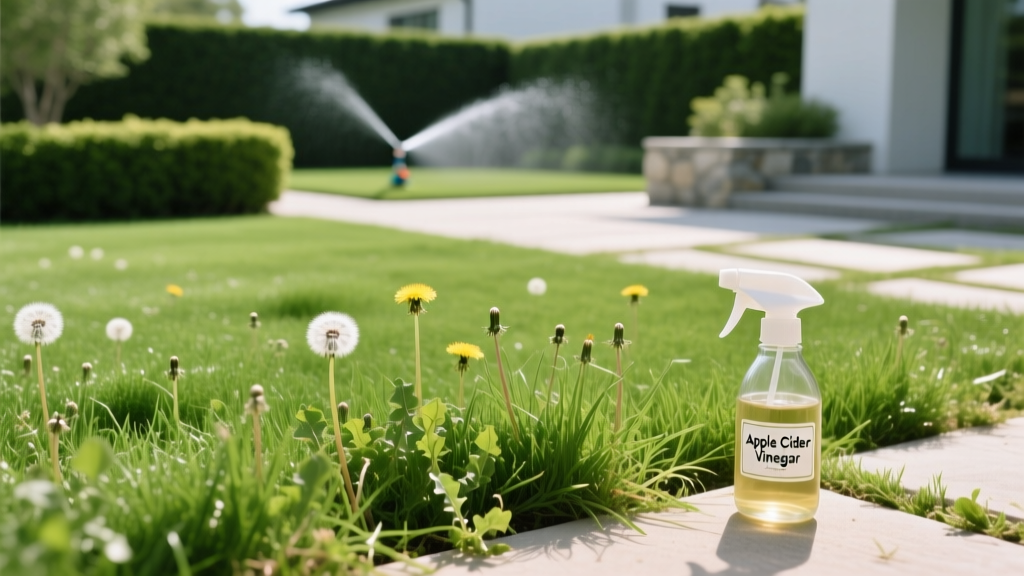
Does Apple Cider Vinegar Kill Weeds? Science and Lawn-Safe Limits
The Short Answer: How Acetic Acid Actually Works
Yes, apple cider vinegar (ACV) can kill weeds, but its efficacy is heavily misunderstood. The active herbicidal agent in ACV is acetic acid (CH3COOH). When sprayed on foliage, acetic acid acts as a rapid contact desiccant. It dissolves the waxy cuticle protecting the leaf surface, causing the plant's cell membranes to rupture and leak their internal fluids. This results in visible wilting and browning within hours.
However, because household apple cider vinegar typically contains only 5% to 6% acetic acid, it only destroys the top growth of the plant. It does not translocate down to the root system. For shallow-rooted annual weeds like crabgrass or chickweed, a 5% solution may be fatal. For deep-rooted perennials like dandelions, bindweed, or nutsedge, the leaves will burn off, but the taproot will simply push up new growth within 7 to 14 days.
Apple Cider Vinegar vs. White Vinegar vs. Horticultural Vinegar
Many homeowners reach for ACV because it is a pantry staple, but from a chemical standpoint, it is an inefficient choice for weed control. Here is how the three common vinegar types compare for lawn and garden use in 2026:
| Vinegar Type | Acetic Acid % | Avg. Cost (per Gallon) | Efficacy on Annuals | Efficacy on Perennials | Safety Profile |
|---|---|---|---|---|---|
| Apple Cider Vinegar | 5% - 6% | $6.00 - $9.00 | Moderate (young seedlings) | Poor (regrows quickly) | Safe (food grade) |
| Standard White Vinegar | 5% - 10% | $3.00 - $5.00 | Moderate to Good | Poor (regrows quickly) | Safe (food grade) |
| Horticultural Vinegar | 20% - 30% | $25.00 - $35.00 | Excellent | Good (may require 2 apps) | Hazardous (corrosive) |
Note: White vinegar is chemically identical to ACV in its herbicidal action but costs significantly less. There is zero botanical advantage to using ACV over standard white vinegar for weed control.
The 'Salt and Soap' Recipe Trap: A Warning for Lawns
A pervasive internet myth recommends mixing vinegar with Epsom salt, table salt, and dish soap to create a 'natural' weed killer. While this mixture will indeed kill weeds, applying it to or near your lawn is a catastrophic mistake for soil health.
CRITICAL SOIL WARNING: Table salt (sodium chloride) does not break down in the soil. Sodium ions bind tightly to clay particles, destroying soil structure, preventing water infiltration, and creating toxic salinity levels. A single heavy application of salt-laced vinegar can render a patch of your lawn completely sterile for years. Never use salt-based herbicide recipes on turfgrass or in garden beds.
Dish soap, however, has a valid purpose. A few drops of liquid castile or standard dish detergent act as a surfactant. Weed leaves have a hydrophobic (water-repelling) waxy coating. The surfactant breaks the surface tension of the vinegar, allowing the acetic acid to spread evenly across the leaf and penetrate the cuticle rather than beading up and rolling off into the soil.
Step-by-Step Application Protocol for Spot Treatment
If you are treating isolated annual weeds in driveway cracks, sidewalk joints, or mulch beds (away from turfgrass roots), follow this precise protocol to maximize the desiccation effect of 5% ACV or white vinegar:
- Timing is Everything: Apply only between 10:00 AM and 2:00 PM on a hot, sunny day. UV radiation and high ambient temperatures (above 80°F) accelerate the cellular rupture process. Do not apply in the evening or on cloudy days.
- Check the Wind: Ensure wind speeds are below 5 mph. Acetic acid is a non-selective contact herbicide; drift will instantly burn the foliage of your desirable turfgrass or ornamental plants.
- Mix the Solution: Combine 1 gallon of 5% vinegar with 1 tablespoon of liquid dish soap in a pump-action garden sprayer. Shake gently to mix without creating excessive suds.
- Saturate the Foliage: Spray the weed until the leaves are completely wet and dripping. Do not heavily drench the surrounding soil, as excessive acetic acid can temporarily harm soil microbiology.
- Monitor and Reapply: Check the weed 48 hours later. If the center crown still shows green tissue, apply a second treatment.
Soil pH and Microbiology Risks
Turfgrass thrives in a soil pH range of 6.0 to 7.0. Acetic acid is, by definition, an acid. While a single spot treatment will not drastically alter your soil chemistry, repeated, broadcast applications of vinegar will drive your soil pH down. According to soil science research published by NC State Extension, once soil pH drops below 5.5, essential macronutrients like calcium and magnesium become locked up and unavailable to grass roots, while toxic levels of aluminum become soluble. Furthermore, highly acidic environments suppress the beneficial mycorrhizal fungi and bacteria required for natural thatch decomposition and nitrogen cycling.
When to Ditch the Vinegar: Commercial Lawn-Safe Alternatives
Because vinegar is non-selective (it kills grass just as easily as weeds) and fails on perennial roots, homeowners managing large lawn infestations need targeted solutions. Here are the most effective, science-backed alternatives for 2026:
1. FeHEDTA (Iron-Based Herbicides) for Broadleaf Weeds
For cool-season lawns (Kentucky Bluegrass, Fescue, Ryegrass), chelated iron (FeHEDTA) is the gold standard for organic-leaning weed control. Products like Fiesta Turf Weed Killer or Ortho WeedClear with Iron exploit a biological vulnerability: broadleaf weeds absorb iron rapidly and cannot regulate it, leading to fatal oxidative stress and tissue necrosis. Turfgrass, however, regulates iron uptake and simply turns a darker, healthier green. FeHEDTA effectively kills dandelions, clover, and plantain without harming the surrounding lawn.
2. Selective Systemic Herbicides for Tough Perennials
If you are battling deep-rooted perennials or grassy weeds like nutsedge, contact herbicides (like vinegar) will always fail. You require a systemic selective herbicide. Active ingredients like 2,4-D, Dicamba, and Quinclorac are absorbed by the leaves and translocated down to the root system, destroying the weed entirely. For warm-season lawns (Bermuda, Zoysia), products containing Celsius WG or Atrazine provide broad-spectrum control. Always consult the Cornell Pesticide Management Education Program for specific active ingredient safety data and application restrictions in your state.
Frequently Asked Questions
Will apple cider vinegar kill grass?
Yes. Apple cider vinegar is a non-selective contact herbicide. If it drifts onto your lawn, it will burn the grass blades, leaving yellow or brown spots. It will not kill established grass roots, but it will cause severe cosmetic damage that takes weeks to grow out.
Is 30% horticultural vinegar safe to use without protective gear?
Absolutely not. While 5% household vinegar is harmless, 20% to 30% horticultural vinegar is a severe corrosive hazard. It can cause irreversible corneal damage (blindness) if splashed in the eyes and severe chemical burns on the skin. You must wear ANSI-approved safety goggles, chemical-resistant gloves, and long sleeves when mixing or applying high-concentration acetic acid.
How long does vinegar stay in the soil?
Acetic acid breaks down rapidly in the soil, typically metabolizing into water and carbon dioxide by soil microbes within 2 to 3 days. It does not leave a long-term residual herbicidal effect, meaning you can safely replant in a treated area a week after application (provided no salt was added to the mixture).

