
Lawn Care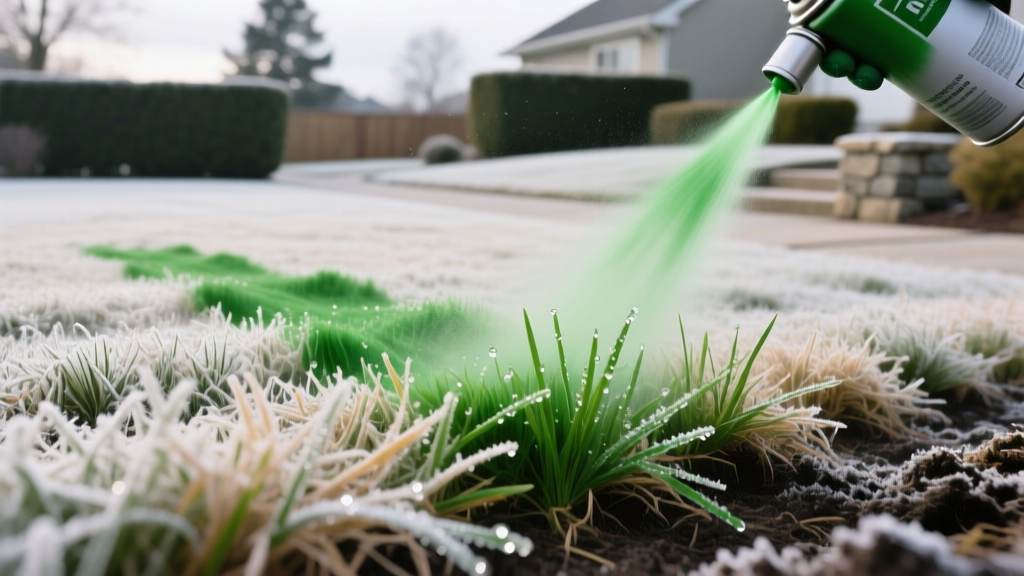
How to Use Grass Spray Paint on Dormant Winter Lawns
The Science of Turf Pigments: Why Paint Dormant Grass?
When soil temperatures drop below 55°F, warm-season grasses like Bermuda, Zoysia, and St. Augustine enter winter dormancy, turning a straw-brown color until spring green-up. While overseeding with perennial ryegrass was historically the standard solution, modern grass spray paint (technically known as turf pigment) has become the preferred agronomic choice. According to NC State University's TurfFiles, turf pigments provide immediate aesthetic improvement without the water, labor, and spring-transition competition associated with winter overseeding.
Unlike the oil-based acrylic paints of the past that suffocated grass blades, modern turf pigments are water-based, carbon and iron-oxide formulations. They bind to the leaf cuticle while remaining breathable, allowing the dormant turf to survive winter without disrupting its cellular structure or blocking the minimal gas exchange required during dormancy.
Decision Matrix: Grass Spray Paint vs. Winter Overseeding
Before purchasing materials, determine if painting is the right agronomic choice for your specific lawn profile.
| Maintenance Factor | Grass Spray Paint (Turf Pigment) | Winter Overseeding (Ryegrass) |
|---|---|---|
| Cost per 1,000 sq ft | $15 - $30 (DIY application) | $40 - $80 (Seed + soil prep) |
| Water Requirement | Zero | High (Daily watering for germination) |
| Spring Transition | Seamless (Pigment fades naturally) | Difficult (Ryegrass competes with base turf) |
| Winter Maintenance | None until spring green-up | Weekly mowing and fertilizing |
| Best Application | Highly manicured lawns, drought zones | Sports fields, high-traffic play areas |
Essential Equipment and Material Costs
Selecting the correct pigment concentration is critical. Commercial-grade pigments offer better UV resistance and colorfastness than consumer aerosol sprays.
| Product Category | Example Brands | Avg. Cost (Quart) | Coverage (Mixed) | Best For |
|---|---|---|---|---|
| Premium Turf Pigment | Geoponics Endurant, Lawnlift | $45 - $65 | 2,000 - 4,000 sq ft | Full lawn coverage, high UV areas |
| Standard Turf Paint | Lesco Green, Spot-Lite | $25 - $40 | 1,000 - 2,000 sq ft | Residential winter dormancy |
| Aerosol Spot Treatment | Restore, Green Lawns | $15 - $25 | 50 - 100 sq ft | Dog urine spots, localized repair |
Equipment needed: 1-gallon or 2-gallon pump sprayer (or HVLP backpack sprayer for lawns over 3,000 sq ft), cardboard shield, measuring cup, and nitrile gloves.
Step 1: Lawn Preparation and Mowing Protocol
Applying pigment to overgrown or debris-covered turf results in a mottled, unnatural appearance once the grass settles.
- Scalp and Mow: Mow the dormant grass slightly lower than your summer maintenance height. For Bermuda grass, drop the reel mower to 0.5 inches. For Zoysia, set it to 1.0 inch. This removes dead, oxidized leaf tips and exposes the healthier lower leaf tissue.
- Bag and Remove Clippings: Do not mulch. Bag all clippings to ensure the pigment binds directly to the living leaf blades rather than decaying organic matter.
- Debris Clearing: Use a leaf blower to remove all pine needles, acorns, and soil mounds. Pigment sprayed over leaves will wash away when the leaf blows across the lawn.
⚠️ CRITICAL WARNING: The Moisture Rule
Never apply grass spray paint to wet grass, heavy morning dew, or frost. Water on the leaf blade will dilute the pigment, causing it to run and pool in low spots, resulting in dark green puddles and light brown high spots. Wait until the turf is completely dry to the touch.
Step 2: Mixing and the "Test Patch" Protocol
Turf pigments are sold as heavy concentrates. The Texas A&M AgriLife Extension notes that proper dilution is the primary factor in achieving a natural green hue rather than a synthetic, "fake" look.
Dilution Ratios for Dormant Turf
- Light Dormancy (Yellowing grass): 1 part pigment to 5 parts water (1:5 ratio).
- Full Dormancy (Straw-brown grass): 1 part pigment to 3 parts water (1:3 ratio).
- Severe Frost/Dark Brown Turf: 1 part pigment to 1 part water (1:1 ratio).
The Test Patch: Mix a small batch (4 oz pigment to 12 oz water) and spray a 2x2 foot hidden area near a shrub bed. Wait 20 minutes for it to dry. If the color looks too dark or "emerald," add more water. Dormant grass should look like healthy summer grass, which has a slightly muted, yellow-green undertone, not the deep emerald of artificial turf.
Step 3: Application Technique (The Cross-Hatch Method)
Use a pump sprayer with a flat-fan nozzle (8002 or 8003 tip) rather than a cone nozzle to ensure an even, overlapping spread.
- Protect Hardscapes: Pro Tip: Before spraying, mix a solution of dish soap and water and spray it onto adjacent concrete driveways, sidewalks, and fence bases. If grass spray paint drifts onto the soapy concrete, it will wash off easily with a garden hose. If it hits dry concrete, it will stain permanently.
- Check Wind Conditions: Only spray when wind speeds are under 5 mph. Turf pigment drift will stain vinyl siding and wooden fences.
- First Pass (Horizontal): Walk at a steady pace of 3 feet per second, holding the nozzle 18 to 24 inches above the turf canopy. Spray in parallel lines, overlapping each pass by 50%.
- Second Pass (Vertical): Once the first coat is tacky (about 15 minutes), spray the lawn again in a perpendicular direction (cross-hatching). This eliminates streak lines and ensures 360-degree coverage of the grass blade.
Step 4: Drying, Curing, and Cleanup
Most premium turf pigments are rain-fast and pet-safe within 1 to 4 hours, depending on ambient humidity and temperature. Do not apply if rain is forecasted within 4 hours of spraying. Once dry, the pigment forms a flexible polymer film that expands and contracts with the grass blade during freeze-thaw cycles without flaking.
Sprayer Cleanup: Immediately flush the sprayer tank, wand, and nozzle with warm soapy water. If turf pigment dries inside the spray tip or internal O-rings, it will permanently clog the equipment. Run a 50/50 mix of water and white vinegar through the system for the final flush to preserve the seals.
Troubleshooting Common Application Failures
Failure Mode 1: Severe Streaking and Zebra Striping
Cause: Walking too fast, holding the nozzle too high, or failing to overlap passes by 50%.
Fix: Wait 24 hours for the first coat to cure, then apply a second, lighter coat perpendicular to the original streaks using a 1:5 dilution ratio.
Failure Mode 2: Color Fading After 3 Weeks
Cause: Using a cheap, non-UV-stabilized paint, or applying to grass covered in morning frost which caused micro-flaking.
Fix: Switch to a premium UV-stabilized pigment like Geoponics Endurant. Expect to do a light touch-up application every 8 to 10 weeks in high-sunlight southern climates.
Frequently Asked Questions
Is grass spray paint safe for dogs and children?
Yes. Once the pigment is completely dry (usually 2-4 hours), it is non-toxic and safe for pets and children. Modern turf pigments are formulated without heavy metals or volatile organic compounds (VOCs). However, keep pets off the lawn while the product is wet to prevent them from tracking green pigment onto indoor carpets.
Can I use grass spray paint on cool-season grasses like Fescue or Kentucky Bluegrass?
While technically possible, it is rarely recommended. Cool-season grasses remain active or semi-active in winter and require photosynthesis to survive. Although modern pigments are breathable, applying a heavy coat of paint to active cool-season turf can reduce light absorption enough to weaken the root system before spring. Reserve turf pigments primarily for fully dormant warm-season grasses or for localized spot-treatments on cool-season lawns (e.g., covering dog urine spots).
How long does turf pigment last?
On fully dormant grass that is not being mowed, a high-quality application will last 8 to 12 weeks. The pigment eventually fades due to UV degradation and physical abrasion from winter winds. As the grass breaks dormancy in spring and you resume mowing, the painted leaf tips are cut off, leaving a seamless transition to natural green growth.

