
Lawn Care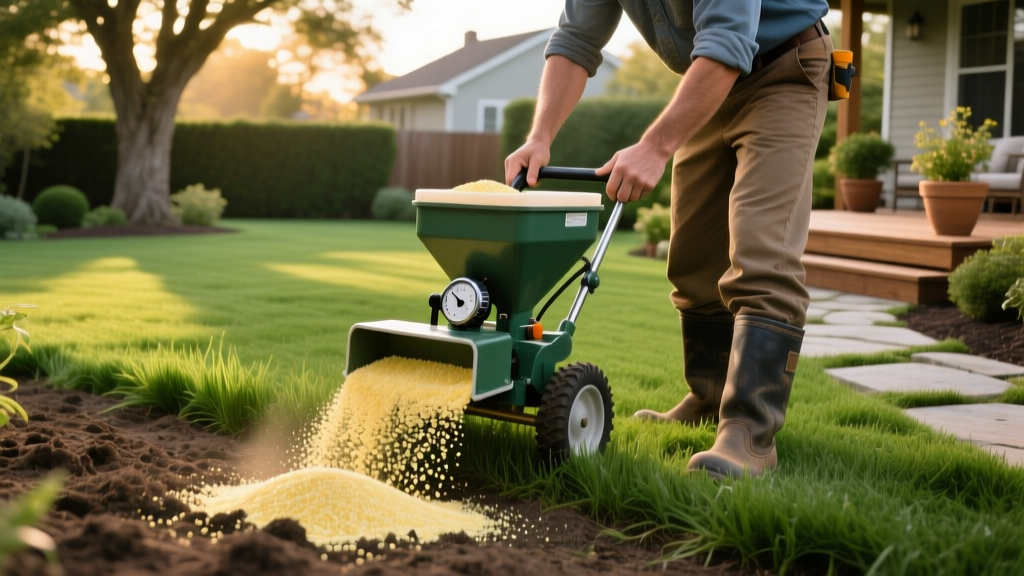
Step-by-Step Guide to Applying Sulfur for Lawn pH Correction
The Science of Soil pH and Why Turf Needs Sulfur
When your lawn's soil pH creeps above 7.2, essential micronutrients like iron, manganese, and phosphorus become chemically locked in the soil profile. The result is chronic chlorosis (yellowing grass) and thinning turf, no matter how much fertilizer you apply. Applying sulfur for lawn pH correction is the most effective, long-term agronomic solution to lower alkaline soil back into the optimal 6.0 to 6.8 range required by most cool- and warm-season turfgrasses.
However, elemental sulfur is not an overnight fix. It is biologically inert until specific soil bacteria (Thiobacillus) oxidize it into sulfuric acid. This microbial process requires soil temperatures above 55°F, adequate moisture, and a timeframe of 3 to 6 months. Understanding this biological mechanism is critical to executing a successful, step-by-step lawn maintenance procedure without burning your turf.
Core pH Target: Aim for a soil pH between 6.2 and 6.8. Do not attempt to drop pH below 6.0, as highly acidic soil will lock up molybdenum and invite destructive fungal pathogens like dollar spot.
Phase 1: Testing and Diagnosing Alkaline Soil
Never apply sulfur based on visual symptoms alone. Yellowing grass can indicate iron deficiency, nitrogen deficiency, or fungal disease. You must confirm high soil pH through testing.
- DIY Testing: Use a reliable analog kit like the Luster Leaf 1601 Rapitest ($12-$15). While less precise than lab tests, it will confirm if your pH is in the 7.5+ danger zone.
- Laboratory Testing: For precise baseline data, send a composite soil sample (15-20 cores taken at a 3-inch depth) to a university extension lab. According to the UMass Amherst Turf Program, a standard turf soil test costs between $15 and $25 and provides exact buffer pH readings, which dictate exactly how much elemental sulfur your specific soil matrix can buffer.
Phase 2: Selecting the Right Sulfur for Lawn Applications
Not all sulfur products are created equal. Choosing the wrong chemical compound can lead to aluminum toxicity or concrete staining. Below is a comparison of the three primary sulfur-based acidifiers used in turf management.
| Product Type | Speed of Action | Pros & Cons | Recommended Brand |
|---|---|---|---|
| Elemental Sulfur (90% S) | Slow (3-6 months) | Safest for turf; lowest burn risk; highly cost-effective. | Espoma Organic Soil Acidifier (~$18 for 4 lbs) |
| Iron Sulfate (Ferrous Sulfate) | Fast (2-4 weeks) | Rapid greening; but stains concrete/stone severely; higher salt index. | Bonide Iron Sulfate (~$22 for 5 lbs) |
| Aluminum Sulfate | Instant | Avoid for lawns. High risk of aluminum toxicity to turfgrass root systems. | N/A (Use only for hydrangeas/shrubs) |
Phase 3: Calculating Exact Application Rates
The amount of elemental sulfur required to lower your pH depends entirely on your soil's cation exchange capacity (CEC), which is dictated by soil texture. Clay soils buffer pH changes heavily and require significantly more sulfur than sandy soils.
The Golden Rule of Sulfur Application: Never apply more than 5 lbs of elemental sulfur per 1,000 square feet in a single application. Exceeding this threshold causes severe salt burn, kills beneficial soil microbes, and can crash your pH into toxic acidity levels.
Baseline Rates to Lower pH by 1.0 Unit (e.g., from 7.5 to 6.5):
- Sandy Soil: 1.0 to 1.5 lbs per 1,000 sq. ft.
- Loam Soil: 2.0 to 2.5 lbs per 1,000 sq. ft.
- Heavy Clay Soil: 3.0 to 4.0 lbs per 1,000 sq. ft.
Note: If your soil test indicates you need to drop the pH by 2.0 units, split the application into two separate treatments spaced 6 months apart.
Phase 4: Step-by-Step Application Procedure
Follow this precise maintenance procedure to ensure even distribution and soil incorporation of elemental sulfur granules. For this guide, we assume the use of a standard rotary or drop spreader and a product like Espoma Organic Soil Acidifier.
- Mow and Dethatch: Mow your lawn slightly lower than your usual height (e.g., 2 inches instead of 3 inches) to expose the soil surface. If your thatch layer exceeds 0.5 inches, perform core aeration or dethatching first. Sulfur must reach the soil; it cannot oxidize if trapped in dead organic matter.
- Calibrate the Spreader: Set your spreader to a low-to-medium setting. For a Scotts EdgeGuard Mini broadcast spreader applying Espoma Soil Acidifier, a setting of 3.5 is generally optimal. Always check the product label for the exact manufacturer setting.
- Perimeter Pass: Walk the perimeter of your lawn with the spreader's edge guard engaged to prevent sulfur from landing on concrete driveways or ornamental garden beds.
- Interior Grid Application: Apply half of your calculated total dose walking in North-South lines. Apply the remaining half walking in East-West lines. This crisscross pattern eliminates striping and ensures uniform coverage.
- Sweep Hardscapes: Immediately use a stiff push broom to sweep any granules off concrete, stone, or brick. Elemental sulfur can leave stubborn yellow stains and will corrode certain sealants over time.
- Water-In: Apply exactly 0.25 inches of water via your irrigation system or a hose-end sprinkler. This washes the granules off the grass blades (preventing foliar burn) and pushes them into the topsoil where the Thiobacillus bacteria reside.
Phase 5: Post-Application Monitoring and Microbial Activation
According to turfgrass research from the University of Minnesota Turfgrass Science program, the oxidation of elemental sulfur is a biological process, not a chemical one. If you apply sulfur in late November, it will sit dormant until soil temperatures warm up in April.
Keep the soil consistently moist (but not waterlogged) during the first 4 weeks after application. Bacteria require water to metabolize the sulfur. Retest your soil pH 6 months post-application. If the pH has only dropped by 0.5 units, apply a second, lighter maintenance dose of 1 lb per 1,000 sq. ft.
Troubleshooting: Edge Cases and Common Mistakes
Even with careful planning, lawn maintenance procedures can encounter variables. Watch for these specific failure modes:
- Symptom: Grass blades develop white or brown necrotic tips 48 hours after application.
Cause: Granules were left on the grass blades without being watered in, causing localized osmotic burn.
Fix: Water deeply (0.5 inches) immediately to flush the salts into the soil profile. - Symptom: Lawn turns intensely dark green, then rapidly yellows and dies in patches.
Cause: Over-application of Iron Sulfate, leading to iron toxicity and manganese lockout.
Fix: Apply a heavy dose of agricultural lime (calcium carbonate) at 50 lbs per 1,000 sq. ft. to neutralize the excess acidity and raise the pH back up. - Symptom: No pH change after 8 months.
Cause: High free calcium carbonate (lime) content in the soil acting as an infinite buffer, common in arid Western US soils.
Fix: Switch from soil amendment strategies to foliar feeding. Use chelated iron (Fe-EDDHA) liquid sprays to bypass the soil entirely and feed the grass directly.
Frequently Asked Questions
Can I apply sulfur for my lawn and fertilizer at the same time?
Yes, but avoid mixing elemental sulfur directly in the same spreader hopper as synthetic nitrogen fertilizers like urea. The moisture from the sulfur can cause the urea to clump and off-gas ammonia. Apply them in separate passes.
Will sulfur kill my lawn grubs or earthworms?
No. Elemental sulfur is a fungicide in high concentrations (used for dusting roses), but at the 2-4 lbs per 1,000 sq. ft. rate used for pH correction, it has no insecticidal properties and will not harm beneficial earthworm populations once watered into the soil.
Is liquid sulfur better than granular?
Liquid sulfur (often sold as potassium thiosulfate or sulfuric acid derivatives) acts much faster but is highly corrosive, requires specialized PPE, and is generally restricted to professional golf course superintendents. For residential lawn care, granular elemental sulfur is significantly safer and provides a longer-lasting, slow-release pH correction.

