
Lawn Care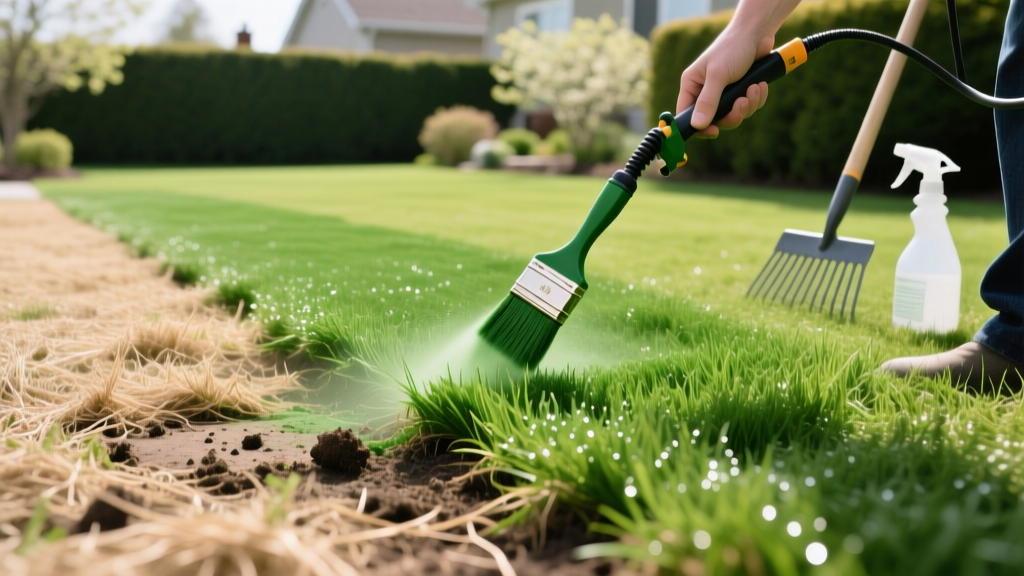
Step-by-Step Guide to Applying Green Lawn Paint on Dormant Turf
When cool-season grasses enter winter dormancy or warm-season varieties like Zoysia and Bermuda turn brown during drought restrictions, homeowners often face aesthetic challenges or strict HOA fines. Green lawn paint—technically known as turf colorant—offers a highly effective, non-toxic solution to maintain a lush, vibrant yard without wasting thousands of gallons of irrigation water. Unlike temporary dyes, modern turf colorants utilize advanced binding agents that lock pigment directly into the grass blade's cellulose, providing weeks of consistent color.
The Chemistry of Turf Colorants: Pigments vs. Dyes
Understanding the chemical difference between colorants is critical for achieving a natural look. Cheap, water-soluble dyes (often sold as "instant green sprays") rely on temporary staining that washes out after a single rainstorm and frequently leaves an unnatural, teal-blue tint. Professional-grade green lawn paint utilizes iron oxide and carbon black pigments suspended in an acrylic polymer binder. These are the exact same UV-stable pigments used in commercial concrete stamping and cosmetics. Once the polymer binder cures on the dry grass blade, it becomes water-insoluble, resisting rain, morning dew, and foot traffic for 6 to 10 weeks depending on UV exposure and mowing frequency.
Product Selection and Coverage Matrix
Selecting the right concentrate dictates your dilution ratio and final cost per square foot. Below is a comparison of the three industry-standard turf colorants used by both golf course superintendents and residential lawn care professionals in 2026.
| Brand / Product | Base Chemistry | Dormant Dilution Ratio | Est. Cost (per Quart) | Coverage (per Quart Concentrate) |
|---|---|---|---|---|
| EnviroColor Lawn Paint | Acrylic Polymer / Iron Oxide | 1:3 to 1:5 | $45.00 - $55.00 | 1,000 - 1,500 sq ft |
| Endurant Turf Paint (Stryker) | Proprietary Binder / Carbon | 1:4 to 1:6 | $50.00 - $65.00 | 1,200 - 1,800 sq ft |
| Lesco Green Lawntone | Water-based Pigment Blend | 1:2 to 1:4 | $35.00 - $45.00 | 800 - 1,200 sq ft |
Step-by-Step Application Procedure
Step 1: Mowing and Thatch Management
Never apply colorant to overgrown or heavily thatched turf. Mow your dormant lawn to a height of 1.5 to 2.0 inches. Crucially, you must bag and remove all clippings. If dead thatch and loose clippings remain on the soil surface, the pigment will coat the debris rather than the standing grass blades, resulting in a patchy, uneven appearance once the wind blows the loose debris away. Use a stiff-bristled push broom or a lawn sweeper to stand the dormant grass blades upright and remove surface dust before spraying.
Step 2: The 48-Hour Moisture Protocol
Moisture is the primary cause of application failure. The grass blades must be bone-dry. If the turf is wet from morning dew, recent rain, or irrigation, the water on the blade will dilute the pigment on contact. This causes the colorant to pool at the base of the grass crown rather than coating the visible upper blade, resulting in a "brown tip, green base" effect. Check your local forecast and ensure a strict 48-hour dry window before application, and schedule your spraying for mid-morning (between 9:30 AM and 11:00 AM) after the morning dew has fully evaporated but before late-afternoon winds pick up.
Step 3: Calibration and Mixing Mathematics
Accurate dilution prevents the "painted plastic" look. For fully dormant, brown grass, a 1:3 ratio (one part concentrate to three parts water) provides the most natural, deep-green opacity. For grass that is only partially dormant or transitioning, use a 1:5 or 1:6 ratio for a lighter, more subtle tint.
Calculation Example for a 5,000 Sq Ft Lawn:
Using EnviroColor at a 1:4 dilution ratio, the application rate is roughly 1 gallon of mixed solution per 250 square feet.
• Total mixed solution needed: 5,000 / 250 = 20 gallons.
• Concentrate needed (20 / 5): 4 gallons of concentrate.
• Water needed: 16 gallons of water.
Always mix the water into the tank first, then add the concentrate to prevent excessive foaming.
Using EnviroColor at a 1:4 dilution ratio, the application rate is roughly 1 gallon of mixed solution per 250 square feet.
• Total mixed solution needed: 5,000 / 250 = 20 gallons.
• Concentrate needed (20 / 5): 4 gallons of concentrate.
• Water needed: 16 gallons of water.
Always mix the water into the tank first, then add the concentrate to prevent excessive foaming.
Step 4: Spraying Technique and Overspray Prevention
Use a backpack sprayer or a tow-behind tank sprayer equipped with a flat fan nozzle (such as a TeeJet 8002VS) rather than a cone nozzle. A flat fan ensures an even, overlapping band of color. Maintain a consistent nozzle height of 18 to 24 inches above the turf canopy. Walk at a steady pace of roughly 3 miles per hour. When approaching hardscapes like concrete driveways, pavers, or vinyl siding, use a physical spray shield or mask the edges with painter's tape and plastic sheeting.
Warning: Concrete and Stucco Staining
Iron oxide pigments will permanently stain porous concrete, natural stone, and painted stucco if allowed to dry. If overspray occurs, you must rinse it immediately with a high-pressure hose. Once the acrylic binder cures (usually within 2 to 4 hours), removal requires a specialized turf paint remover or a pressure washer with a 15-degree nozzle tip and a mild alkaline detergent.
Iron oxide pigments will permanently stain porous concrete, natural stone, and painted stucco if allowed to dry. If overspray occurs, you must rinse it immediately with a high-pressure hose. Once the acrylic binder cures (usually within 2 to 4 hours), removal requires a specialized turf paint remover or a pressure washer with a 15-degree nozzle tip and a mild alkaline detergent.
Troubleshooting Common Application Failures
- Streaking and Zebra Striping: Caused by uneven walking speed or failing to overlap spray passes by at least 30%. Maintain a consistent pace and use a marking dye in your tank to see where you have already sprayed.
- Unnatural Blue or Teal Tint: Occurs when using a cheap, dye-based product, or when applying a highly concentrated dark-green pigment to a lawn that is only partially dormant (the green pigment mixes with the living yellow-green chlorophyll). Always test a small 4x4 foot patch 24 hours before full application.
- Flaking and Rub-Off on Shoes: Indicates the colorant was applied to dusty grass or wet grass, preventing the polymer binder from adhering to the cellulose. The grass must be clean and dry for the binder to form a mechanical bond.
- Sprayer Clogging: Pigment particles will settle and harden in the sprayer lines if left overnight. Always flush the entire system with clean water and a mild soap solution immediately after finishing the job.
Longevity, Maintenance, and Environmental Impact
Once fully cured (typically 4 to 6 hours post-application depending on ambient humidity), professional green lawn paint is entirely non-toxic and safe for pets and children. According to the EPA WaterSense landscaping guidelines, utilizing turf colorants during severe drought restrictions is a highly recommended alternative to wasting potable water on dormant grass simply to maintain aesthetic curb appeal. Furthermore, the University of California Integrated Pest Management program notes that allowing warm-season grasses to enter natural winter dormancy is vital for the long-term root health of the turf, and cosmetic colorants allow homeowners to support this natural biological cycle without sacrificing yard aesthetics.
The color will gradually fade due to UV degradation and the natural shedding of the coated grass blades as the lawn transitions back into active spring growth. You can expect 6 to 8 weeks of vibrant color from a single application of an acrylic-based pigment. Mowing the lawn will not immediately remove the color, as the pigment coats the entire length of the blade, but frequent mowing will accelerate the fading process by physically removing the painted tips of the grass.

