
Lawn Care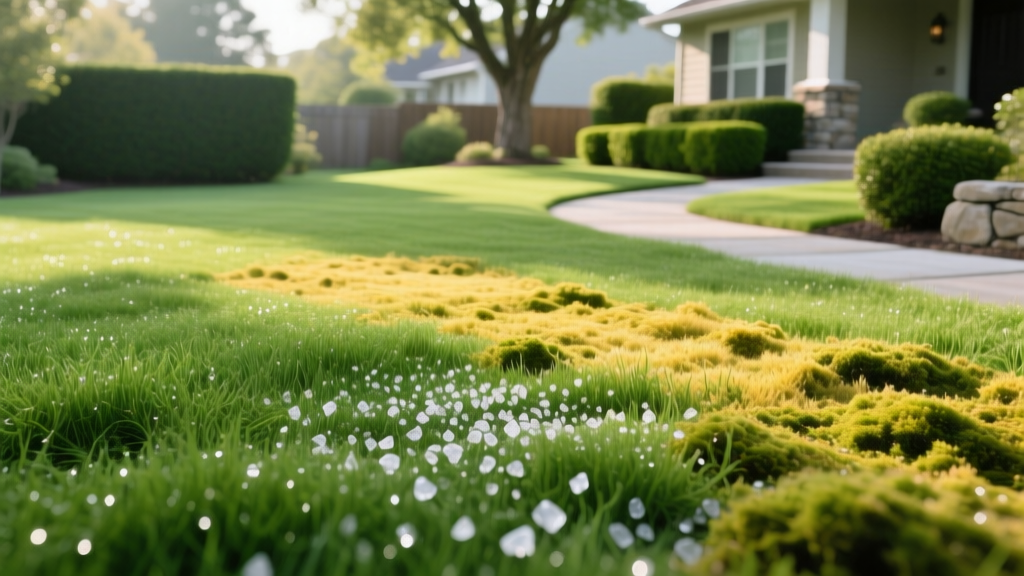
Iron Sulfate for Grass: Fix Yellowing and Kill Moss
The Iron Chlorosis Problem: Why Your Grass is Yellowing
When turfgrass turns pale yellow or white while the veins remain green, you are looking at interveinal chlorosis. This is a classic iron deficiency. However, the irony of iron chlorosis is that your soil likely contains abundant iron; it is simply locked up and unavailable to the grass roots. Applying iron sulfate for grass (ferrous sulfate) is the most cost-effective way to restore deep green color without triggering the aggressive, mowing-intensive growth spurts associated with nitrogen fertilizers.
Before purchasing a bag of ferrous sulfate, you must understand the chemical limitations of this compound. Iron sulfate is highly effective in acidic to neutral soils (pH 5.5 to 6.8). In alkaline soils (pH above 7.2), the sulfate rapidly oxidizes and binds with calcium and phosphorus, rendering it useless to the turf. If your soil pH is above 7.2, you must bypass standard iron sulfate and use an EDDHA-chelated iron product instead, as confirmed by Colorado State University Extension research on high-pH turf management.
Granular vs. Liquid Iron Sulfate: Which Should You Use?
The market offers iron sulfate in two primary formulations. Choosing the wrong one for your specific lawn condition will result in wasted money and potential turf burn.
| Feature | Granular Ferrous Sulfate (20% Fe) | Liquid Iron Sulfate / Chelated Iron |
|---|---|---|
| Primary Use | Moss control, long-term soil amendment | Rapid greening, foliar feeding, spot treatments |
| Speed of Results | 7 to 14 days (requires watering in) | 24 to 72 hours (foliar absorption) |
| Cost (2026 Pricing) | $18 - $28 per 5 lbs | $22 - $35 per quart (covers ~4,000 sq ft) |
| Staining Risk | High (if left on concrete) | Moderate (easily washed off if caught quickly) |
| Best Grass Types | Cool-season (Fescue, Kentucky Bluegrass) | Warm-season (Bermuda, Zoysia, St. Augustine) |
Step-by-Step Application Guide for Lawn Greening
To achieve a dark, emerald-green lawn without over-applying, follow these precise measurement protocols. Over-application of iron sulfate can cause "blackening," where the grass absorbs toxic levels of iron and turns a bruised, dark purple-black before dying back.
Liquid Application (Foliar Spray)
- Mix Rate: Combine 2 to 4 ounces of liquid iron sulfate (or chelated iron) per 1,000 square feet. Dilute in 1.5 to 2 gallons of water to ensure even coverage.
- Add a Surfactant: Include 1/4 teaspoon of non-ionic surfactant per gallon. This breaks the surface tension of the water, allowing the iron to penetrate the leaf cuticle rather than rolling off.
- Timing: Spray between 6:00 AM and 8:00 AM. Avoid foliar applications when temperatures exceed 85°F, as the water will evaporate too quickly, leaving concentrated iron salts that will burn the leaf tips.
- Post-Application: Do not water the lawn for at least 24 hours to allow maximum foliar absorption.
Granular Application (Soil Drench)
- Spread Rate: Apply 2 to 3 pounds of 20% ferrous sulfate heptahydrate per 1,000 square feet using a rotary spreader.
- Moisture Requirement: The grass blades must be completely dry during application to prevent the granules from sticking to the foliage and burning the leaf tissue.
- Watering In: Immediately irrigate the lawn with 1/4 inch of water to wash the granules off the blades and into the thatch layer and soil profile.
⚠️ CRITICAL WARNING: Concrete and Paver Staining
Iron sulfate will permanently stain concrete, limestone, and light-colored pavers with deep orange rust marks within minutes of contact. Always use a leaf blower to clear granules off hardscapes immediately after spreading. If staining occurs, standard household cleaners will not work; you must use a commercial oxalic acid-based concrete rust remover.
Using Iron Sulfate for Moss Control
Beyond cosmetic greening, iron sulfate is a highly effective, low-toxicity moss killer. Moss thrives in compacted, acidic, and poorly drained soils where turfgrass struggles. According to the Pacific Northwest Weed Management Handbook, iron sulfate desiccates moss rapidly without harming established grass roots.
The Moss Eradication Protocol
- Heavy Application: Apply granular iron sulfate at a much higher rate of 5 to 8 pounds per 1,000 square feet directly over the moss patches.
- Wait and Watch: Within 48 to 72 hours, the moss will turn from vibrant green to a dead, blackish-brown color.
- Physical Removal: Once the moss is dead and dry (usually after 7 to 10 days), use a stiff-tined thatching rake or a mechanical dethatcher to aggressively pull the dead moss out of the turf canopy.
- Address the Root Cause: Iron sulfate only kills the existing moss; it does not prevent regrowth. You must follow up with core aeration to relieve soil compaction and apply pelletized lime to raise the soil pH above 6.5, creating an environment where grass outcompetes moss.
Troubleshooting Common Iron Sulfate Failures
"I applied it, but my grass is still yellow."
This is almost always a soil pH issue. If your soil pH is 7.5 or higher, the iron sulfate you applied has oxidized into insoluble iron oxide (rust) in the soil. You must perform a soil test. If pH is high, switch to a liquid iron product chelated with EDDHA (ethylenediamine-N,N'-bis(2-hydroxyphenylacetic acid)). EDDHA protects the iron molecule from high-pH tie-up, keeping it available to the grass roots even in alkaline conditions. Products like Southern Ag Chelated Liquid Iron or Monterey EDDHA Iron are formulated specifically for this scenario.
"My grass turned black and crispy."
You experienced iron toxicity and salt burn. This happens when applying granular iron to wet grass blades, or when applying liquid iron during peak midday heat. The localized concentration of salts dehydrated the plant tissue. To fix this, water the lawn deeply (1 inch) to flush the excess salts below the root zone, and apply a light dose of liquid kelp extract to help the grass recover from osmotic stress.
"Iron is a micronutrient, meaning turfgrass requires it in very small quantities—typically less than 0.5 pounds per acre annually for basic maintenance. When using iron sulfate for aggressive greening or moss control, you are applying it at supra-optimal rates. Always respect the dosage limits to avoid heavy metal accumulation in your topsoil."
— Turfgrass Science & Management Principles
Final Soil Nutrition Integration
Iron sulfate should be viewed as a targeted tool, not a foundational fertilizer. It provides zero nitrogen, phosphorus, or potassium. For a complete lawn care program, integrate iron sulfate applications during the cooler months of spring and fall when the grass is actively growing but heat stress is low. Always pair your iron applications with a comprehensive soil test to monitor your baseline macronutrient levels and ensure your turf has the structural foundation required to utilize the micronutrients you are supplying.

