
Lawn Care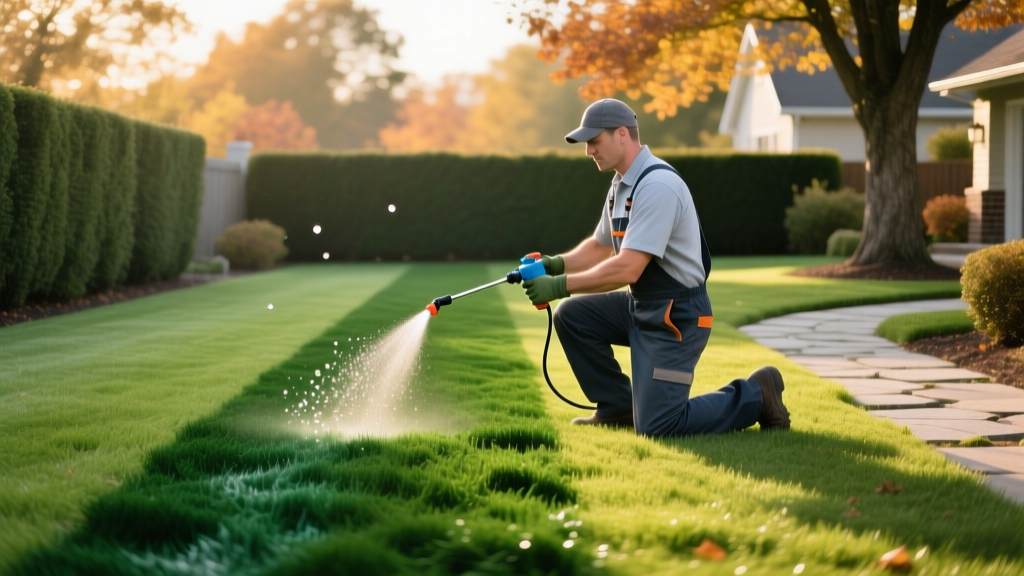
Step-by-Step Guide to Applying Lawn Dye for Winter Dormancy
When soil temperatures drop below 55°F, warm-season turfgrasses like Bermuda, Zoysia, and St. Augustine enter winter dormancy, turning an unsightly straw-brown. While overseeding with perennial ryegrass has been the traditional remedy, the water, mowing, and seed costs associated with overseeding have driven a massive shift toward lawn dye (commercially known as turf paint). Applying lawn dye provides immediate, uniform color that lasts 60 to 90 days without the agronomic stress of competing winter grasses.
This guide details the exact equipment calibration, chemical dilution ratios, and application techniques required to achieve a professional-grade finish while avoiding the most common failure modes, such as concrete staining and streaking.
The Economics of Lawn Dye vs. Overseeding
Before selecting a pigment, it is critical to understand the cost-benefit analysis of turf paint versus traditional overseeding. According to the NC State University Turfgrass Program, winter overseeding requires intensive water usage to germinate ryegrass, followed by weekly mowing and supplemental nitrogen fertilization throughout the winter.
| Metric | Ryegrass Overseeding | Lawn Dye Application |
|---|---|---|
| Material Cost (per 1,000 sq ft) | $15 - $25 (Seed & Fertilizer) | $8 - $14 (Pigment) |
| Water Requirements | High (Daily for 14 days to germinate) | None (Post-curing) |
| Labor / Maintenance | High (Mowing, edging, blowing) | Low (Single 2-hour application) |
| Spring Transition Impact | Severe (Ryegrass competes with base turf) | None (Fades naturally as base turf greens up) |
Selecting the Right Turf Paint Formulation
Not all green colorants are created equal. Consumer-grade 'lawn paint' from hardware stores often uses water-soluble food dyes that wash away in the first rainstorm. Professional lawn dyes utilize acrylic polymer resins and iron oxide or carbon black pigments that bind to the leaf cuticle and resist UV degradation.
- Endurant TE (Turf Enhancer): The industry standard for fully dormant grass. High pigment load provides deep, dark green coverage. Priced around $65 per gallon.
- Geoponic Green: A highly concentrated formulation that requires a 1:5 dilution ratio for semi-dormant grass. Excellent for transition zones. Priced around $55 per gallon.
- Lesco Green Turf Paint: A lighter, brighter green formulation best suited for cool-season grasses experiencing winter browning (like Fescue) rather than fully dormant warm-season grasses. Priced around $45 per gallon.
Equipment Calibration and Setup
Achieving a streak-free finish relies entirely on proper equipment calibration. You must deliver a consistent volume of liquid per square foot, known as Gallons Per Acre (GPA). For dormant turf, a target application rate of 40 to 50 GPA is ideal.
Required Equipment Specifications
- Sprayer: 4-gallon backpack sprayer (e.g., Solo 425 or Chapin 1949) with a pressure regulator.
- Nozzle: TeeJet 8004 or 8002 Flat Fan nozzle. Never use a cone or adjustable nozzle, as they create uneven droplet distribution.
- Pressure: Maintain a steady 20 to 30 PSI. Pumping above 40 PSI causes the dye to atomize into a fine mist, leading to wind drift and concrete staining.
- Surfactant: Add a non-ionic surfactant (0.25% v/v) to break the surface tension of the waxy dormant leaf cuticle, ensuring the pigment bonds rather than beading up.
Step-by-Step Application Procedure
- Mow and Edge: Mow the dormant turf slightly lower than your standard summer height (e.g., scalp Bermuda to 1 inch). Edge all hardscapes to create a clean physical boundary. Remove all clippings and debris.
- Pre-Wet Hardscapes: Use a garden hose to thoroughly wet any adjacent concrete, stone, or brick. Wet porous surfaces are less likely to absorb accidental dye overspray, making post-application cleanup significantly easier.
- Mix the Solution: For fully dormant, brown grass, mix 1 part lawn dye to 1 part water (1:1 ratio). For grass that is only partially dormant (yellowing), use a 1:3 ratio. Fill the sprayer halfway with water, add the dye and surfactant, agitate vigorously, and then fill to the top.
- Establish a Perimeter: Spray a 2-foot perimeter around the edges of the lawn using a shielded spray wand to prevent drift onto siding or concrete.
- Apply in Overlapping Swaths: Walk at a steady pace of 3 feet per second. Overlap each spray swath by 50%. The flat fan nozzle should be held exactly 18 to 24 inches above the turf canopy. Keeping the nozzle too high causes wind drift; keeping it too low causes visible spray lines.
- Cross-Hatch for Uniformity: For premium, golf-course quality results, apply half your mixture walking North-South, and the remaining half walking East-West. This cross-hatching eliminates any missed streaks.
Troubleshooting Common Lawn Dye Failures
Even with careful preparation, environmental variables can cause application defects. Use this decision matrix to diagnose and correct issues in real-time.
| Visual Defect | Root Cause | Corrective Action |
|---|---|---|
| Dark and Light Streaking | Uneven walking pace or nozzle held at varying heights. | Slow down. Re-spray the light streaks with a highly diluted (1:5) mixture to blend the color. |
| Pigment Beading on Leaves | Lack of surfactant or applying to grass with a heavy dew layer. | Wait for the sun to burn off the dew. Add 2 oz of non-ionic surfactant per gallon of remaining mix. |
| Green Stains on Concrete | Wind drift exceeding 5 mph, or spraying with a cone nozzle. | Immediately scrub with a stiff bristle brush and a 10% bleach solution before the acrylic polymer cures (within 2 hours). |
| Color Washing Away in Rain | Applied less than 4 hours before precipitation, or mixed without a binder. | Ensure 24 hours of dry weather post-application. If using cheap dye, switch to an acrylic-resin based turf paint. |
Post-Application Curing and Environmental Safety
Once applied, lawn dye requires a minimum of 2 to 4 hours of direct sunlight and dry conditions to fully cure and bind to the cellulose in the grass blade. During this curing window, restrict all foot and pet traffic to prevent tracking the wet pigment onto shoes and into the house.
From a regulatory and environmental standpoint, high-quality turf paints are generally considered safe once cured. According to the Environmental Protection Agency (EPA), many turf colorants fall under minimum-risk pesticide exemptions or are classified as inert cosmetic colorants, meaning they do not leach harmful active chemicals into the soil profile or groundwater. The pigments are locked into the plant tissue and will only break down naturally through UV photodegradation and the physical shedding of the grass blade during spring green-up.
By strictly adhering to flat-fan nozzle calibration, utilizing a 1:1 dilution for heavy dormancy, and pre-wetting adjacent hardscapes, you can achieve a lush, winter-green lawn that survives frost, rain, and foot traffic until your base turf naturally breaks dormancy in the spring.

